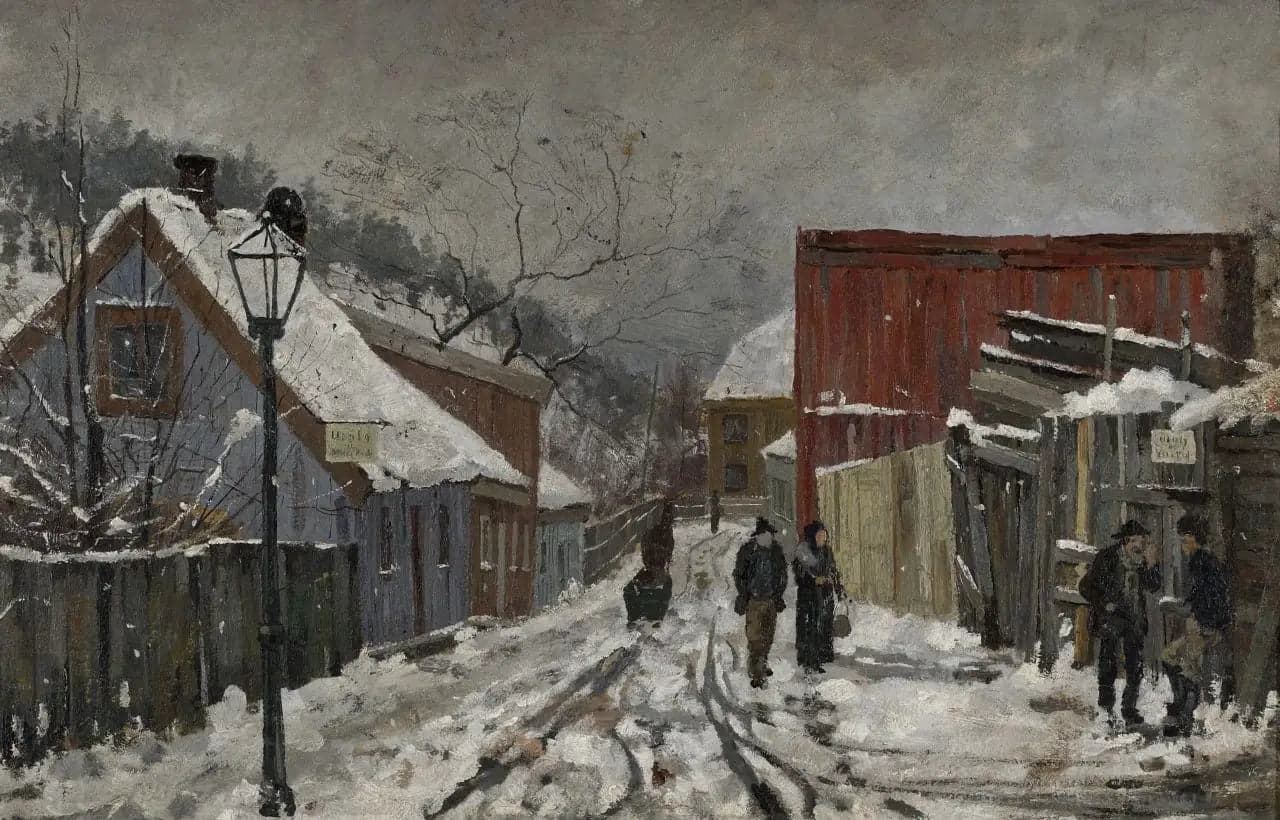
Saxegårdsgate
- Original dimensions
- 55 x 36 cm
- Museum
- Lillehammer Art Museum
- Year
- 1882
Scene depicted
This painting depicts a scene imbued with pain and introspection. The canvas captures an alley in Oslo, where shadows and light intertwine to create an atmosphere of wandering. The cobblestones, silent witnesses of past lives, come to life under Munch's brush, revealing not only a physical space but also a state of mind, lost between melancholy and hope.
Historical context
Created in 1882, in Oslo, this painting is part of the promising beginnings of the expressionist movement. In a context marked by a quest for authenticity and meaning, Saxegårdsgate stands as a living testimony of Norwegian urban life of the time. The canvas , preserved at the Lillehammer Art Museum, measures 55 x 36 cm and offers an intimate glimpse of an emotional alley, emblematic of its creator.
Place in the artist's career
Saxegårdsgate occupies a unique place in Munch's artistic evolution. It is a turning point, a prelude to his future stylistic explorations. In parallel, his paintings such as “The Scream” and “The Madonna” reveal more complex emotional approaches, marking a transition to a bolder visual language.
Anecdote
“I have always felt that a soul inhabited every wall, every alley.” These words from Edvard Munch evoke the genesis of this canvas , painted on a calm morning, where the soft light of dawn seems to dance on the fresh cobblestones of Saxegårdsgate. This fleeting moment inspired a work of art vibrant with emotion and authenticity.