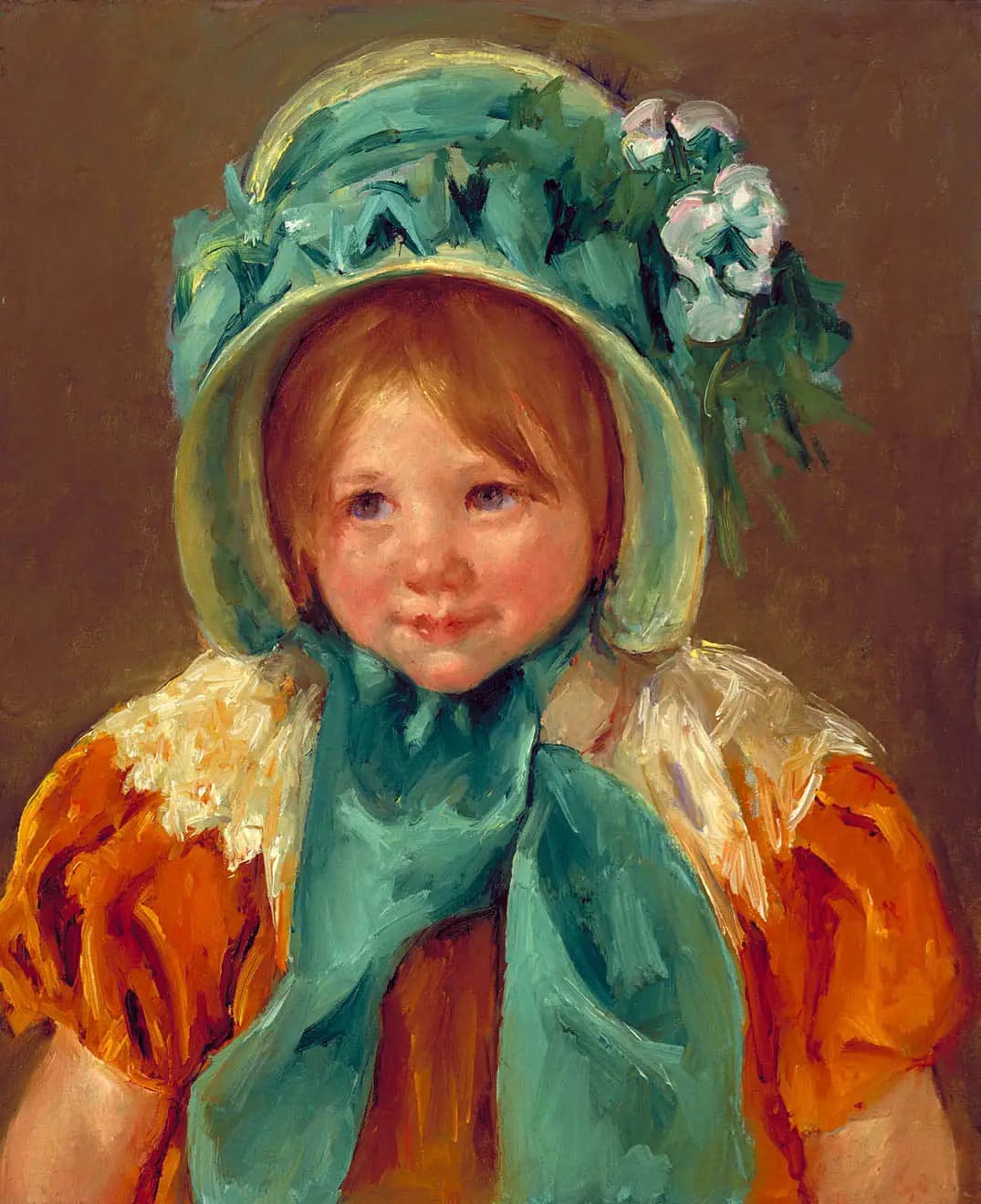
Sara with the Green Bonnet
- Original dimensions
- 34.6075 x 41.91 cm
- Museum
- Smithsonian American Art Museum
- Year
- 1901
Scene depicted
The painting depicts a young girl, Sara, joyfully amazed by her surroundings, her head adorned with an elegant green bonnet. The composition is a celebration of childhood, capturing the innocence and beauty of everyday life, while revealing the intimacy of the child's personality through the contemplative gaze of the artist.
Historical context
Created in 1901, the painting Sara au bonnet vert embodies the very essence of impressionism during the Belle Époque. Made in Paris, this captivating painting evokes the artistic movement that advocates light and color. Currently, this canvas is carefully preserved at the Smithsonian American Art Museum, where it is admired by art enthusiasts from around the world.
Place in the artist's career
This painting is one of the milestones in Cassatt's career, marking her entry into a brilliant artistic maturity. By comparing it to works like Le Bonheur de vivre and La Baignade , one better understands the evolution of her style, moving from a more conventional approach to a bold expression of color and light.
Anecdote
Mary Cassatt , with a unique sensitivity, stated: “Children are the quarters of motherhood, and each moment represents a painting that is both joyful and emotional.” It was under the softness of a spring morning that the artist felt inspired to immortalize this fleeting moment, bringing this masterpiece to life.