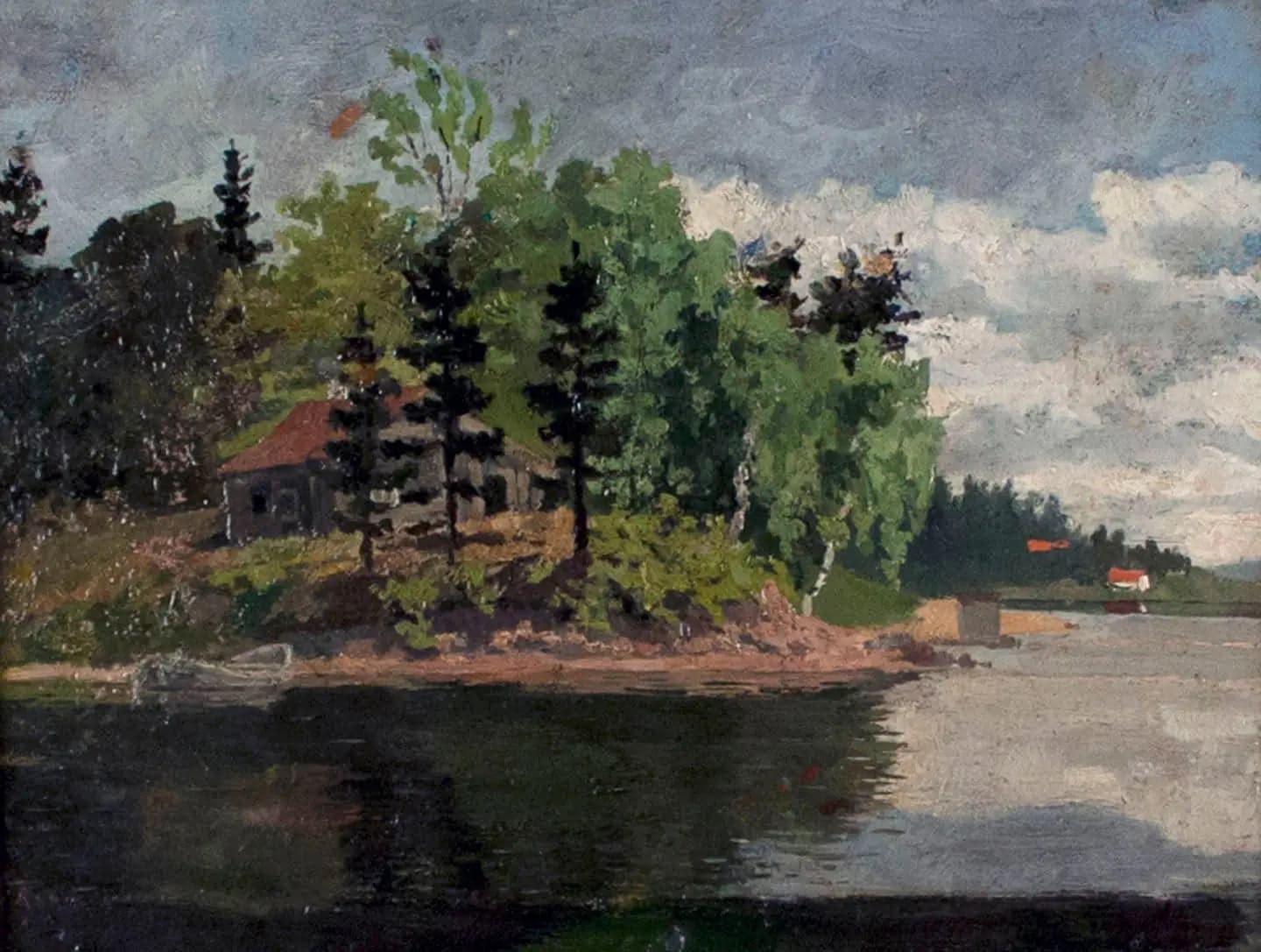
Sandvika
- Original dimensions
- 25 x 20 cm
- Museum
- Not specified
- Year
- 1881
Scene depicted
The painting “Sandvika” presents an uplifting view of nature, where the water sparkles under the sunlight, surrounded by lush hills. This canvas evokes an atmosphere of serenity and contemplation, inviting the viewer to dive into its natural world. Munch manages to convey the softness of a light breeze and the tenderness of a soothing landscape.
Historical context
Created in 1881, this painting , emblematic of the work of Edvard Munch , is rooted in Sandvika, a charming Norwegian town emblematic of the symbolist movement. At this time, Munch was developing his unique style, engaged in the exploration of human feelings. This canvas transports you to a time when artists began to disrupt conventions, integrating emotions and landscapes into their art. Currently, the painting is not displayed in any known permanent museum.
Place in the artist's career
“Sandvika” represents one of the early milestones in Munch's career, wrapped in a period of intense development. Compared to later works such as “The Scream” and “The Madonna,” this painting shows a technical maturation, where he begins to articulate more ambitious compositions while preserving his poetic sensitivity.
Anecdote
“Every day, I paint what I feel deeply,” Munch said, as he observed the golden illumination of a spring morning in Sandvika. This precious moment fueled the inspiration for his masterpiece , capturing the ephemeral beauty of a landscape that resonates in the soul.