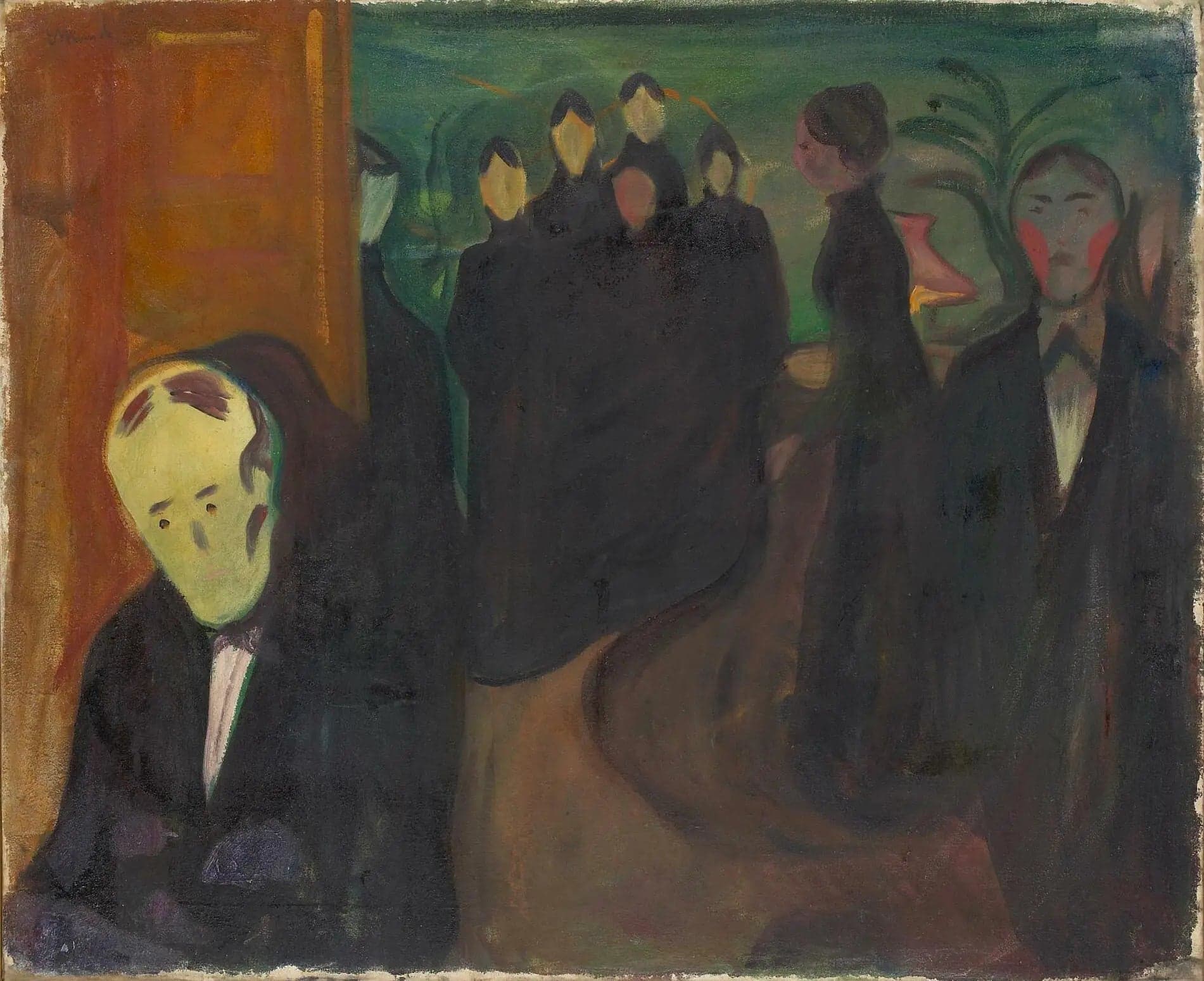
Sanatorium
- Original dimensions
- 86 x 70.5 cm
- Museum
- Munch Museum
- Year
- 1902
Scene depicted
In this painting , Munch immerses us in the melancholic horizon of a sanatorium, where light mingles with shadow, creating an atmosphere that is both serene and unsettling. The human figures in the foreground seem suspended between hope and distress, embodying the emotional struggles inherent to the human condition. Every detail of this **pictorial work** conveys a sense of isolation and inner contemplation.
Historical context
Created in 1902 in Oslo, this painting , emblematic of the expressionist movement, is set at a time when Munch explores the complexities of the human soul. This canvas is today preserved at the Munch Museum, a place imbued with the legacy of this revolutionary artist who profoundly marked the history of modern art.
Place in the artist's career
Sanatorium represents one of the pivotal stages in Munch's career, where his style begins to be defined with strength. In parallel, his **painting** The Scream and the canvas The Madonna echo this artistic maturity, each revealing the depth of his ideas and tumultuous emotions.
Anecdote
“Art is not a reflection of reality, but a light that illuminates the soul.” This quote from Edvard Munch resonates in every brushstroke of his masterpiece . It is said that he found inspiration in the shimmering colors of a misty morning, each shade of his painting telling a buried emotion deep within him.