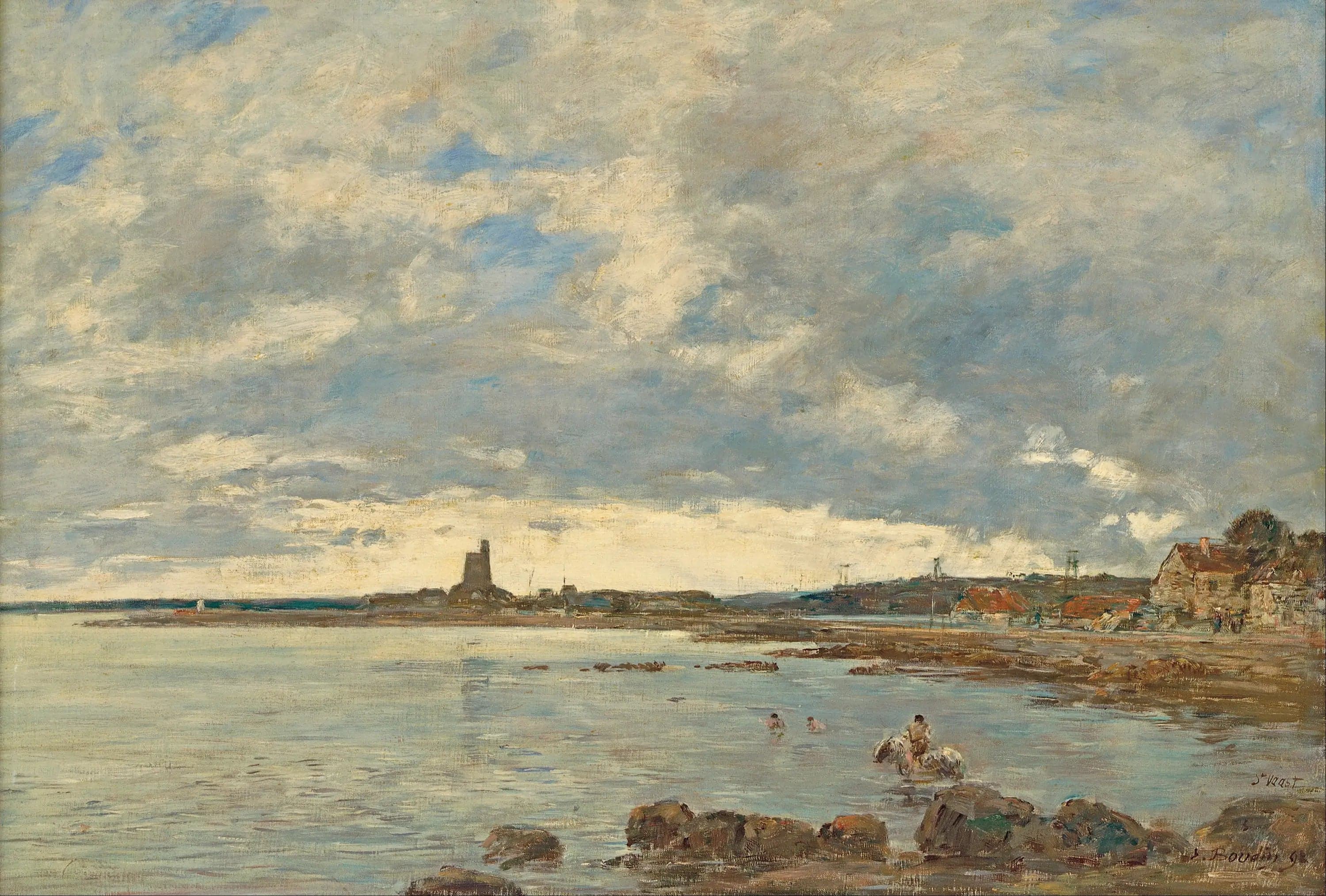
Saint-Vaast-la-Hougue
- Original dimensions
- 78 x 53 cm
- Museum
- South Australian Art Gallery
- Year
- 1892
Scene depicted
The composition of the canvas reveals a maritime scene where white sails imprint on the deep blue of the water. The characters, in search of simple happiness, are immersed in an atmosphere of serenity and harmony. Every detail of the canvas resonates with the delicacy of moments spent by the sea, inviting the viewer on a journey.
Historical context
Created in 1892, this painting emerged in the charming town of Saint-Vaast-la-Hougue, nestled on the Normandy coast. It is part of the Impressionist movement, which flourished at that time, seeking to capture light and ephemeral atmospheres. Today, this canvas is carefully preserved in the South Australian Art Gallery, a testament to the beauty of the French coasts and Boudin's artistic heritage.
Place in the artist's career
Saint-Vaast-la-Hougue , a significant work of early plein air, marks a turning point in Boudin's career. It is a technical and emotional achievement, akin to La Plage de Trouville and Le Débarquement des Provisions , showcasing an increasing mastery of light nuances and human interactions. This canvas reflects his artistic maturity and contagious enthusiasm for the world around him.
Anecdote
“Every brushstroke must speak to the soul,” said Boudin. He was inspired by the first light of a sunny morning as he wandered along the peaceful quays. This fleeting moment infused a creative force into the painting Saint-Vaast-la-Hougue , transforming a simple maritime view into a vibrant masterpiece .