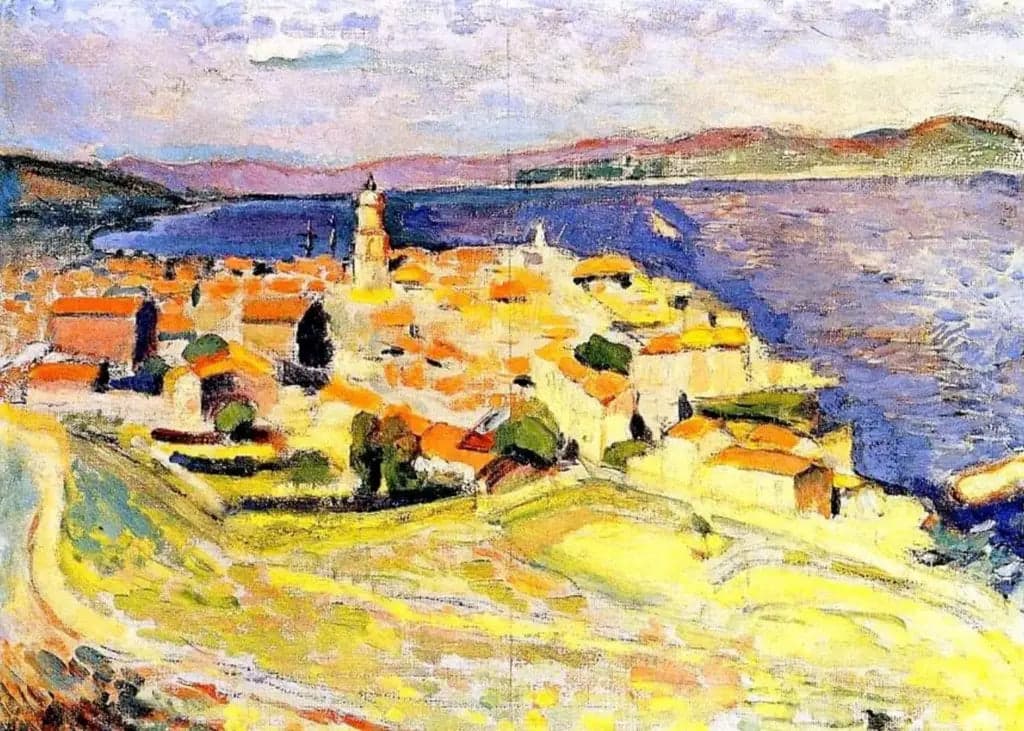
Saint-Tropez
- Original dimensions
- 48 x 35 cm
- Museum
- Albert André Museum
- Year
- 1904
Scene depicted
The painting "Saint-Tropez" depicts a vibrant scene of natural animation. With its bold palette and simplified forms, Matisse captures the warmth of the Mediterranean summer, where azure sky and golden earth meet. The canvas is truly pictorial, transporting the viewer into the effervescence of coastal landscapes, informing about local life and the essence of an iconic place.
Historical context
Created in 1904, the painting "Saint-Tropez" plunges its roots into the soft light of the South of France, on the famous Côte d'Azur. This work belongs to the Fauvist movement, revolutionizing the concepts of color and form at the time. Currently exhibited at the Albert André Museum, this canvas embodies the free spirit of an artistically vibrant environment that shaped Matisse's career.
Place in the artist's career
"Saint-Tropez" represents a major milestone in Matisse's career, marking his rise among the iconic figures of Fauvism . This painting stands alongside his works "Woman with a Hat" and "The Water Lilies," demonstrating the evolution of his technique and perception of color, moving from gentle contemplation to an explosion of strokes and shades.
Anecdote
"Color is an essential element of my art, a melody that sings for the soul," is said to have declared Henri Matisse . It was in the heart of a sunny morning, as he wandered through the alleys of this colorful village, that the inspiration for this canvas emerged, capturing the magic of the moment. This painting thus tells a story of escape, beauty, and light.