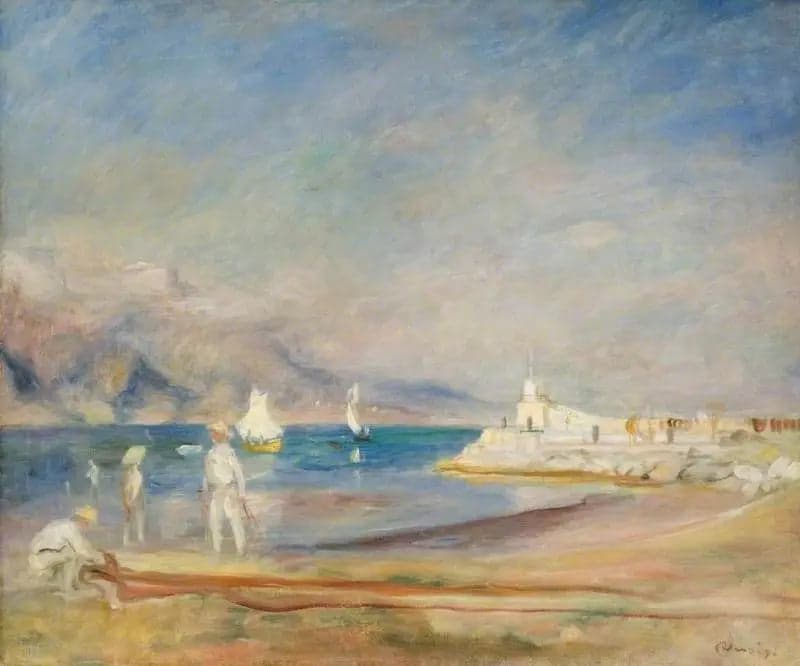
Saint-Tropez, France - Pierre
- Original dimensions
- 65.4 x 54.5 cm
- Museum
- Birmingham Museum and Art Gallery
- Year
- 1899
Scene depicted
The painting “Saint-Tropez, France” depicts a lively seaside where bathers enjoy the sun. Female silhouettes in light dresses mingle with men diving into the turquoise waters, symbolizing the spirit of conviviality and lightness of summer. The light plays with a thousand reflections on the sea, creating a sparkling game that invites the viewer to dive into this atmosphere of celebration and relaxation.
Historical context
Created in 1899, this painting vibrantly captures the heart of Saint-Tropez, a jewel of the Côte d'Azur, famous for its bright light and summer atmosphere. Its origin is rooted in the Impressionist movement, an artistic current that redefined the possibilities of the canvas and liberated colors from their classical constraints. The painting is currently displayed at the Birmingham Museum and Art Gallery , where its brilliance and beauty continue to amaze generations.
Place in the artist's career
Positioned at a turning point in Renoir's career, “Saint-Tropez, France” embodies a period of maturity. At this time, the artist establishes a perfect balance between technique and emotion, similar to his other iconic paintings like “Luncheon of the Boating Party” and “Dance in the City.” Each of these works testifies to an essential evolution, making Renoir a pillar of Impressionism .
Anecdote
Renoir once stated: “Happiness is sometimes hidden in the unknown, where we go to seek the light.” A sunny morning in Saint-Tropez, as the first rays of dawn caressed the waves, served as inspiration for this masterpiece . This scene evokes simple joy and the beauty of fleeting moments, capturing the very essence of his emotion.