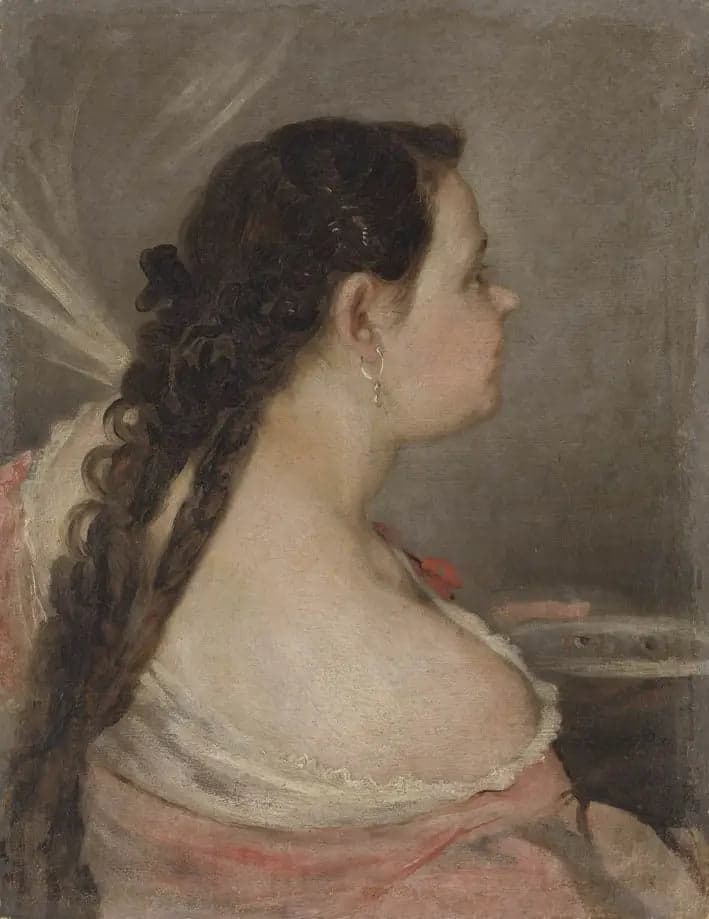
Saint Lucy
- Original dimensions
- 49.5 x 64 cm
- Museum
- Neue Pinakothek
- Year
- 1799
Scene depicted
The scene depicted in "Saint Lucy" immerses us in the heart of a mystical moment, immortalizing the saint in deep contemplation. Her serene and determined gaze evokes a profound devotion to her faith. Goya, with unmatched mastery, captures the very essence of faith and light, bestowing an almost divine aura to this composition .
Historical context
Created in 1799, the painting "Saint Lucy" finds its place within an artistic movement in full swing: romanticism . At that time, Goya was located in the iconic city of Madrid, where he captured the social and political tensions of his time. The canvas is now housed in the prestigious museum of the Neue Pinakothek in Germany, offering its visitors the opportunity to contemplate this work up close.
Place in the artist's career
This painting gracefully positions itself in Goya's career. It is a significant work from a period of creative maturity, alongside other masterpieces like "Las Meninas" and "The Naked Maja." Each of these creations shows a fascinating evolution in his technical and emotional approach, as well as a quest for authenticity in pictorial expression.
Anecdote
"Every brushstroke is a prayer, an offering to beauty," Goya might have said while painting this masterpiece. Inspired by a tranquil morning where light played with shadows, he captured the essence of Saint Lucy with rare precision, giving this canvas a breath of life that transcends the centuries.