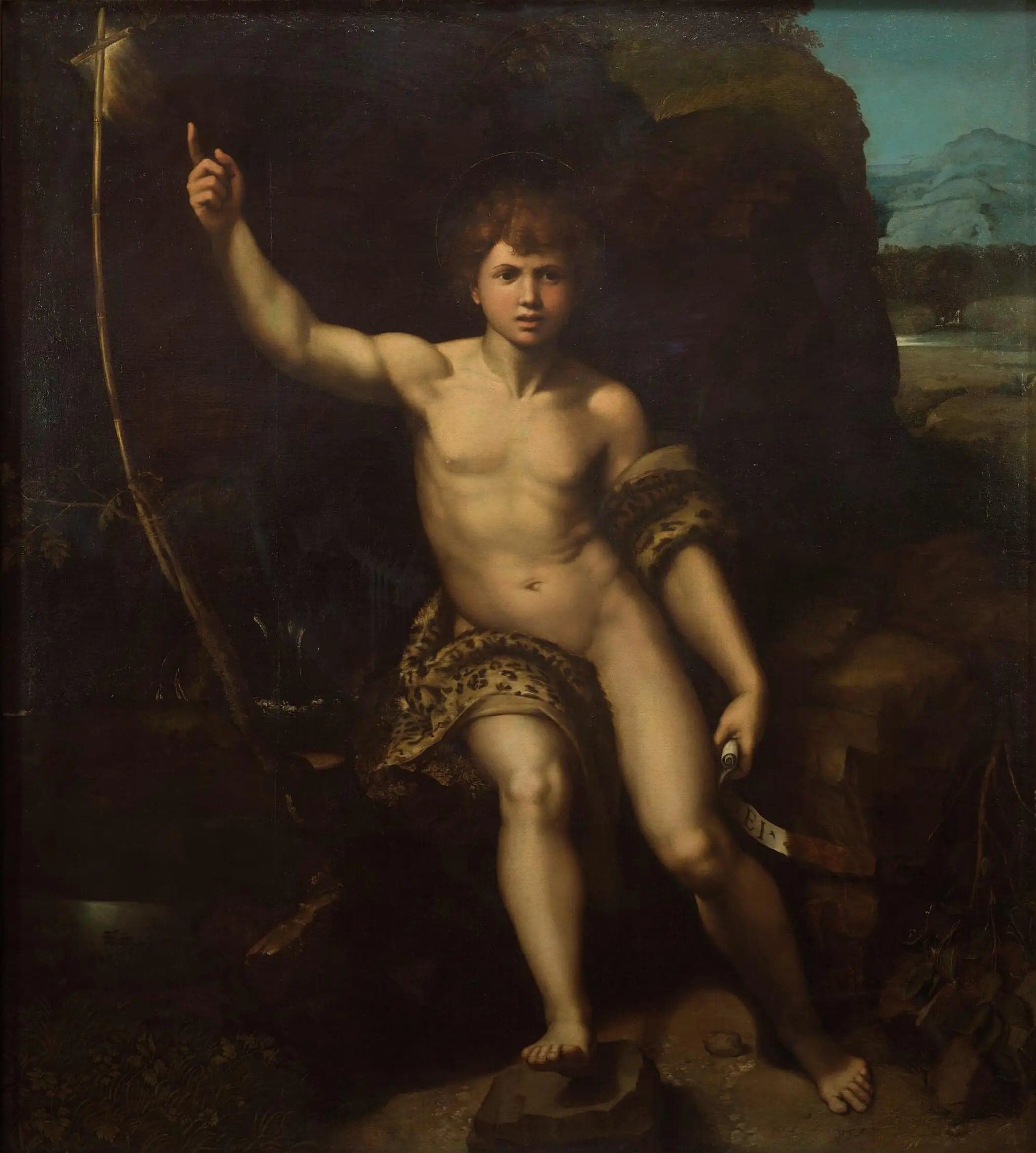
Saint John the Baptist
- Original dimensions
- 147 x 165 cm
- Movement
- High Renaissance
- Museum
- Uffizi Gallery
- Year
- 1518
Scene depicted
The painting "Saint John the Baptist" captures the iconic figure of the saint, both prophet and precursor. Represented in a moment of contemplation, he embodies the fusion of spirituality and nature, contemplating the wonders of his divine mission, a scene imbued with mystery and simplicity.
Historical context
Created in 1518 in Florence, this painting is at the heart of the High Renaissance , a movement that combines artistic innovation with a deep respect for traditions. The canvas is currently housed in the Uffizi Gallery, an illustrious museum of the city, where eras and masterpieces intersect.
Place in the artist's career
This canvas marks a pinnacle in Raphael's career, symbolizing his mature style. Compare it to "The Sistine Madonna" and "The Miraculous Draught of Fishes," where one can see an evolution in texture and the use of light, affirming his creative genius.
Anecdote
It is said that Raphael , one spring morning, was inspired by a sweet fragrance of flowers in a Florentine garden. He reportedly said: "True beauty reveals itself when light caresses a sincere face." This quote resonates in every brushstroke of the painting depicting Saint John the Baptist, vibrant with humanity.