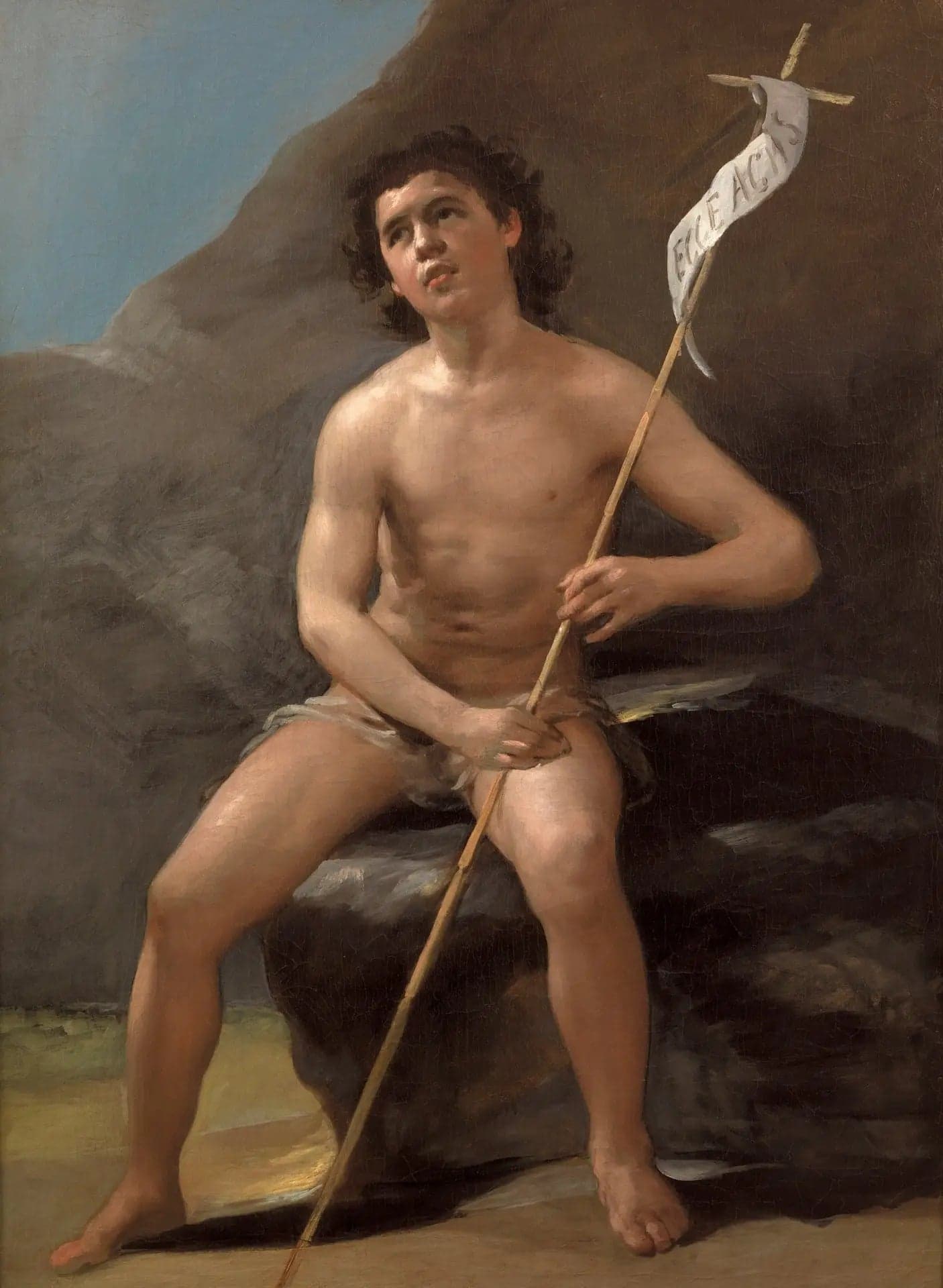
Saint John the Baptist in the Desert
- Original dimensions
- 82 x 112 cm
- Museum
- Museo del Prado
- Year
- 1810
Scene depicted
In this powerful work, Goya depicts Saint John the Baptist, dressed in animal skins, in deep meditation. He is surrounded by wild nature, evoking both the solitude essential to divine revelation and the frugality of ascetic life. The gestures of the saint, imbued with wisdom, carry an eternal message, connecting heaven to earth through a vibrating silence. This composition is a poignant celebration of faith and isolation.
Historical context
This painting emblematic was created in 1810, in the heart of Madrid, vibrant capital of Spain. It belongs to the romantic movement, marked by inner reflections and rich symbolism . At that time, the painting captured the spiritual struggle and the quest of man in the face of both earthly and divine forces. Today, this canvas magnificent is preserved in the Museo del Prado, a high place of European culture.
Place in the artist's career
Saint Jean-Baptiste au désert represents a pivotal moment in Goya's career. It is a synthesis of his innovative style, and a deep emotional depth emerges. Compared to his earlier works like La Maja Desnuda and his later canvases like Les Désastres de la Guerre, this painting illustrates the rise of an artist in search of spiritual essence.
Anecdote
Goya is said to have once stated: "Painting is the reflection of the soul, a window to the invisible." Imagine him, alone in his studio, one spring morning, observing the light filtering through the curtains. This moment of inspiration would become the breath of his masterpiece , Saint Jean-Baptiste au désert, where solitude and contemplation meet.