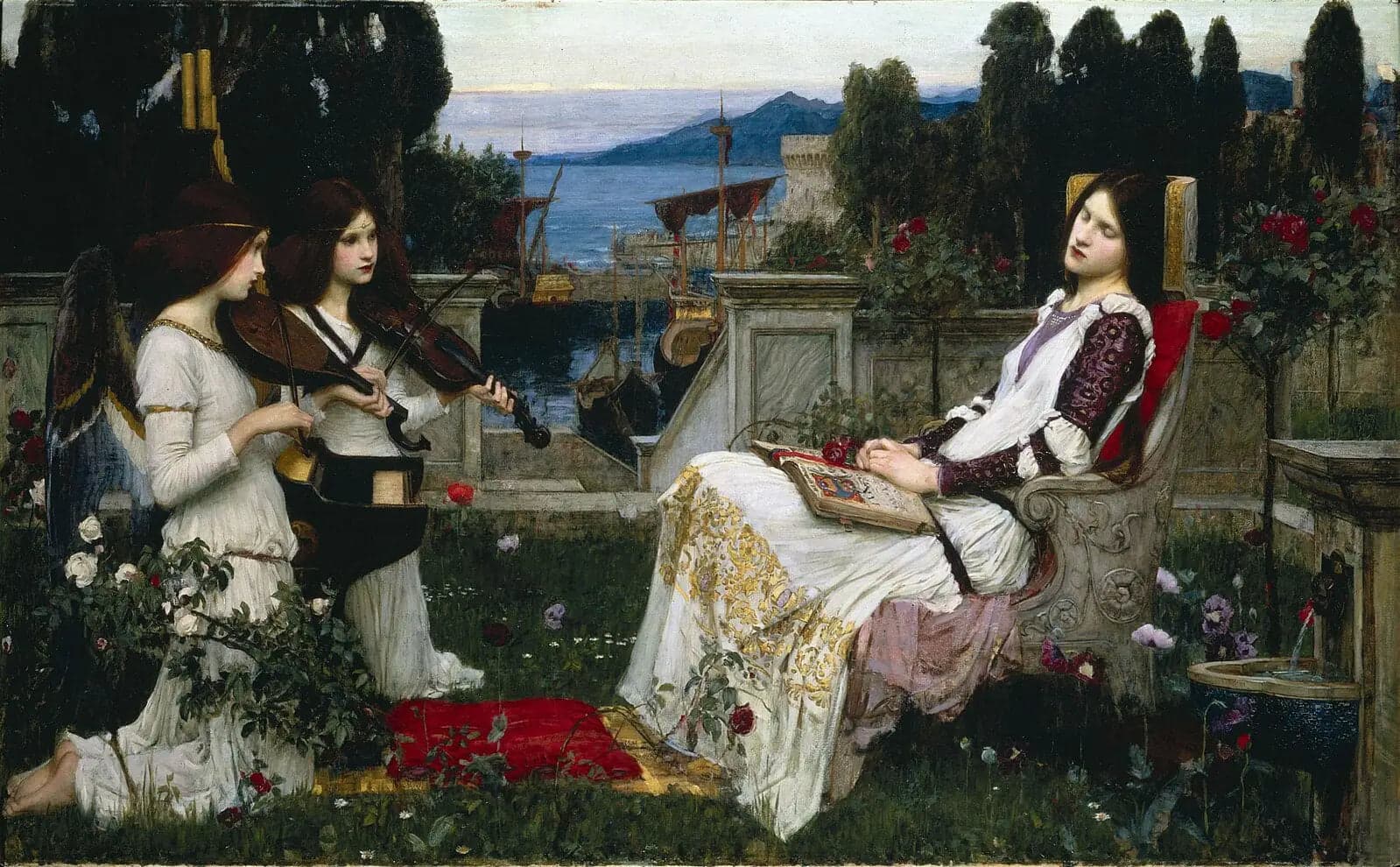
Saint Cecilia
Scene depicted
The painting “Saint Cecilia” illustrates the magical moment when the saint, surrounded by a luminous aura, plays the organ. The composition presents a scene imbued with spirituality and melody, capturing the very essence of divine music. The details of her expression and the delicacy of her gestures convey the passion that animates her in her devotion.
Historical context
Created in 1895 in London, this painting is emblematic of the aesthetic movement of Pre-Raphaelitism. This movement, rooted in a desire to return to the artistic and spiritual values of the old masters, flourished at the end of the 19th century. The canvas original is preserved in the collection of the Manchester Museum, perfectly sized at 123 x 153 cm, capturing the vibrant essence of the era.
Place in the artist's career
“Saint Cecilia” stands at a crossroads in Waterhouse's career. After notable successes like “The Woman with the Lily” and “The Invitation to the Dance,” this painting marks a stylistic peak, revealing a mastery of light play and increased emotional depth. The common thread of the artist's evolution lies in the intensity of emotions conveyed on the canvas , where each work foreshadows the next, testifying to a perpetual quest for beauty.
Anecdote
“Beauty is the echo of memories and dreams.” This quote could summarize the soul of the artist. Waterhouse found his inspiration one April morning, as he wandered through a pristine garden, enveloped by the sweet scent of flowers and distant birdsong. It was in this suspended moment that the magic of the painting we know today was forged.