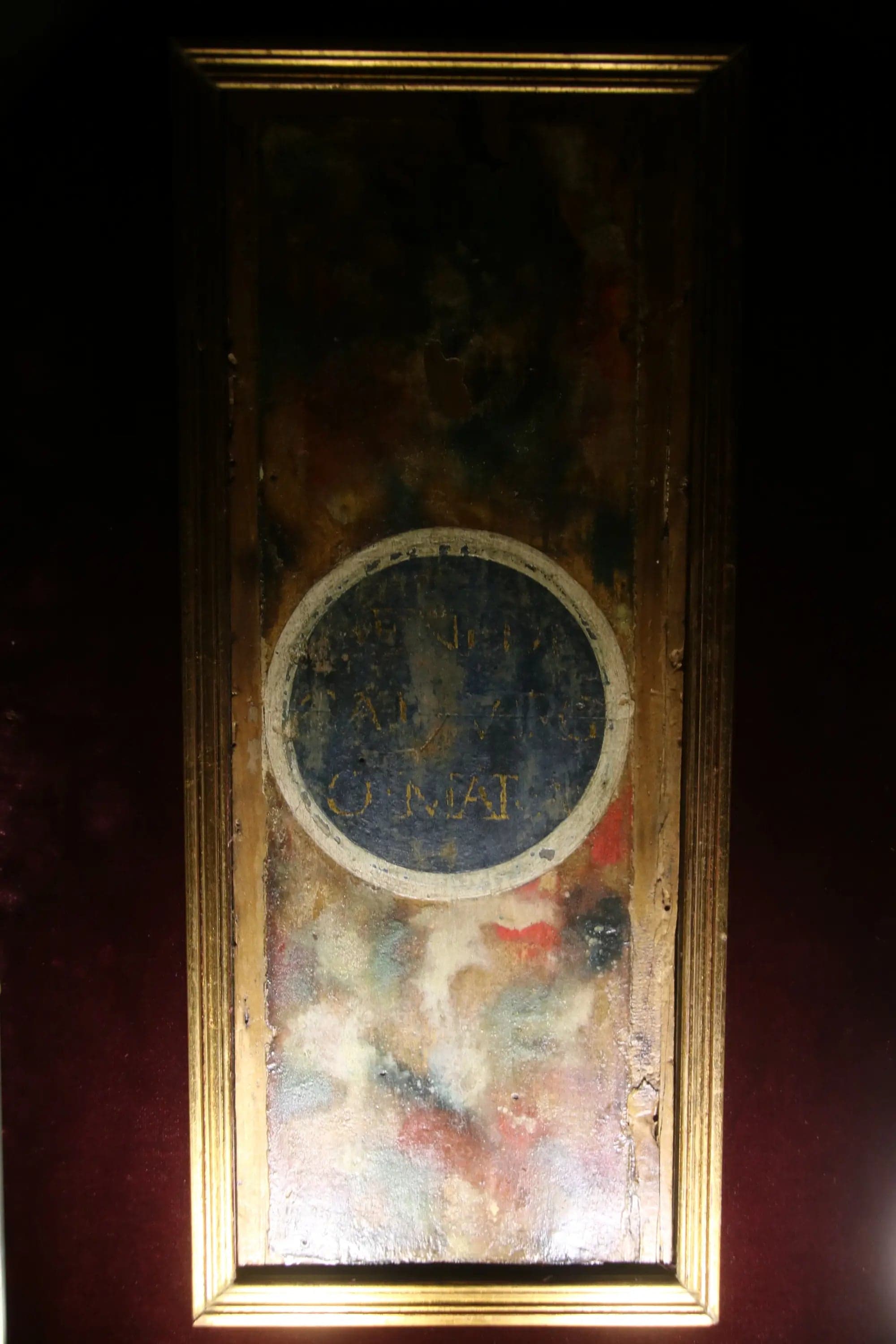
Saint Catherine of Alexandria
- Original dimensions
- 15 x 39 cm
- Museum
- Galleria Nazionale delle Marche
- Year
- 1502
Scene depicted
The painting depicts Saint Catherine, an emblematic figure of Christianity, dressed in her royal attire, emerging from the dark background, illuminated by an angelic glow. The work reveals the tension between the earthly world and the divine, illustrating Catherine's silent pride in the face of her tragic fate, thus magnifying her message of faith and courage.
Historical context
Created in 1502, the painting “Sainte Catherine d'Alexandrie” finds its origin in the splendid city of Urbino, region of Marche in Italy. It is part of the artistic movement of the Renaissance , a time when humanism and art merge to explore the essence of humanity. Today, this canvas is carefully preserved at the Galleria Nazionale delle Marche, a true fortress of artistic treasures, where it continues to fascinate those who lose themselves in front of its finesse and depth.
Place in the artist's career
“Sainte Catherine d'Alexandrie” represents an emblematic milestone in Raphael's career, a turning point towards stylistic maturity. In parallel with the canvas “The Sistine Madonna” and “The Virgin with the Long Neck,” one notices the evolution of his approach to composition and the representation of human emotion. This masterpiece testifies to a growing technical control and emotional depth that will be significant in his future creations.
Anecdote
Raphael, contemplating the soft light of a spring morning, once said: “Light is the mother of all colors,” a thought that resonates powerfully in this pictorial work . It was in a quiet alley of Urbino that he drew his inspiration, capturing the breath of life in a gaze, an expression that vibrates the soul of the canvas .