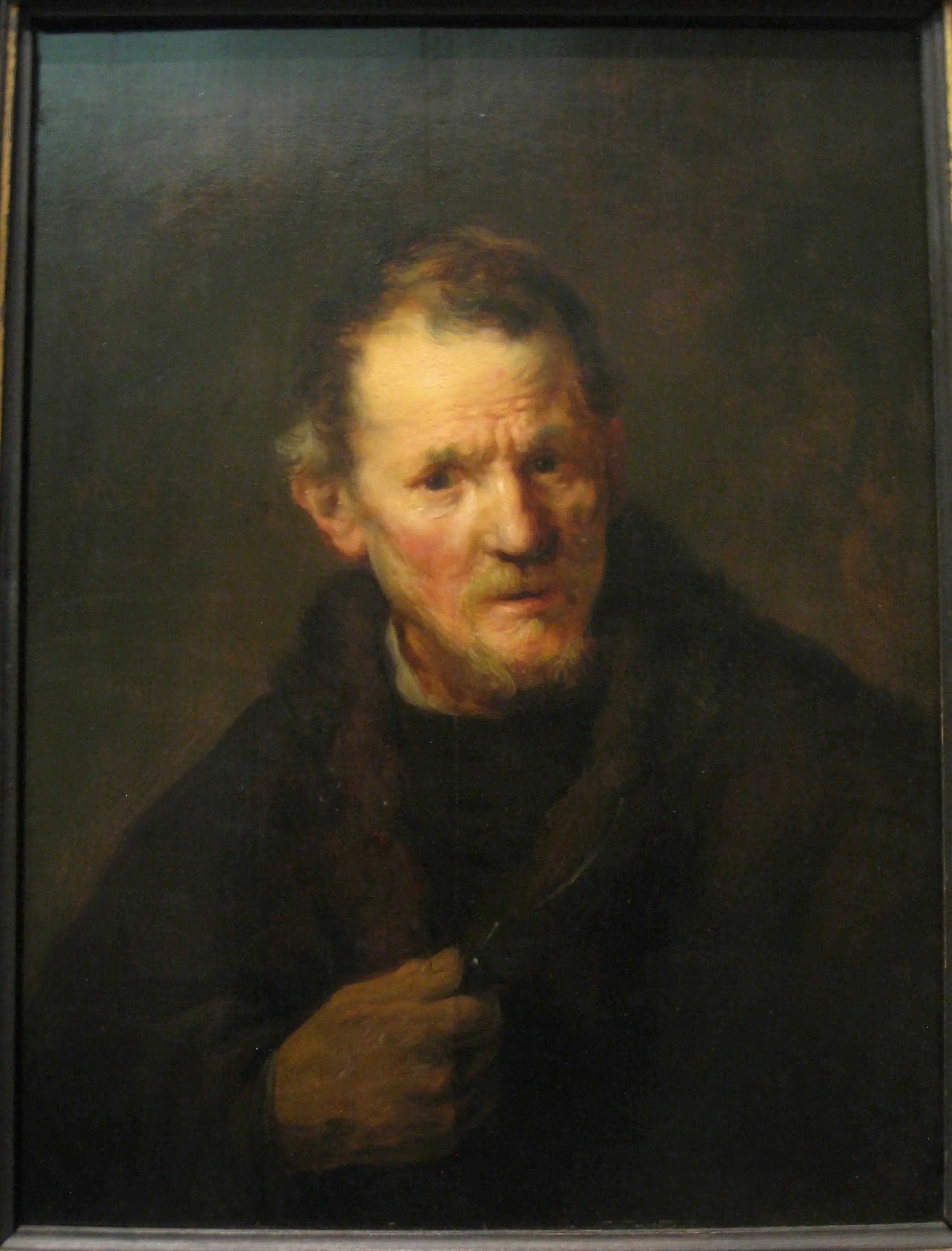
Saint Barthélemy
- Original dimensions
- 756 x 867 cm
- Museum
- J. Paul Getty Museum
- Year
- 1661
Scene depicted
"Saint-Barthélemy" is a powerful painting where the saint is depicted in a moment of contemplation before his martyrdom, embodying human suffering and resilience. This canvas conveys contradictory emotions, challenging the viewer to dive beyond the surfaces to grasp the depth of the human experience.
Historical context
The painting "Saint-Barthélemy" was created in 1661, while Rembrandt , the undisputed master of baroque , was establishing himself in Amsterdam, a city vibrant with artistic and commercial innovation. This canvas belongs to the movement of Dutch realism , interwoven with lights and shadows. Currently exhibited at the J. Paul Getty Museum in California, this iconic painting , with its imposing dimensions, testifies to the artist's skill and deep understanding of light.
Place in the artist's career
This painting is at the heart of Rembrandt's career, during his period of artistic maturity, where his style evolves towards greater introspection and complexity. It can be juxtaposed with other masterpieces of this era, such as "The Night Watch" and "The Anatomy Lesson of Dr. Tulp," thus showing his journey towards heightened sensitivity.
Anecdote
"An image is not limited to what the eye perceives; it reveals the soul of its subject." Such could be the words of Rembrandt , reflecting on this pictorial work at the dawn of a golden spring morning in his studio. This moment of inspiration reveals all the passion that fuels each brushstroke of this painting .
Major exhibitions
Late Rembrandt