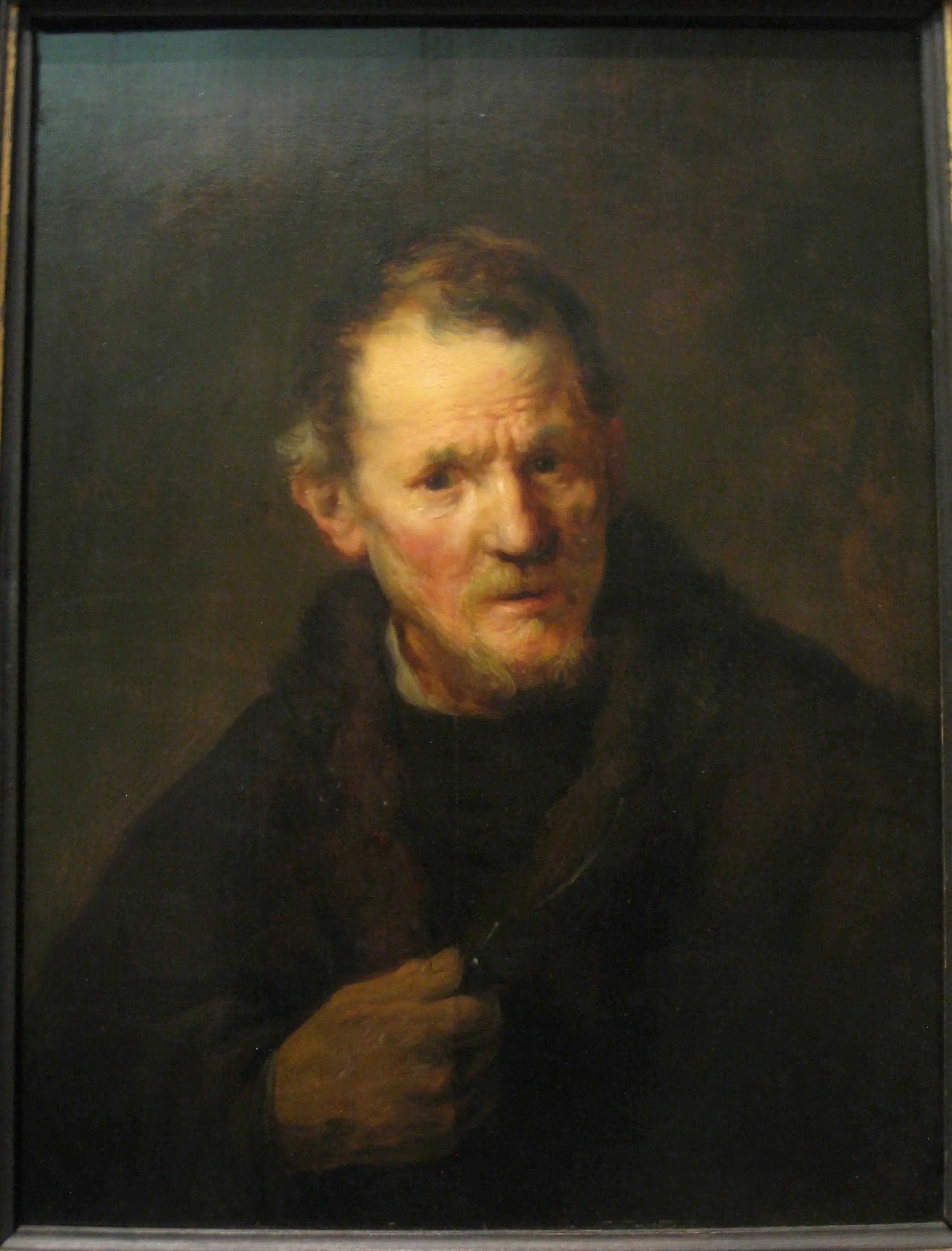
Saint Barthélemy
- Original dimensions
- 99.7 x 122.7 cm
- Museum
- Timken Museum of Art
- Year
- 1657
Scene depicted
The canvas “Saint-Barthélemy” presents a poignant representation of the patron saint, a man of faith, bearing his strong symbol, a cross and a book. The scene unfolds in a spiritual and symbolic context, revealing the intensity of the divine light that seems to emanate from him. Every detail, from his concentrated expression to the texture of his robe, tells a story of devotion and sacrifice, inviting the viewer to deep contemplation.
Historical context
Created in 1657, this majestic canvas is located in the artistic heart of Amsterdam, then bubbling with ideas and innovative currents. Saint-Barthélemy, a masterpiece of the baroque movement, embodies the pinnacle of Rembrandt 's art during a period when light, contrast, and realism reach new heights. This painting, full of emotional depth, is today preserved at the Timken Museum of Art, where it continues to dazzle visitors with its imposing dimensions.
Place in the artist's career
“Saint-Barthélemy” fits into the artistic maturity of Rembrandt , just before his final period, where he masters the play of shadows and lights to perfection. Compared to works such as “The Night Watch” and “Self-Portrait at Age 63,” this painting reflects a significant stylistic evolution, where raw emotion contrasts with impeccable technique.
Anecdote
“Light is the guide of the soul,” said Rembrandt . That morning, illuminated by the clarity of a gentle sun, he imagines the perfect moment to capture the fleeting grace of his model, Saint-Barthélemy. The colors, the textures, each brushstroke reflects the sense of wonder that this scene inspired in him. The emotion of this moment resonates through the composition of the painting.
Major exhibitions
Late Rembrandt