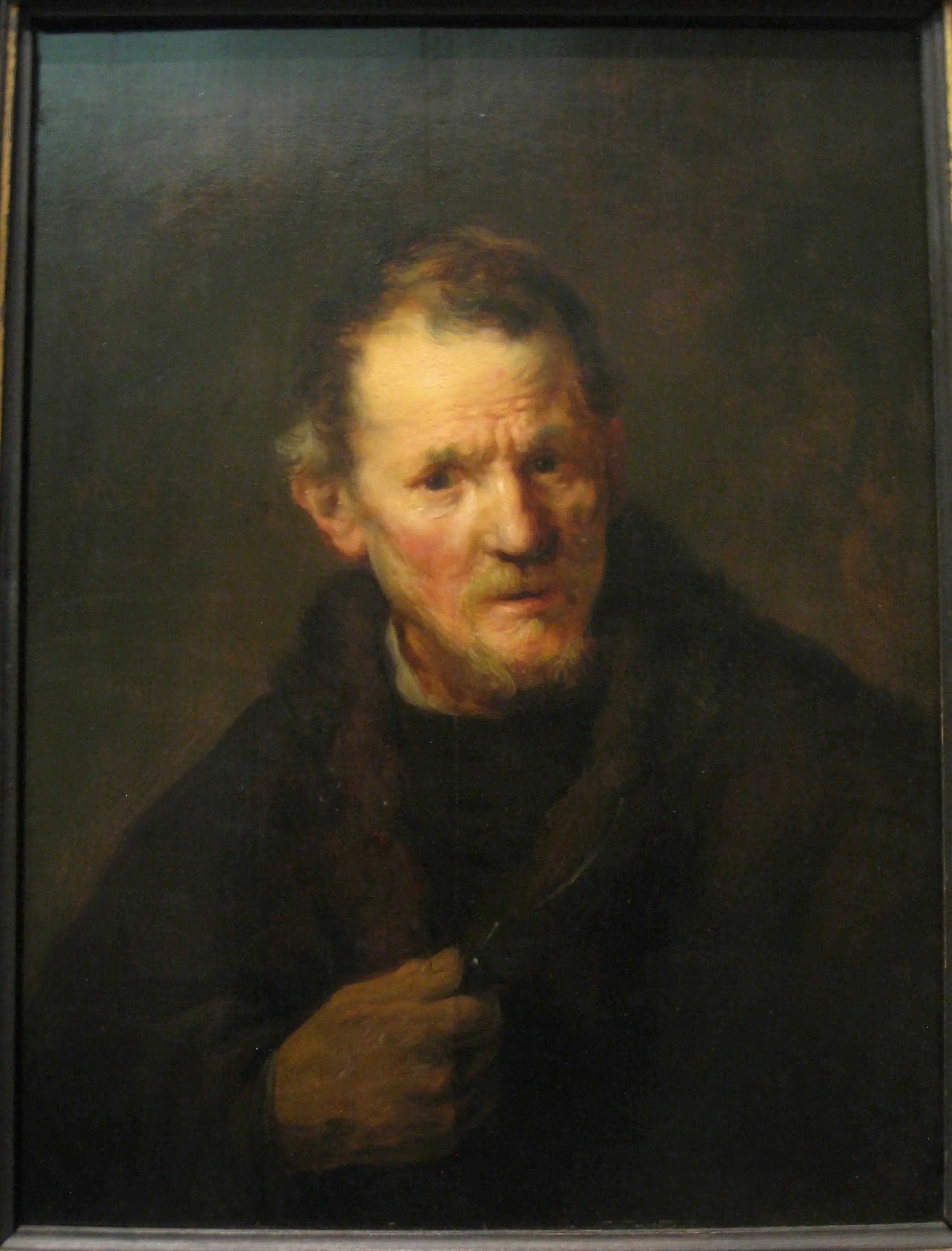
Saint Barthélemy
- Original dimensions
- 47.6 x 63.3 cm
- Museum
- Worcester Art Museum
- Year
- 1633
Scene depicted
In his painting, Rembrandt depicts Saint Barthélemy, one of the apostles, in a moment of deep contemplation. The work immerses us in a scene rich in religiosity and humanity, where the apostle seems to embrace the sufferings of the world with poignant serenity. The finesse of the features and the texture of the painting remind us of the depth of human emotions, inviting each viewer to introspection.
Historical context
Created in 1633, this painting is emblematic of a time when baroque art flourished throughout Europe, particularly in Amsterdam, a vibrant heart of culture and artistic innovation. This masterpiece is now housed at the Worcester Art Museum , reflecting the importance of the canvas in the evolution of the baroque movement. Every nuance of the composition embodies the richness of an era, a time when Rembrandt redefined the dimensions of light and shadow.
Place in the artist's career
This painting illustrates a central period in Rembrandt's career, a moment when his style evolved towards a more martial mastery of light. Compared to other works like “The Anatomy Lesson of Dr. Tulp” and “The Night Watch,” Saint Barthélemy stands out for its understated simplicity yet rich in details and emotions. This masterpiece testifies to an unmatched artistic maturity.
Anecdote
“Light is the soul of every painting .” This imaginary quote resonates like an echo from the moment when Rembrandt painted his canvas. Inspired by the softness of an autumn morning and the glow of a bustling alley, the artist captured a fleeting moment. This moment was directly influenced by the historical and spiritual atmosphere of his time, giving the canvas an unparalleled emotional depth.