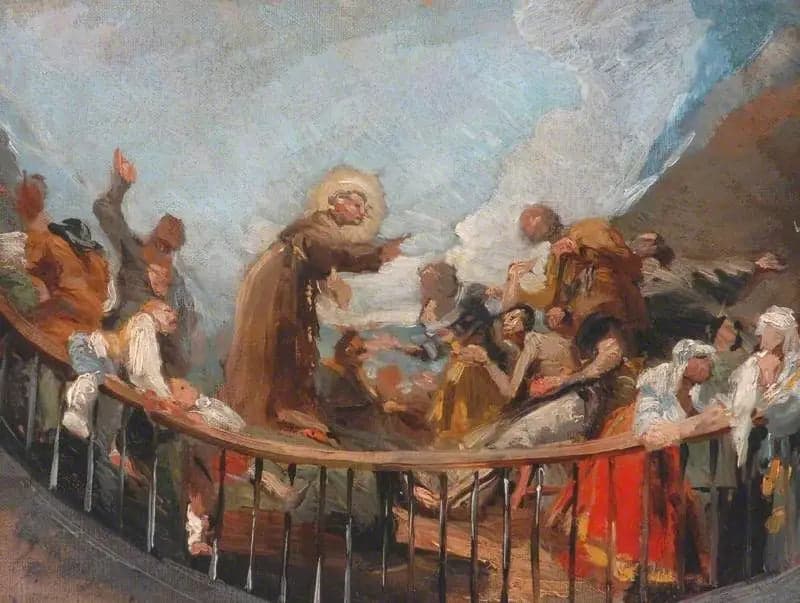
Saint Anthony Resurrecting a Dead Man
- Original dimensions
- 33 x 25.5 cm
- Museum
- Bowes Museum
Scene depicted
This canvas depicts the poignant moment when Saint Anthony, touched by the pain of those mourning a loved one, feels the call of divinity and undertakes to exercise his power of resurrection. Through a dramatic staging, Goya captures the intensity of human emotion, blending fear with hope. The composition unfolds against a dark background, where light illuminates the benevolent face of the saint, offering a vision that is both real and miraculous.
Historical context
Created at the turn of the 19th century, specifically in 1780 in Madrid, this painting is emblematic of the works marking the transition from Rococo to Romanticism . Francisco de Goya , an iconic figure of the period, demonstrates in this canvas the full power of art in the service of human emotions. Currently exhibited at the Bowes Museum in Yorkshire, this masterpiece stands out for its compact dimensions, but also for the richness of its visual impact.
Place in the artist's career
“Saint Anthony Resurrecting a Dead Man” is a centerpiece of Goya's career, symbolizing a major stylistic transition. Positioned at a crossroads, it follows works such as “La Maja Desnuda” and precedes “The Disasters of War,” illustrating a journey from beauty to confrontation with reality. This passage illustrates his growing mastery of light and movement, creating a direct emotional link with the viewer.
Anecdote
“I paint not only with my hands, but with my soul.” This quote resonates deeply when one immerses themselves in Goya's canvas . The artist, inspired one foggy autumn morning, encountered tragedy and hope while observing human misery. His imagination then guided him to this scene imbued with mystery, revealing how the pictorial work can transcend reality.