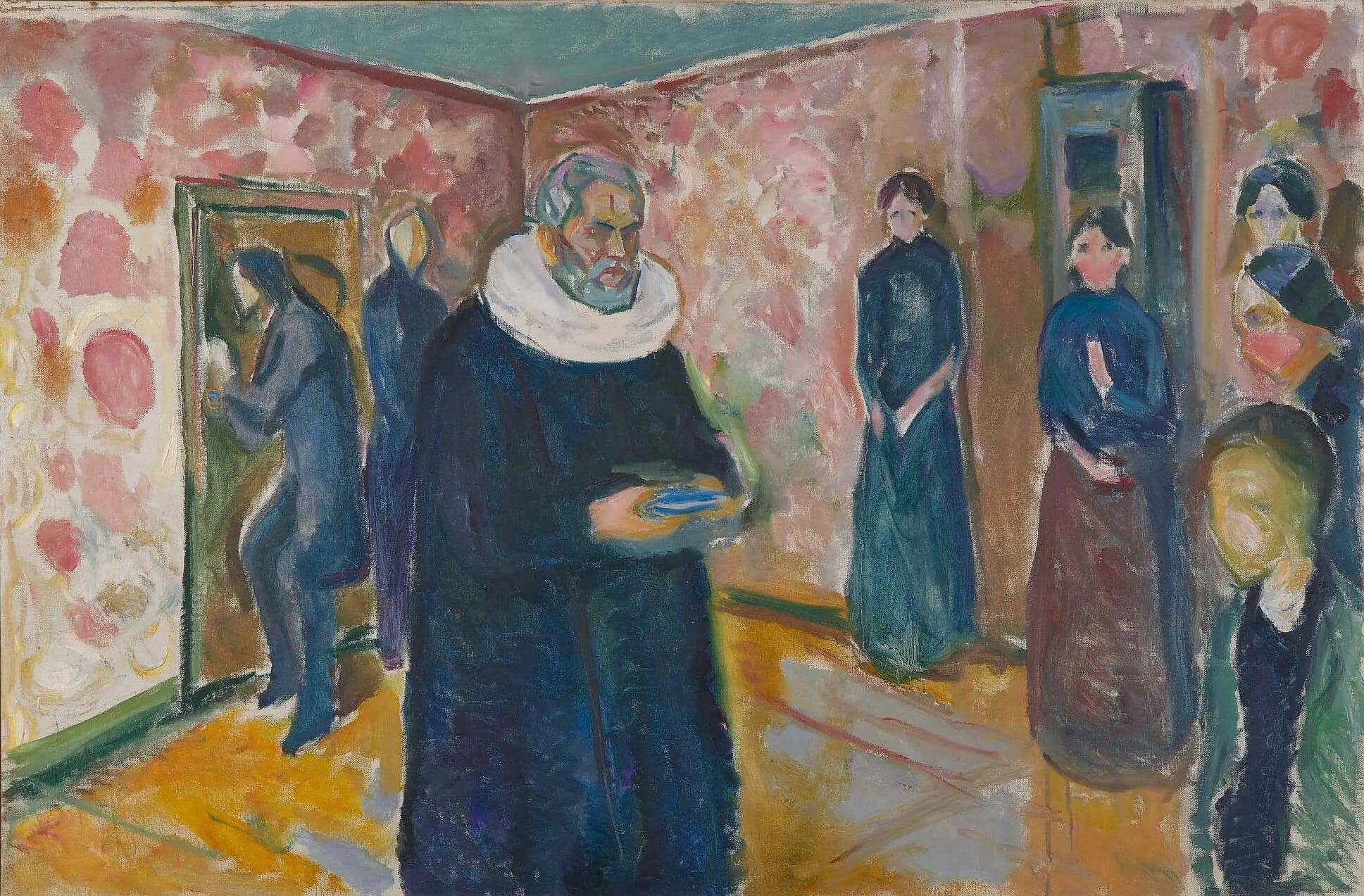
Sacrament
- Original dimensions
- 180.5 x 120 cm
- Museum
- Munch Museum
- Year
- 1915
Scene depicted
The scene depicted in Sacrament represents a moment of spiritual communion, a celebration of life and death. Munch, through his vibrant colors and expressive forms, evokes the tension between the sacred and humanity. The figures appear elevated and spiritual, harmoniously blending with the shades of the canvas , creating a captivating atmosphere that leads the viewer into a deep reflection on the meaning of existence.
Historical context
Created in 1915, amidst the turmoil of the early 20th century, the painting by Edvard Munch , Sacrament, stands out in the vibrant city of Oslo, Norway. This iconic work is part of the expressionist movement, which explores human passions and the torments of the soul. Currently exhibited at the Munch Museum, this canvas is impressive, measuring 180.5 by 120 centimeters, and continues to awaken the senses and provoke deep reflection.
Place in the artist's career
Sacrament is part of a period of artistic maturity for Munch, alongside his famous works such as The Scream and The Madonna. This canvas represents a stylistic turning point where the artist begins to transcend realism , expressing the inner world with unparalleled emotional intensity. While navigating between light and shadow, Munch manages to capture the turmoil and beauty of human existence.
Anecdote
“I have always sought to resonate emotions through my canvases, to capture the invisible.” These words from Munch resonate powerfully when thinking about the genesis of Sacrament. Imagine a spring morning, where the artist observes an intimate ceremony, the faces marked by the golden light of the sun filtering through the leaves. This original emotion adorns the masterpiece with a unique aura, making this painting a true dive into the human soul.