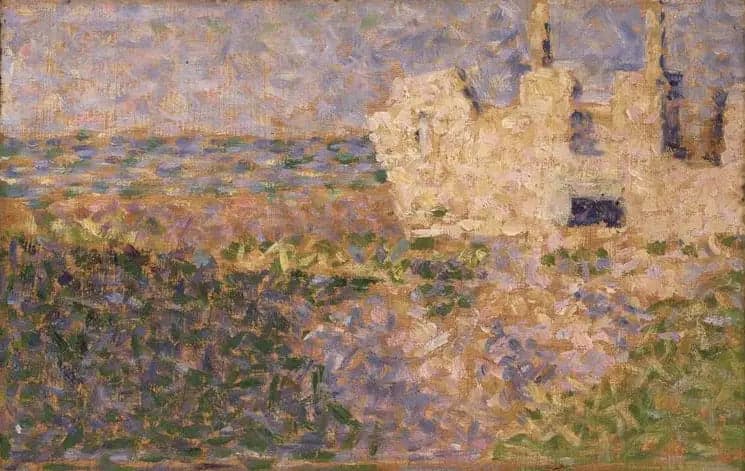
Ruins at Grandcamp
- Original dimensions
- 25 x 15.7 cm
- Museum
- Orsay Museum
- Year
- 1885
Scene depicted
This painting depicts fascinating ruins, witnesses of a bygone past. The painting offers a contemplative view of the Norman landscape, where one feels through the meticulous details the gentle melancholy and ephemeral beauty of nature. The interaction between light and fragile architecture brings this canvas to life, inviting the viewer to introspect on the passage of time.
Historical context
Created in 1885, the painting "Ruins at Grandcamp" is part of the neo- impressionist movement. This iconic painting is the result of a period when Georges Seurat passionately explored the interplay of light and color. Located in Grandcamp, a peaceful haven in Normandy, this canvas evokes a unique artistic meeting point, now displayed at the prestigious Orsay Museum in Paris, where its timeless charm continues to captivate visitors.
Place in the artist's career
"Ruins at Grandcamp" represents a crucial step in Seurat's career. Situated between his promising beginnings and his major works such as "A Sunday Afternoon on the Island of La Grande Jatte" or "The Circus," this painting illustrates his stylistic quest, marrying pointillism and harmonious composition, and reveals the evolution of his gaze on light and color.
Anecdote
"Nature is the master, and our only duty is to listen to it." This quote reflects the inspiration that guided Seurat during the creation of his masterpiece . Imagine him wandering through the streets of Grandcamp, absorbing the harmony of light and the whispers of the wind, one spring morning when every moment was a painting in itself.