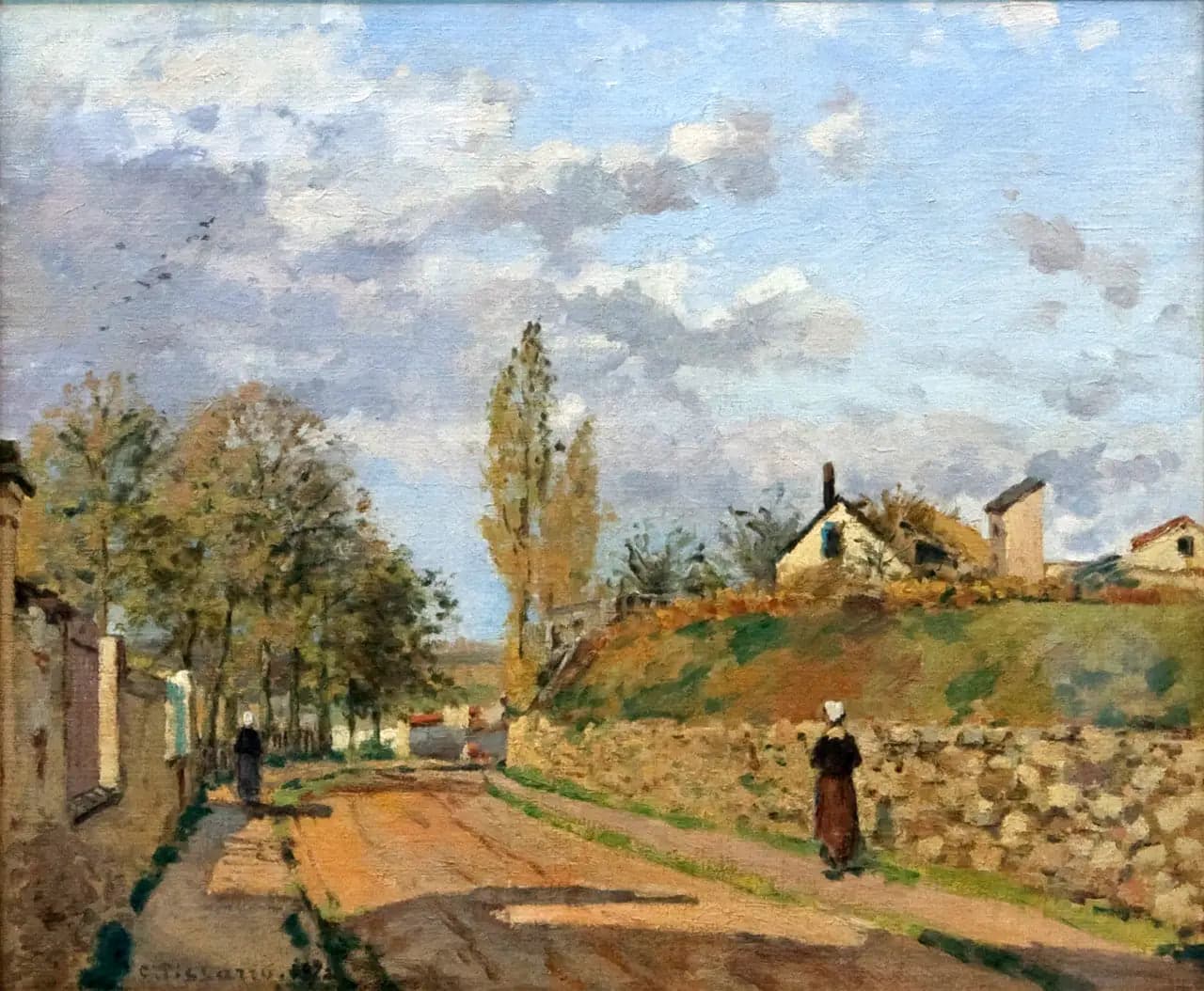
Rue de Beaujour, Pontoise
- Original dimensions
- 55.9 x 45.7 cm
- Museum
- Carnegie Museum of Art
- Year
- 1872
Scene depicted
The scene painted by Pissarro offers us a soothing vision of an ordinary street where life flows serenely. The buildings, bathed in filtered light, seem to come alive under the artist's brushstroke. Figures move about, bringing a touch of life to this canvas , illustrating the harmony between humans and their environment. This enriching composition echoes the social concerns of the time while celebrating the beauty of modernity.
Historical context
Created in 1872, the painting "Rue de Beaujour, Pontoise" brilliantly represents the beginnings of the Impressionist movement. In a vibrant artistic atmosphere, in Pontoise, a charming town in Val-d'Oise, Camille Pissarro captures the essence of a fleeting moment in daily life. This iconic canvas is currently housed at the Carnegie Museum of Art , providing a valuable glimpse into the artistic landscape of the 19th century.
Place in the artist's career
This canvas marks a significant milestone in Pissarro's career, placing it at the heart of his Impressionist period. Compared to other works, such as "The Gardens of the Impressionist " and "The Place du Théâtre Français," it demonstrates a palpable evolution in the use of color and light, representing undeniable artistic maturity.
Anecdote
“I have always thought that painting is about capturing the soul of a moment, preserving the magic of ephemeral light.” This quote resonates deeply with the genesis of this masterpiece , created on a spring morning, where the gentle whisper of the wind and the fragrance of flowers adorn the peaceful street, witnessing the simple joys of life.