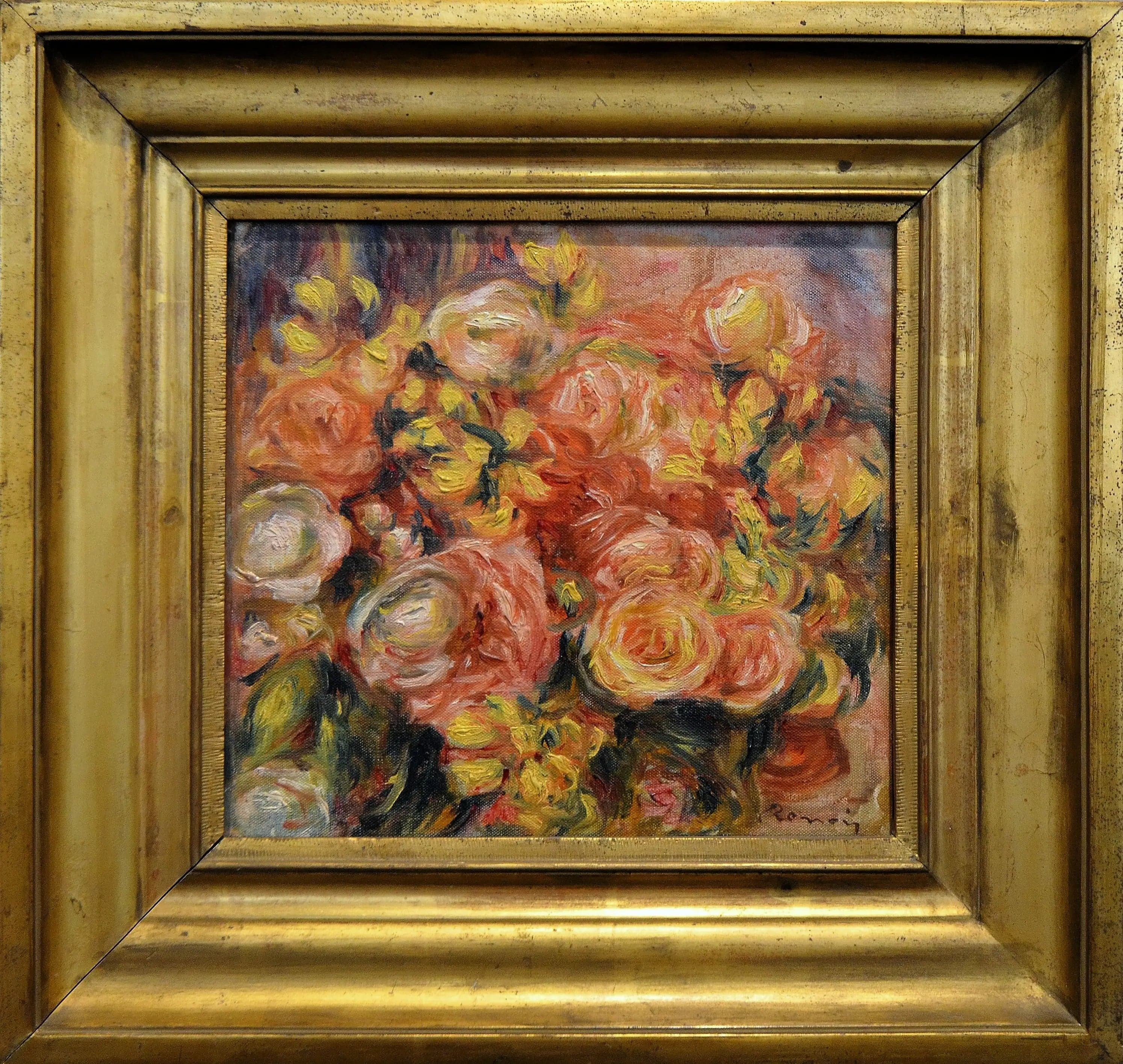
Roses - Pierre
- Original dimensions
- 30 x 27 cm
- Museum
- Museum of Fine Arts and Archaeology of Besançon
- Year
- 1915
Scene depicted
This canvas highlights the delicacy and diversity of roses, playing with natural light to create an almost dreamlike atmosphere. Each brushstroke has been applied with care, allowing the shades of pink to live harmoniously on the canvas, evoking the sweetness of the lush gardens that surrounded Renoir. A floral composition that evokes both the ephemeral beauty of life and the attention the artist paid to every detail.
Historical context
The painting titled Roses was created in 1915, in the beautiful city of Besançon, widely recognized for its artistic wealth. This canvas is part of the Impressionist movement, a trend that transformed the perception of art in the early 20th century. Today, this painting rests in the Museum of Fine Arts and Archaeology of Besançon, testifying to the expression and sensitivity that characterize this era. The dimensions of this work, 30 x 27 cm, give it an intimacy that invites contemplation.
Place in the artist's career
Roses is a striking example of Renoir's mature style, reflecting his artistic evolution over the years. Compared to other masterpieces such as Lunch of the Boating Party and The Bathers , this canvas shows a deepening of his palette and a more refined treatment of light, marking a turning point in his approach to nature and its vibrant colors.
Anecdote
Auguste Renoir once mentioned: "Flowers are silent muses that speak without a word." In this painting , inspiration came to him on a gentle spring morning, where the scent of roses filled the air. These flowers, beautifully captured, convey all the vitality and ephemeral beauty of nature, which any art lover can appreciate.