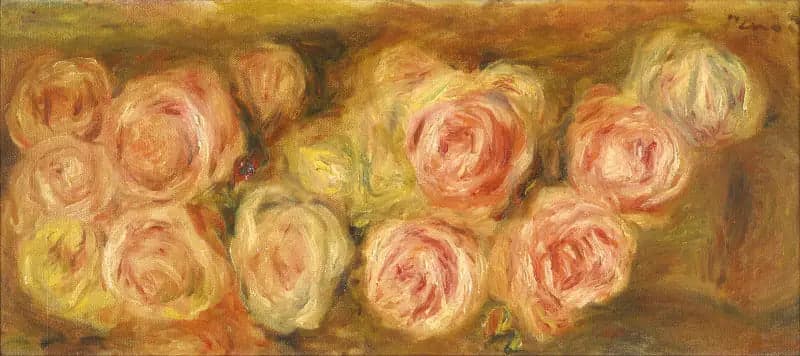
Rose - Pierre
- Original dimensions
- 50.2 x 22.9 cm
- Museum
- National Museum of Western Art
Scene depicted
The painting "Rose" by Renoir captures a subtle interaction between the nuances of nature and the full representation of beauty. The composition evokes the lightness and elegance of roses, where each stroke of paint enchants the eye, transporting the viewer to the heart of a vibrant bloom.
Historical context
Created in 1881, in Paris, this painting is emblematic of the Impressionist movement, which emerged in the heart of France. At that time, the city was in full artistic effervescence and became the center of creativity. The canvas is currently displayed in the prestigious National Museum of Western Art , where it attracts the attention of art enthusiasts from around the world.
Place in the artist's career
This canvas constitutes a pivot in Renoir's career, marking his transition to bolder floral explorations. In parallel, works such as "Luncheon of the Boating Party" and "The Dance at Bougival" illustrate his technical and emotional evolution, a testament to the richness of the Impressionist movement.
Anecdote
“Light, it is what dances, what touches you…”. One spring morning, Renoir found his inspiration in a garden of a thousand colors. Each petal of this canvas evokes floral sensuality and the delicacy of life, connecting its essence to this masterpiece.