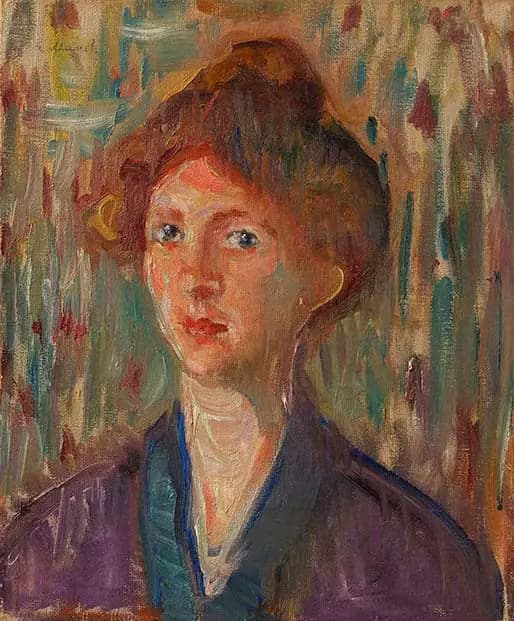
Rosa Meissner
- Original dimensions
- 45.2 x 51 cm
- Museum
- Hiroshima Art Museum
- Year
- 1907
Scene depicted
The painting "Rosa Meissner" depicts a female figure, enveloped in a halo of warm and vibrant colors, embodying the ephemeral beauty of life. Through this composition , Munch explores themes of intimacy, silent suffering, and emotional awakening. The shades and contours intertwine to offer a poignant glimpse into the human soul.
Historical context
Created in 1907, the painting "Rosa Meissner" is at the heart of the expressionist movement, reflecting the emotional turmoil of a changing era. Its creator, Edvard Munch , originally from Norway, drew from pain and passion to shape this iconic pictorial work. Currently exhibited at the Hiroshima Art Museum , this canvas is a window into the innovative artistic thought of its time.
Place in the artist's career
"Rosa Meissner" marks a significant phase in the career of Edvard Munch , illustrating his transition to mature expressionism . It resonates with the famous "The Scream" and "The Madonna," two other iconic paintings that punctuate his artistic journey, reflecting the evolution of his technique and his relationship with emotion.
Anecdote
"I see life not as it is, but as it is lived," Munch once declared, expressing the essence of his artistic approach. By lifting the brush on this canvas , he recalls a fleeting encounter in a blooming garden, where the evening glow revealed buried emotions, and this inspiration gave birth to the evocative power of "Rosa Meissner."