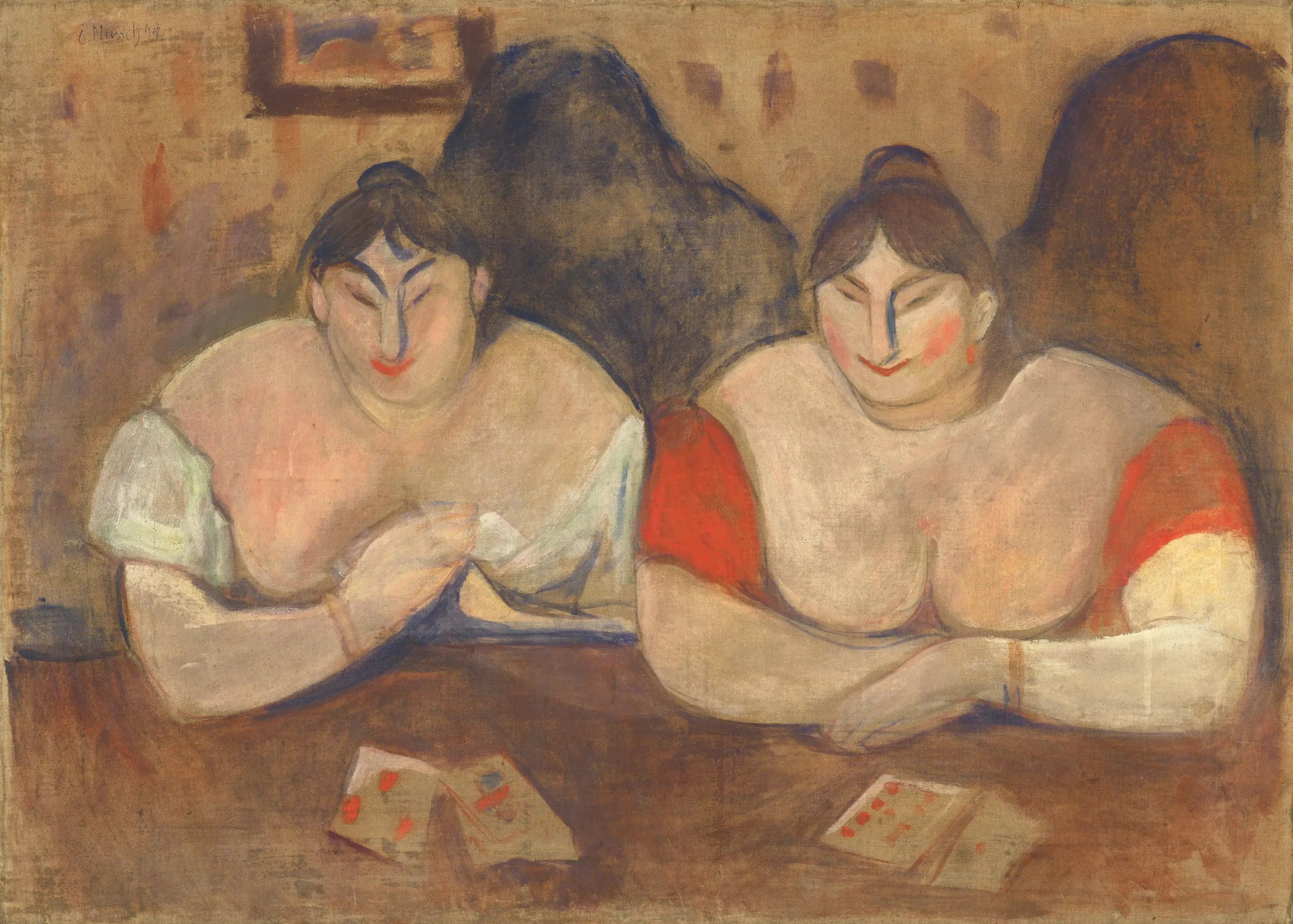
Rosa and Amélie
- Original dimensions
- 109 x 78 cm
- Museum
- Stenersen Museum
- Year
- 1894
Scene depicted
The painting, Rosa and Amélie, depicts a moment of intimacy shared between two women whose faces express palpable melancholy and tenderness. Munch, in his quest to explore feminine identity and the nuances of love, immerses us in a delicate space, between dream and reality, rich in lived emotions. This canvas offers a reflection of the aspirations and disillusionments we all face.
Historical context
Created in 1894, this painting embodies the rich symbolist movement, a product of an era where the quest for inner life and the human spirit was at its peak. Located in Oslo, this work is now housed in the Stenersen Museum, where it attracts art lovers in search of meaning and emotion. With its dimensions of 109 x 78 cm, this canvas stands as a monument to the complexity of human relationships.
Place in the artist's career
Rosa and Amélie represents a pivotal time in Munch's career as he explores themes of human psychology. Unlike his famous painting “The Scream” and his work “The Dance of Life,” this painting reveals a softness and emotional depth, reflecting his growing artistic maturity.
Anecdote
“Every face I encounter is a story, a tragedy.” These words from Edvard Munch resonate like the echo of his creative process. It was in a peaceful alley, bathed in soft light, that he drew inspiration to bring this masterpiece to life. The raw emotion of the protagonists, Rosa and Amélie, weaves into the painting , capturing the essence of a fleeting yet eternal moment.
Major exhibitions
Kan hende er det vakkert. Kunstsamleren Rolf Stenersen