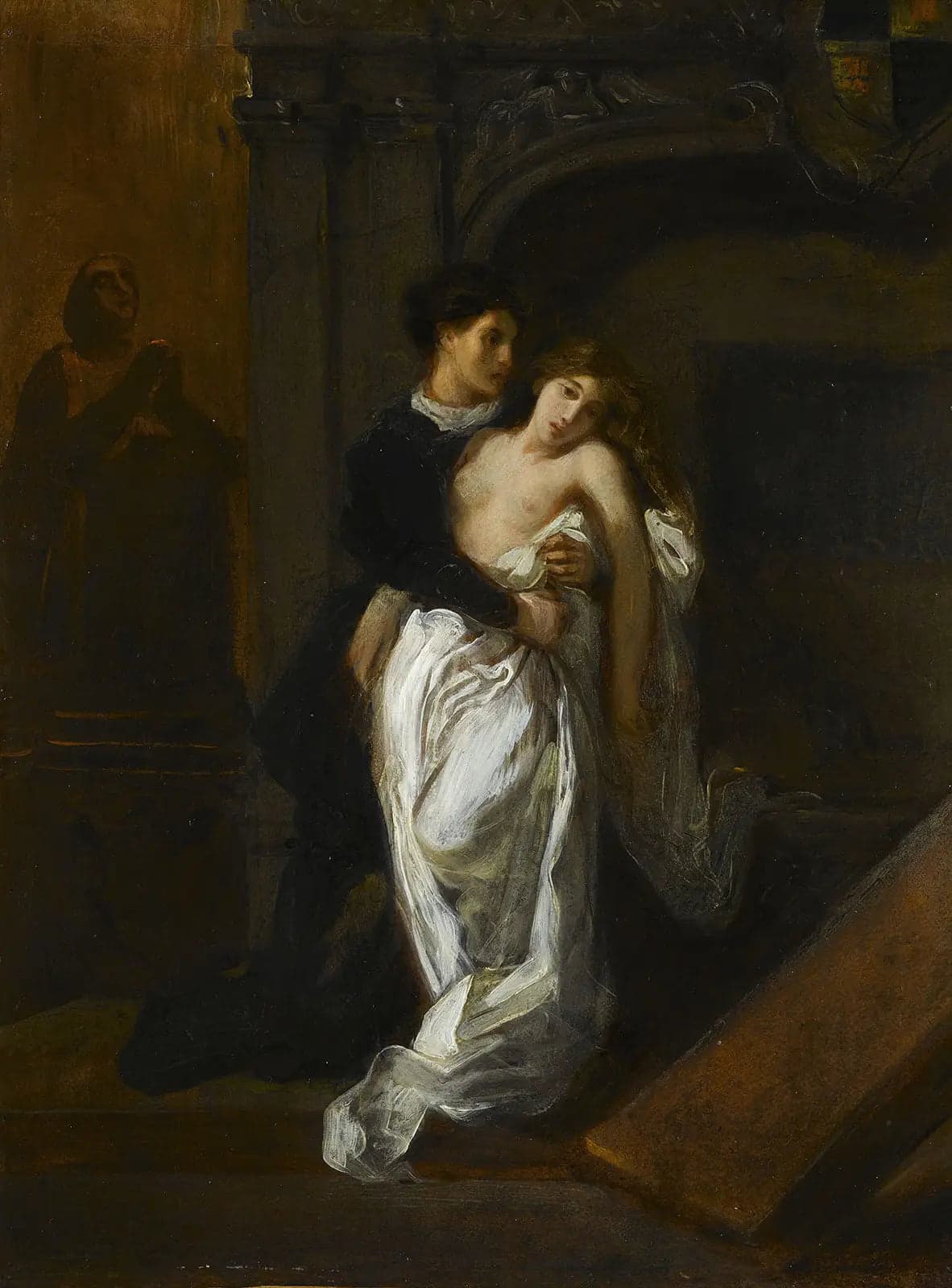
Romeo and Juliet at the Tomb of the Capulets
- Original dimensions
- 26.5 x 35.2 cm
- Museum
- national museum Eugène-Delacroix
- Year
- 1850
Scene depicted
In this painting , Delacroix captures the poignant moment where Romeo, overwhelmed by despair, mourns over Juliet's remains. The composition is a ballet of emotions, where light and shadow intertwine to evoke tragedy and eternal love. The characters, enveloped in an atmosphere heavy with sorrow, testify to the devastating passion that transcends time and space.
Historical context
Artwork: Romeo and Juliet at the Capulet's Tomb |BRK| Artist: Eugène Delacroix |BRK| Year: 1850 |BRK| Museum: national museum Eugène-Delacroix |BRK| Dimensions: 26.5 x 35.2 cm |BRK|
Place in the artist's career
This painting , although one of Delacroix's jewels, fits into a period of creative maturity for the artist. It can be compared to his two other masterpieces, “Liberty Leading the People” and “The Massacre at Chios ,” which also illustrate his talent for blending raw emotion with refined technique, thus demonstrating the evolution of his style, from passion to a more intellectual approach to art.
Anecdote
Delacroix once declared: “Color is my faith, my light.” Imagine him, inspired by a misty morning, wandering through the streets of Paris, when the vision of a tragic love story appeared to him like a bright star among the shadows. This moment, imbued with poetry, gave life to the iconic painting that is “Romeo and Juliet at the Capulet's Tomb.” The strength of the emotions emanating from this pictorial work remains palpable through its brushstrokes.