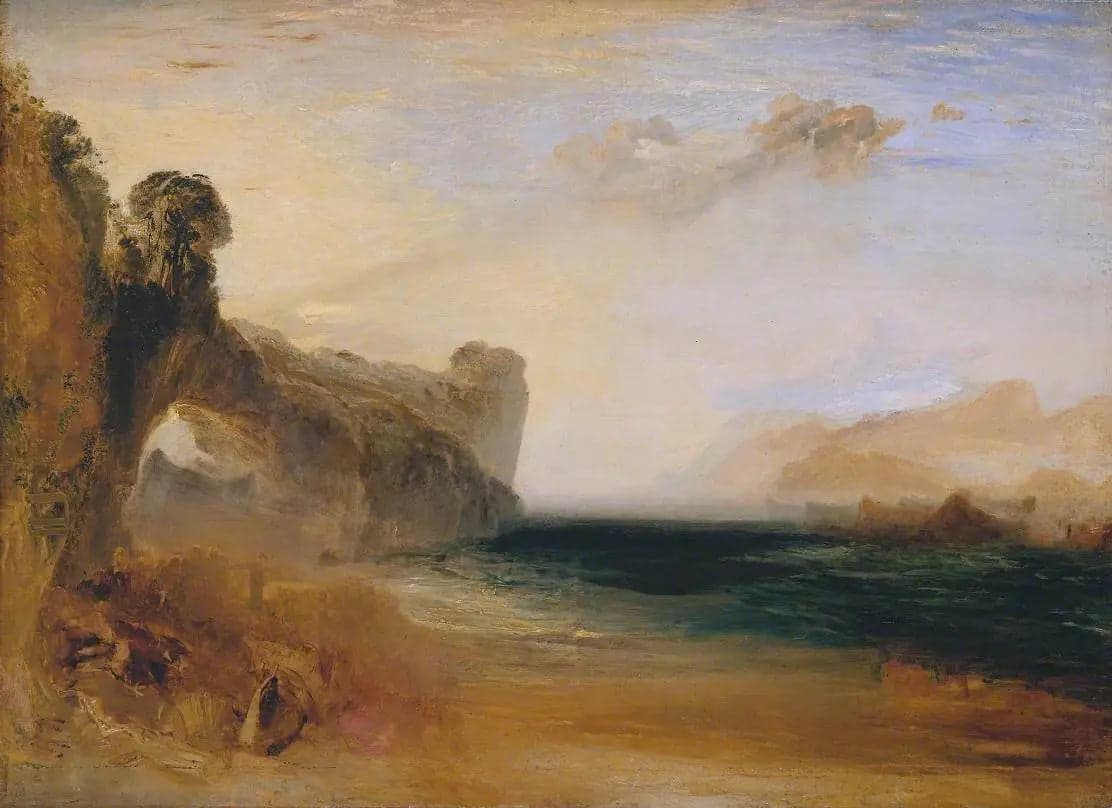
Rocky Bay with Figures
- Original dimensions
- 90.2 x 123.2 cm
- Museum
- Tate
- Year
- 1828
Scene depicted
The painting "Rocky Bay with Figures - J. M. W. Turner" immerses us in a seascape where human figures blend with a breathtaking maritime landscape. The silhouettes, almost ghostly, evolve in an atmosphere that is both peaceful and tumultuous, illustrating the complex nuances of the interaction between man and nature. The horizon is ablaze with warm colors, creating a striking contrast with the undulating sea, evoking an atmosphere that is both serene and dynamic.
Historical context
Created in 1828, this painting is emblematic of the romantic movement, occurring at a time when Turner was exploring themes of nature and light. The canvas reflects a vibrant era of technical and aesthetic changes in the art world, representative of the artist's hard work in London, at the heart of England. Currently, the painting resides in the prestigious collection of the Tate , where it continues to dazzle visitors with its impressive dimensions.
Place in the artist's career
This painting represents a pinnacle in Turner's career, encapsulating his growing mastery of light and color. By placing it alongside his works such as "The Snow Storm" and "The Last Voyage of the Temeraire," one can appreciate Turner's captivating evolution, moving from realistic representation to a more emotional and abstract language.
Anecdote
Joseph Mallord William Turner once declared: "Light is the poetry of painting." This quote resonates deeply when observing the genesis of this canvas . Imagine him, standing on the coast, one spring morning, absorbing the vibrant colors of the sunrise dancing on the water. This floral moment of natural beauty infused new life into his painting , marking a key milestone in his artistic vision.