Rocks
- Original dimensions
- 65.3 x 54.4 cm
- Museum
- Paris
- Year
- 1867
Scene depicted
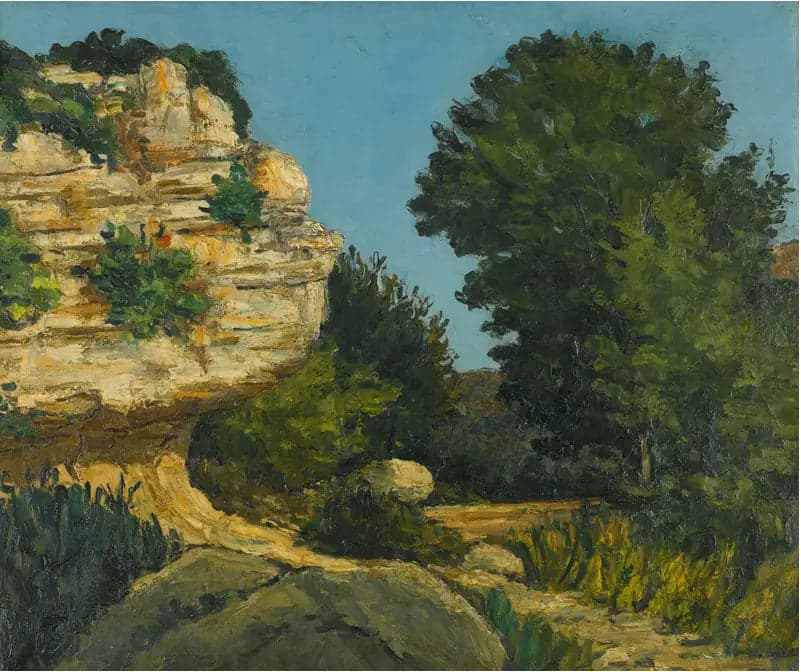
This canvas , a true pictorial work, immerses us in a rocky landscape where nature expresses itself with strength and serenity. The geometric shapes, the shades of warm colors, and the delicate shadows instantly blend to create a captivating atmosphere. Cézanne invites us to contemplate the majesty of the mountain, awakening with the light.
Historical context
Created in 1867, the painting "Rocks" by Paul Cézanne is situated in the heart of France, in an artistic context marked by the Impressionist movement. In Paris, then in full cultural effervescence, Cézanne captures the essence of nature with striking intimacy. The canvas is now preserved in an iconic museum, a testament to its artistic greatness.
Place in the artist's career
"Rocks" represents an important milestone in Cézanne's career, a stage of maturity where he begins to define his unique style. In parallel with works like "The Large Bathers" and "Mont Sainte-Victoire," this canvas reveals a technical evolution towards increasingly bold compositions, marked by an innovative approach to shapes and colors.
Anecdote
Cézanne, philosopher of painting , once said: "Nature is a silent poem that one deciphers with the eyes." It is in the soft light of a spring morning, in the heart of the Alps, that he found inspiration for this masterpiece, where each rock seems to tell its story through a canvas that vibrates.