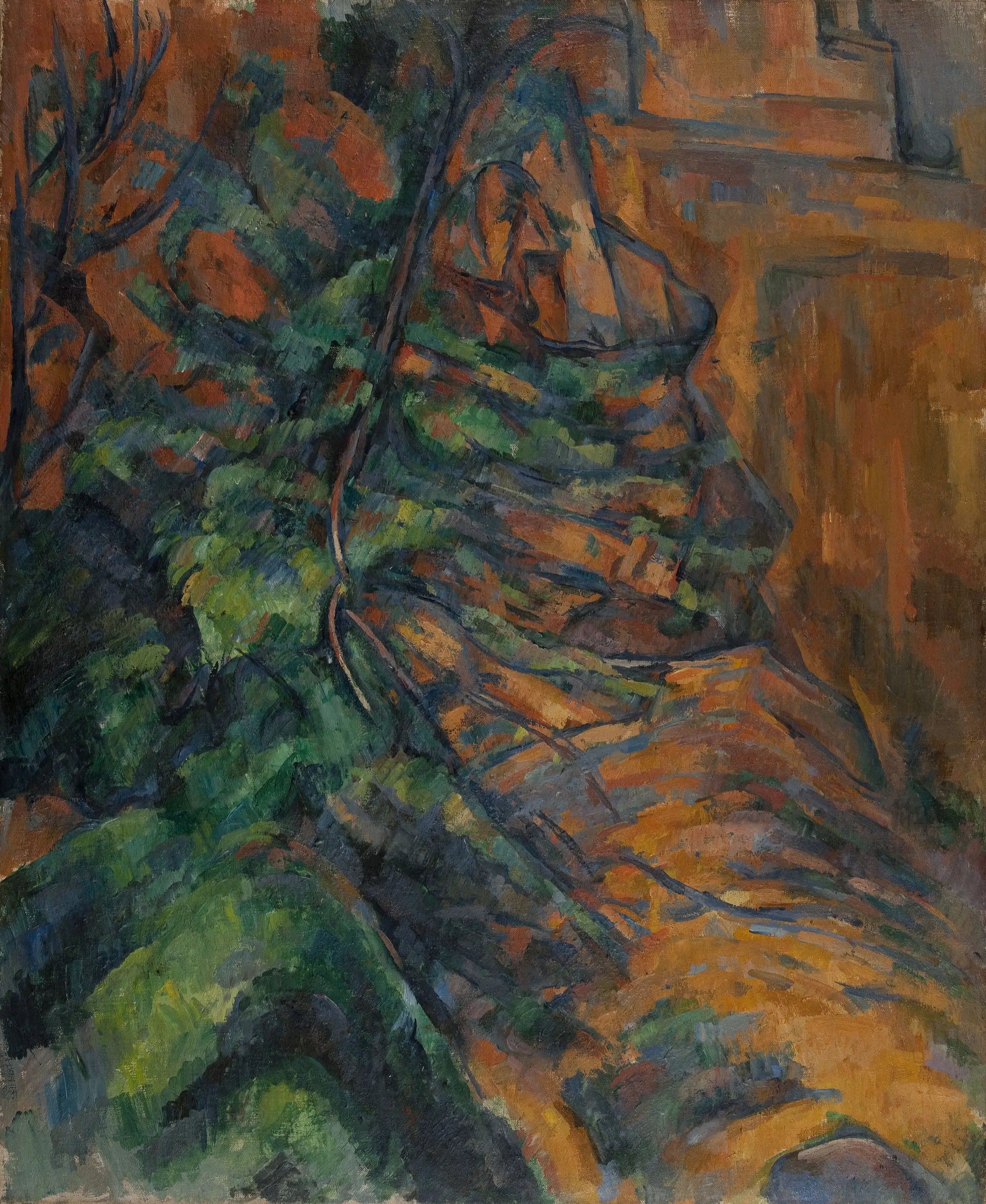
Rocks and Branches at Bibémus
- Original dimensions
- 50.5 x 61 cm
- Museum
- Petit Palais
- Year
- 1895
Scene depicted
This painting illustrates a Provençal landscape, where rocks and branches harmoniously intertwine. A powerful reminder of the natural beauty surrounding the artist, each element of the canvas seems to vibrate under the influence of sunlight. The warm colors and naturalistic forms intertwine, leading the viewer on a poetic journey through Cézanne's intimate universe.
Historical context
Created in 1895, this iconic painting by Paul Cézanne results from a deep attachment to his home region, Aix-en-Provence. It embodies the Impressionist movement, at the heart of a period when art sought to capture the very essence of nature. Currently, this painting is preserved at the Petit Palais in Paris, a place of convergence between classical heritage and the emergence of avant-gardes. Its delicate dimensions of 50.5 x 61 cm allow for an intimate immersion in this rich and nuanced composition.
Place in the artist's career
Rocks and Branches at Bibémus represents a key moment in Cézanne's career. Evoking a period of artistic maturity, it is situated between two other iconic works: The Montagne Sainte-Victoire and The Large Bathers. Each testifies to a technical evolution, from the imposition of his personal vision to the celebration of nature.
Anecdote
“I want to express what I see, not just what I know.” This quote resonates deeply with the genesis of Rocks and Branches at Bibémus. Imagine a spring morning, where silence is only broken by the song of birds and the whisper of the wind in the branches. It is in this peaceful setting that Cézanne drew inspiration, revealing the evocative power of this masterpiece.
Major exhibitions
From Corot to Modern Art. Memories and Variations