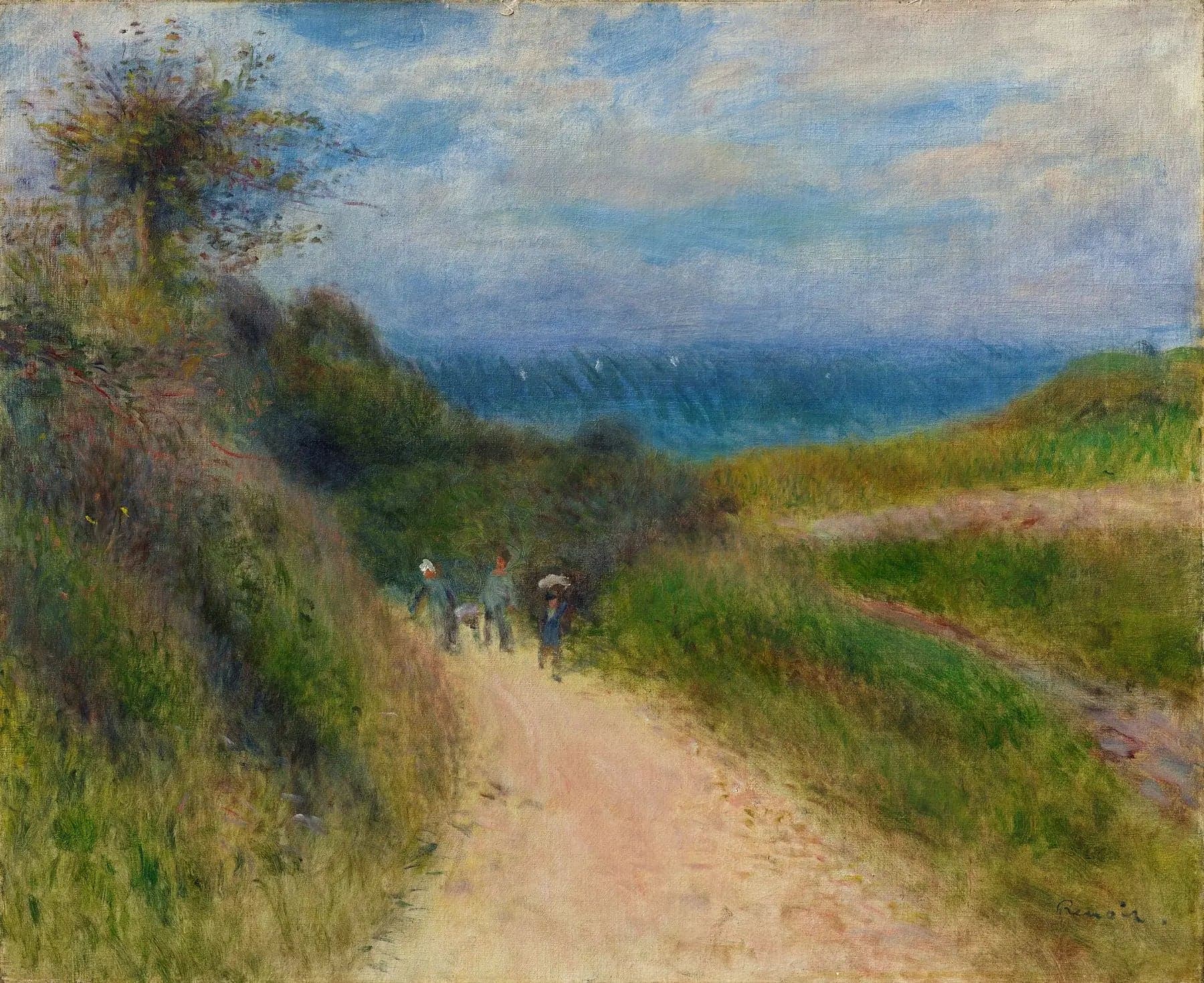
Road to Berneval - Pierre
- Original dimensions
- 61 x 50 cm
- Museum
- Barberini Museum
- Year
- 1880
Scene depicted
This pictorial work represents a bucolic landscape of Normandy, revealing the harmony between nature and humanity. The gentle curves of the road, framed by lush trees, seem to invite the viewer to explore the riches of the countryside. The light dances on the ground, while the vibrant texture of the painting evokes the soft sounds of nature, such as the singing of birds and the whisper of the wind.
Historical context
Created at the end of the 19th century, the painting "Route de Berneval" is part of the Impressionist movement, which was in full swing. This canvas evokes the ephemeral beauty of light and color, typical of Renoir's work. The painting is currently displayed at the prestigious Barberini Museum in Germany, where it continues to captivate visitors with its warm and vibrant atmosphere.
Place in the artist's career
"Route de Berneval" is a significant milestone in Renoir's career, showcasing his evolution towards a brighter and more colorful approach. Alongside other paintings such as "Luncheon of the Boating Party" and "The Grand Boulevards," this canvas reflects his growing mastery of light play and the subtle emotions that permeate his works from this period.
Anecdote
"Nature is my greatest master, and every painting I create brings me closer to it." This quote from Renoir resonates particularly when observing the composition inspired by the canvas "Route de Berneval." It was on a spring morning, in the gentle breeze of a small path, that the artist found inspiration to capture the magic of this fleeting moment.