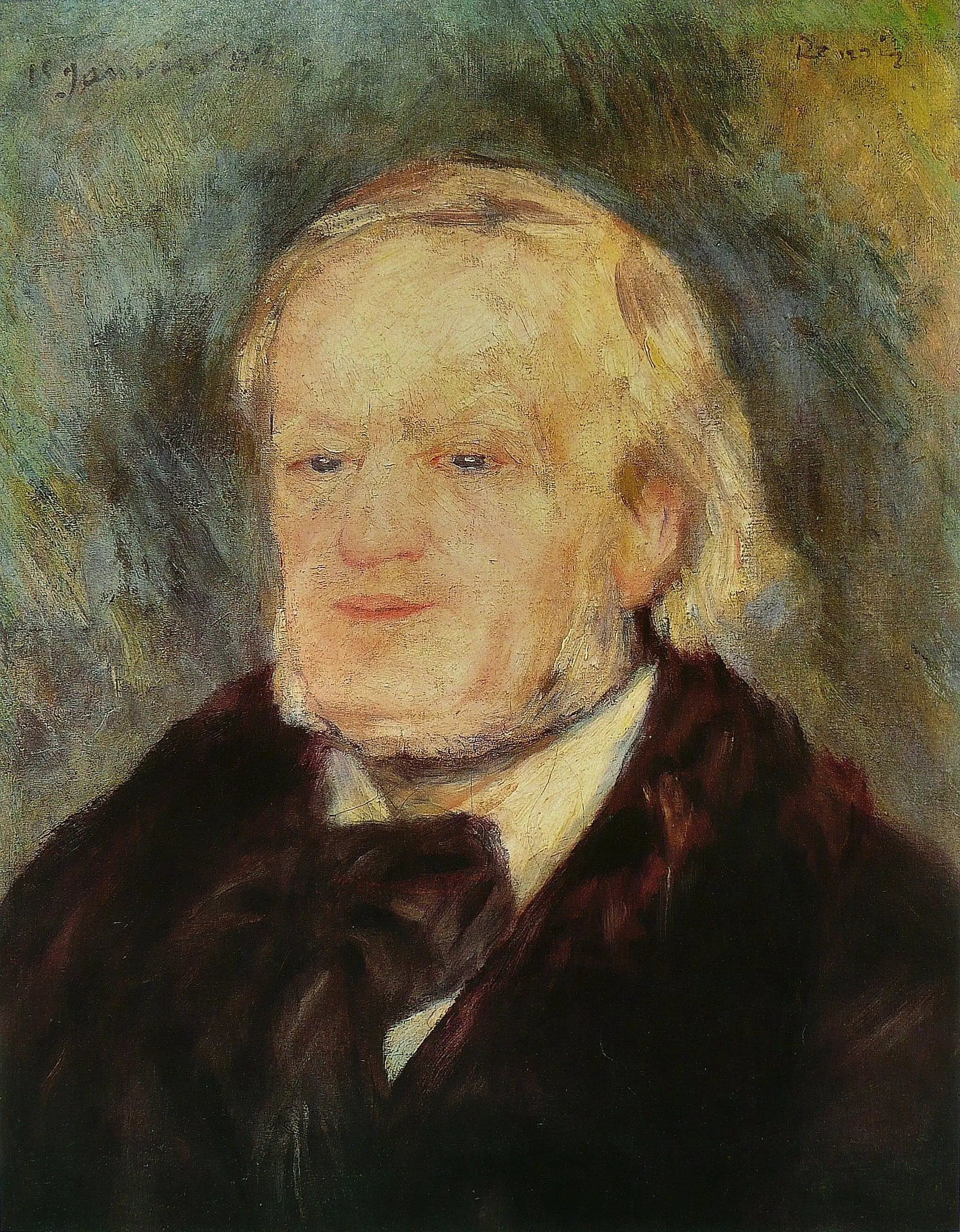
Richard Wagner - Pierre
- Original dimensions
- 44.7 x 51.3 cm
- Museum
- Orsay Museum
- Year
- 1882
Scene depicted
In this pictorial work , Renoir manages to capture the very essence of the artist Richard Wagner. The painting evokes not only the composer himself but also translates the fusion of the arts: music, painting, and pure emotion. The composition is skillfully orchestrated, blending warm hues and a play of light that draws the eye to the central subject, paying tribute to Wagner's creative soul.
Historical context
Created in 1882 in Palermo, in the heart of the Impressionist movement, the painting "Richard Wagner" is part of a vibrant era of creativity. At this time, Renoir captures light and emotions with a unique sensitivity, a central aspect of the artistic movement he embodies. Today, this canvas is preserved at the Orsay Museum , a showcase that highlights this emblematic work.
Place in the artist's career
This canvas represents a turning point in Renoir's career, marking his artistic maturity. At this time, the artist explores more personal subjects, approaching the sensuality present in his later works such as "Luncheon of the Boating Party" and "The Bather".
Anecdote
“I love to paint what I feel, not just what I see.” These words resonate as an echo of Renoir's inspiration for this canvas . Imagine a spring morning, the softness of the air, and a blaze of colors evoking the passion of Wagner's music, transcended by Renoir's masterful brush.