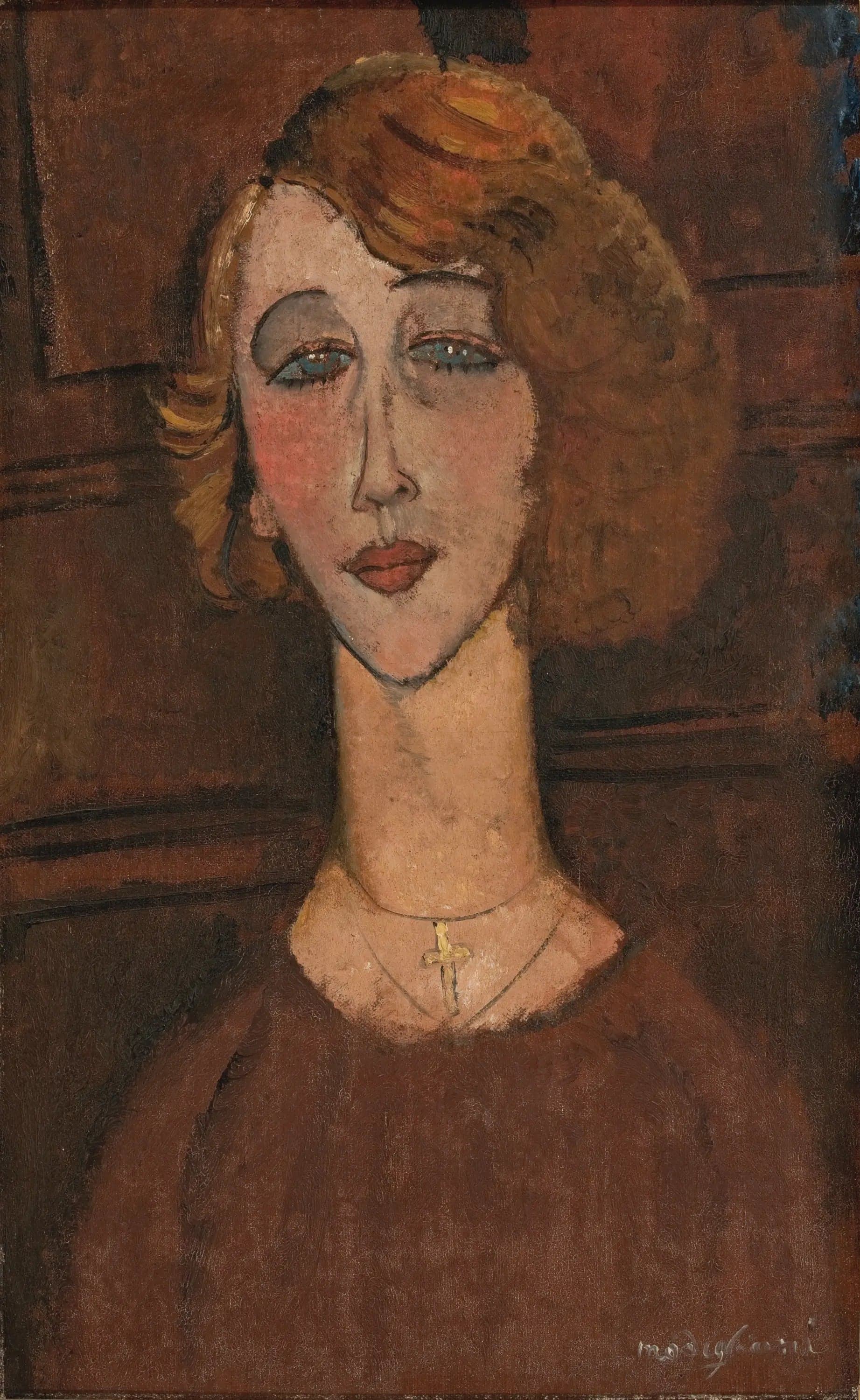
Renée
- Original dimensions
- 50.2 x 61.1 cm
- Museum
- Pola museum
- Year
- 1917
Scene depicted
The painting “Renée” depicts a young woman whose delicate posture and pensive expression reveal a rich and mysterious inner world. The long, elegant lines of her neck and stylized features convey the essence of timeless beauty, capturing the fragility and strength of her femininity through a palette of soft and introspective colors. This pictorial work seems to sail between dream and reality, inviting us to explore the thoughts of this enigmatic character.
Historical context
Created in the heart of Paris in 1917, this iconic work is part of the artistic movement of Fauvism and Cubism . The canvas, now preserved at the Pola museum , reflects a pivotal time when Modigliani, with his unique vision, redefined the codes of pictorial representation while engaging in an introspective quest about human identity.
Place in the artist's career
“Renée” is part of a period of maturity for Modigliani, showcasing his unique signature that evolves. This painting marks a stylistic peak where the fluidity and simplicity of forms rival other masterpieces such as “Jeanne Hébuterne” or “Nu couché,” bringing forth an artistic sensitivity imbued with melancholy and beauty.
Anecdote
Modigliani once declared: “I paint dreams, not faces.” It is this vision that inspired the creation of this painting. At the dawn of a sunny morning, he is said to have crossed the gaze of a woman in the Mediterranean alleys of Livorno, an image that would forever mark his artistic approach, resonating deeply in the canvas “Renée.”