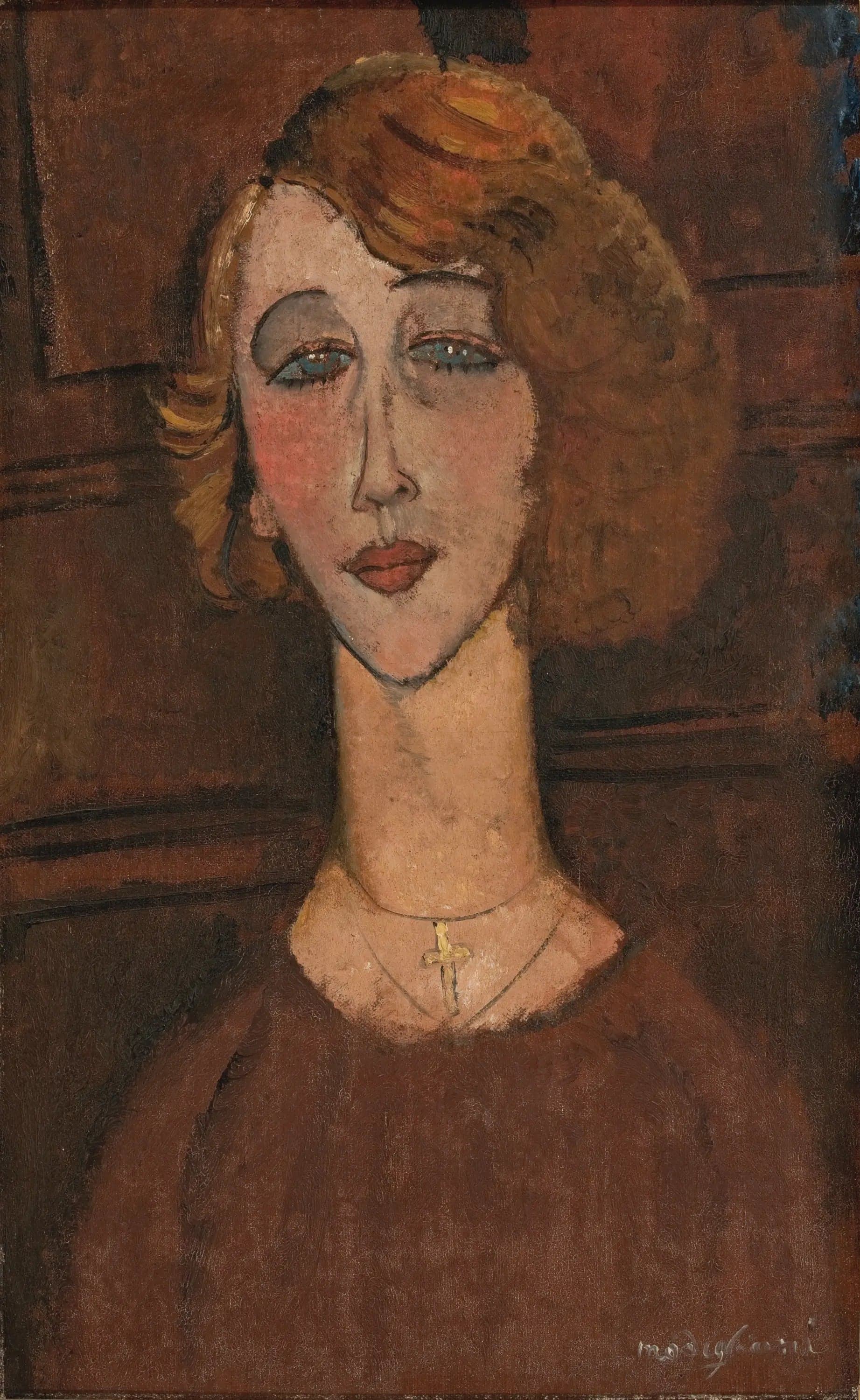
Renée
- Original dimensions
- 38 x 61 cm
- Museum
- São Paulo Museum of Art
- Year
- 1917
Scene depicted
In Renée , Modigliani captures the grace and elegance of a woman, with elongated features that seem to transcend time. The composition is both intimate and universal, showing not only a female figure but also a representation of the human soul. The soft light illuminating her face symbolizes fleeting beauty made eternal by art.
Historical context
Created in 1917, at the crossroads of modern Avant-garde and Fauvism , the painting titled Renée is born in the vibrant heart of the city of Paris. This iconic painting captures not only the tumultuous era of the first half of the 20th century but is also a reflection of the creative genius of Amedeo Modigliani , an Italian artist whose legacy endures beyond the decades. Today, this timeless painting is housed in the São Paulo Museum of Art , where it continues to move generations of visitors with its expressive dimensions.
Place in the artist's career
In light of this painting , it is possible to understand Modigliani's artistic evolution. In the previous years, his works like Jeanne Hébuterne and La Petite Anne marked the beginning of his stylistic exploration. With Renée , he reaches a stylistic peak, blending background and form with unprecedented emotional maturity.
Anecdote
Amedeo Modigliani once declared: "Beauty lies in the invisible, it is in the soul that light reveals itself." On a small sun-drenched terrace, inspired by a face encountered at the turn of a peaceful alley, he created the delicate lines and sinuous shapes that characterize his masterful masterpiece . Each brushstroke on the canvas of Renée evokes a deep emotion, inseparable from its moment of inspiration.