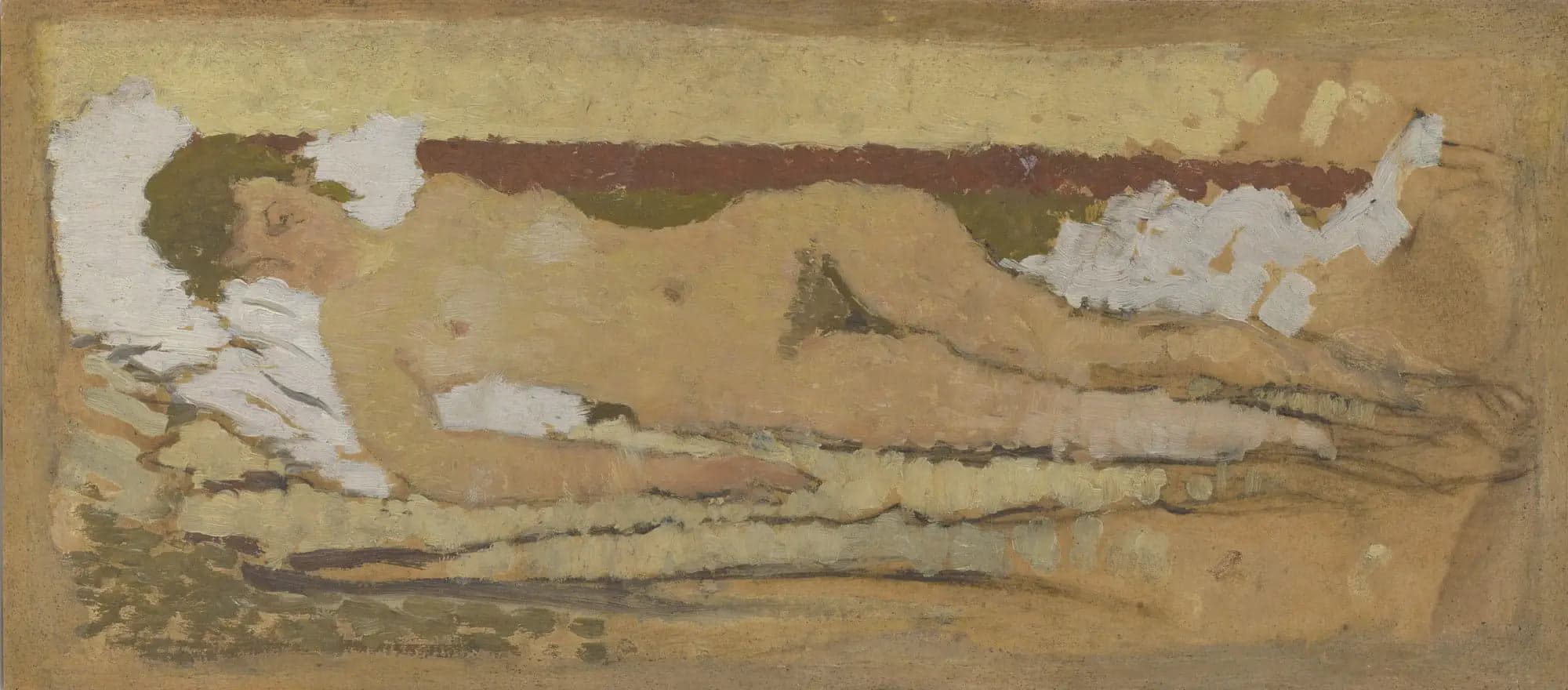
Reclining Nude
- Original dimensions
- 41.6 x 18.7 cm
- Museum
- Museum of Modern Art
- Year
- 1897
Scene depicted
In this painting , Bonnard transports us to a universe of calm and contemplation. The languorous body of the model stretches lazily, the vibrant colors blend harmoniously, revealing a frozen moment where time seems suspended. Each shade responds to the other, outlining the dancing light, enveloping the viewer in a warm intimacy. The painting evokes not only the beauty of the nude but also a fleeting glimpse of the human soul.
Historical context
Created in 1897, in the artistic and vibrant heart of Paris, this painting is emblematic of the nabi movement, a current that revolutionized painting by moving away from the academic conventions of the time. Pierre Bonnard , a charismatic figure of this school, immortalizes the intimacy and sensuality of modern life through this contemporary work. Today, this masterpiece is exhibited at the Museum of Modern Art, a living testament to the artistic genius that flourished in Paris at the end of the 19th century.
Place in the artist's career
At the heart of Bonnard's career, Nu allongé represents a crucial milestone, where his style emerges with brilliance. This work is situated between Deux nymphéas and La chambre de l’artiste , marking a stylistic turning point towards a more intimate and emotional exploration of color and composition. Through these paintings, the artist reveals not only his technical talents but also his deep perception of the nuances of life.
Anecdote
“Painting must reveal more than it shows. It must speak to the heart.” It is with this conviction that Bonnard captured the essence of life through his canvas . One April morning, filled with soft light, he contemplated the tranquil beauty of his reclining model, dreamy, bathed in the warmth of the sun. This fleeting moment gave birth to his composition, imbued with a luminous softness and unparalleled delicacy.