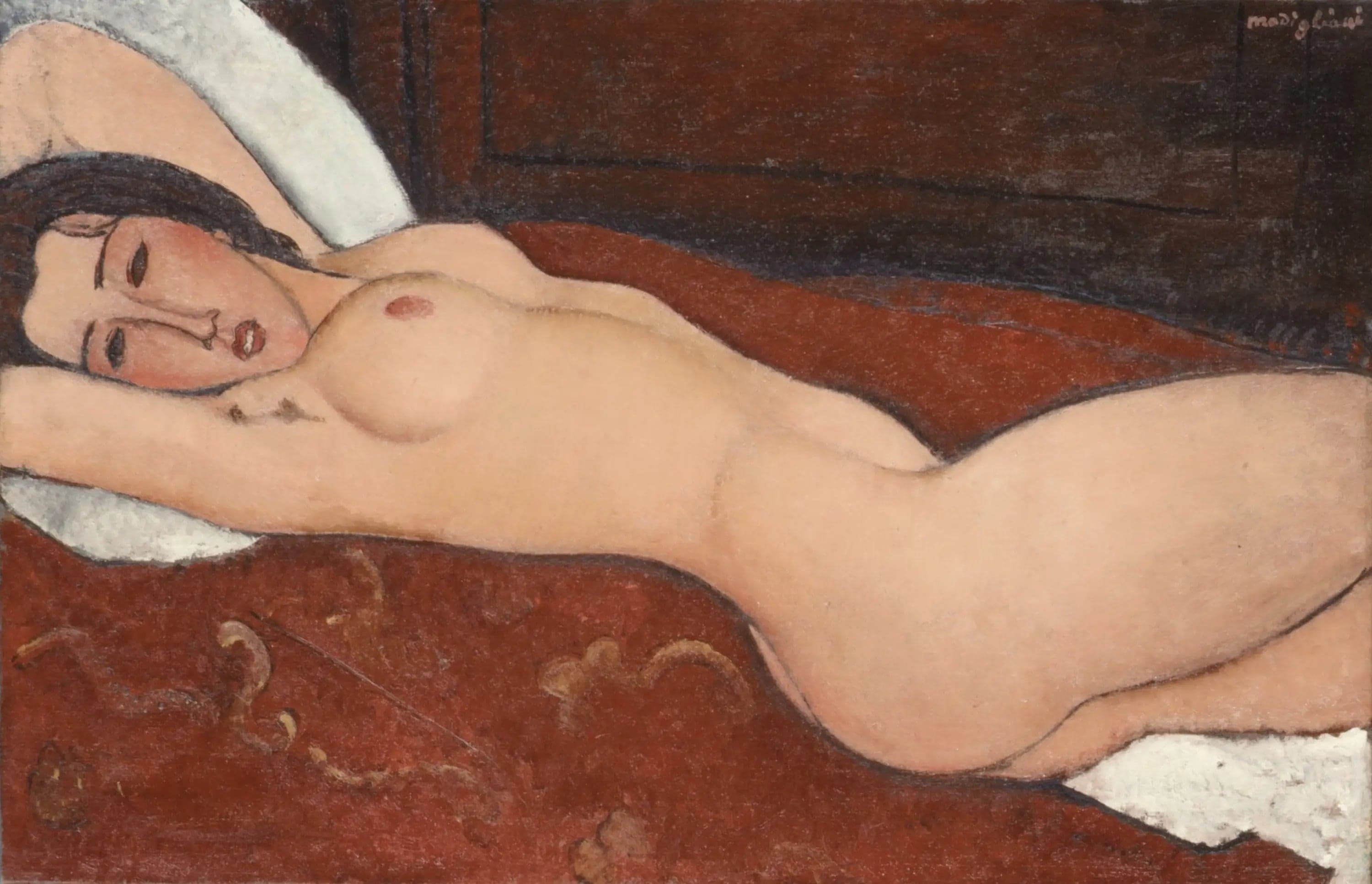
Reclining Nude
- Original dimensions
- 116 x 73 cm
- Museum
- Museum of Modern Art
- Year
- 1917
Scene depicted
The canvas “Reclining Nude” is a masterful illustration of human bodies, where the model is presented in a languorous pose. Modigliani transcends the classical representation of nudity by creating an atmosphere of serenity and intimacy, leaving the viewer captivated by the softness of the silhouette. The voluptuous curves evoke a presence that is both ethereal and tangible, inviting everyone to explore the delicacy of flesh.
Historical context
Created in 1917 in the vibrant city of Paris, this iconic painting belongs to the artistic movement of modernism , characterized by distorted forms and fluid lines. The painting is now displayed at the Museum of Modern Art, where it continues to evoke the emotions of a turbulent era mixed with a deep aesthetic quest. Its imposing dimensions, 116 x 73 cm, make it a centerpiece of any art collection.
Place in the artist's career
In Modigliani's career, Reclining Nude stands as a stylistic peak. This pictorial work, at the boundary between naivety and sophistication, marks the end of a period of creative maturity. Alongside other significant paintings like “Portrait of Jeanne Hébuterne” and “The Large Nude,” Reclining Nude illustrates the evolution of his approach towards a more distant abstraction, yet still imbued with poignant humanity.
Anecdote
“It is not just the body that I paint, but the soul beyond the flesh.” These words from Amedeo Modigliani resonate deeply with his masterpiece, Reclining Nude. Imagine him, one spring morning, wandering in his light-filled studio, gently touching the blank canvas, with the echo of so much beauty in his heart.