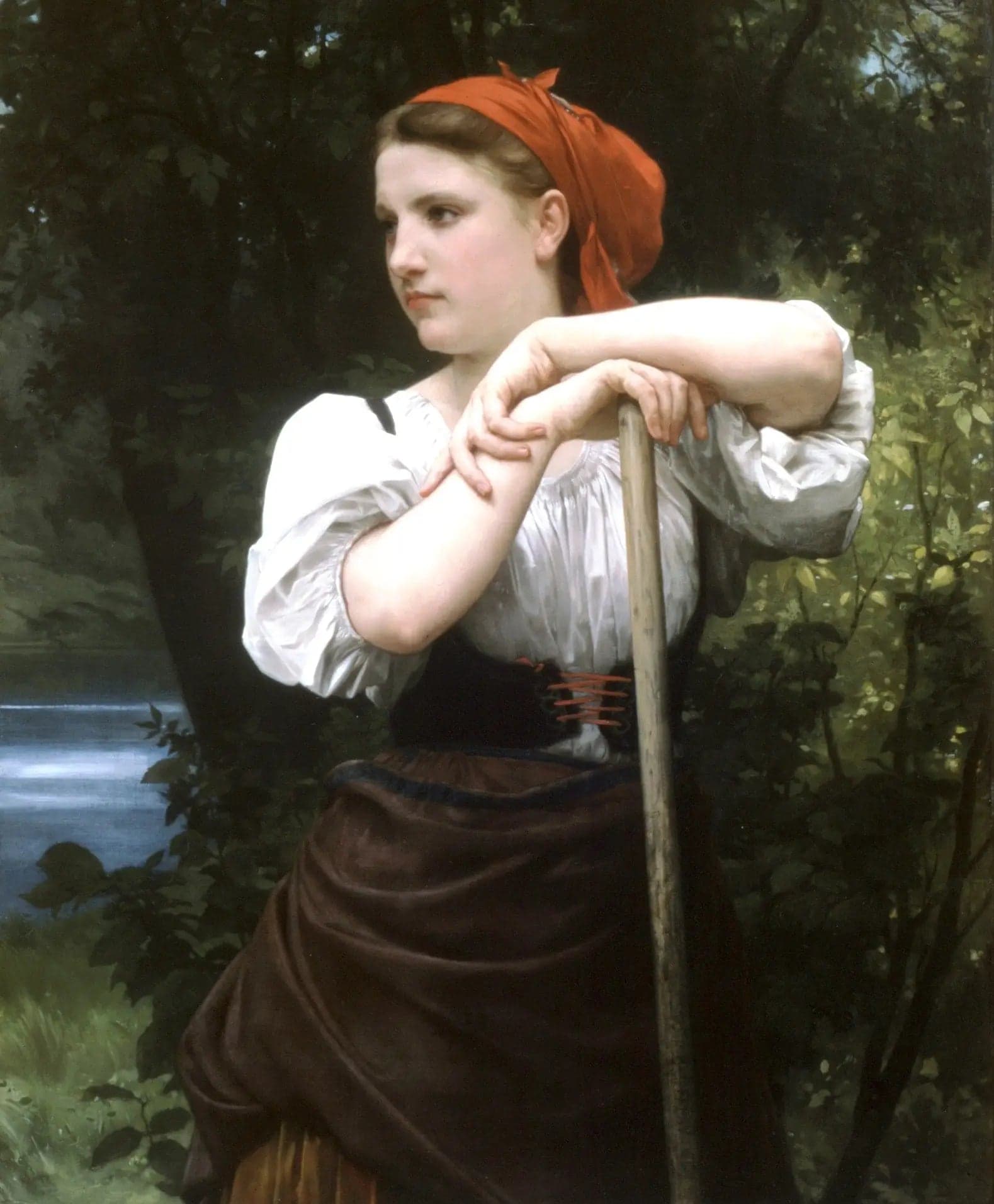
Reaper
- Original dimensions
- 116 x 179 cm
- Museum
- Not specified
- Year
- 1872
Scene depicted
In this painting , Bouguereau immortalizes the figure of the reaper, a symbol of the connection between man and the earth. The delicate composition depicts a young woman harvesting, a gesture imbued with grace and fluidity. The rhythmic movement of her hand, accompanied by the soft rustling of the ears, immerses us in an atmosphere of serenity and harmony. It is an ode to nature, where each stroke evokes a period of labor and devotion.
Historical context
Created in 1872, this canvas is emblematic of the artistic and cultural context of 19th century France, where realism and neoclassicism meet. Capturing pastoral beauty and scenes of rural life, this painting resonates with the era when Bouguereau, the undisputed master of academic painting, explored the essence of everyday life with a poetic gaze. The painting , now unspecified, bears a generous size of 116 x 179 cm, thus captivating the observer with its monumentality.
Place in the artist's career
“Reaper” positions itself in Bouguereau's artistic maturity, representing a turning point where he combines technique and passion. Preceded by works such as “Innocence” and followed by “The Vine and the Branch,” this canvas reveals an evolution in his mastery of light and emotions. The painting reflects an artist at the height of his art, capable of conveying the depth of human feelings.
Anecdote
“Nature is my muse. In the song of the wind and the whisper of the wheat, I find inspiration for my works.” Imagine Bouguereau, on a spring morning, observing the dance of shadows on the golden field, his thoughts aligning with each brushstroke. It is in this precise moment that the painting “Reaper” took shape, a work that resonates with the soul of the rural world.