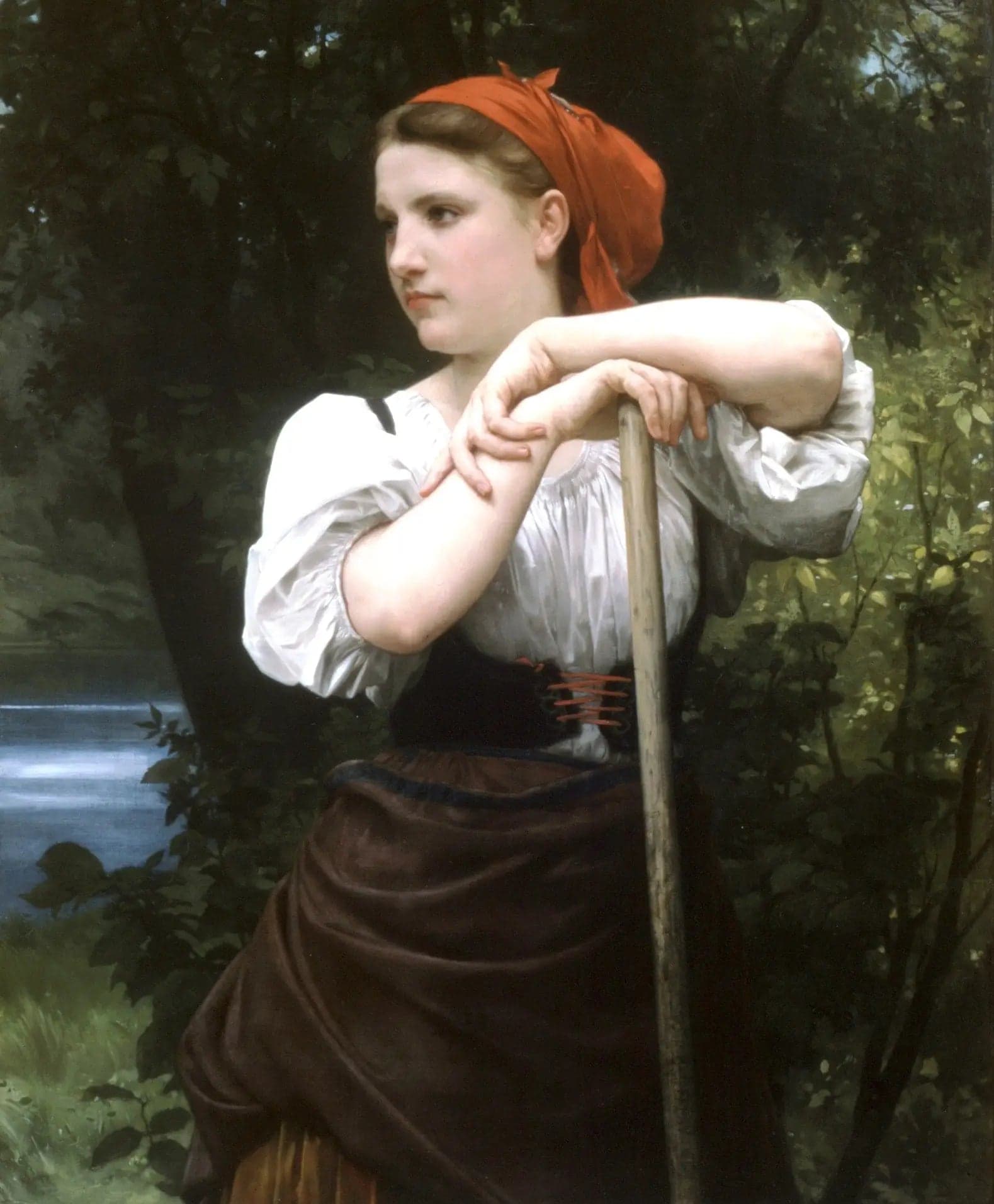
Reaper
- Original dimensions
- 80.8 x 100.33 cm
- Museum
- Carnegie Museum of Art
- Year
- 1869
Scene depicted
In this emotionally rich painting, a pastoral landscape unfolds. A young woman, her head slightly tilted, while she is drying the golden grasses, evokes delicacy and a deep connection with the nurturing earth. The meticulously worked details of the canvas present a vibrant nature, and the work transforms into a hymn to rural life.
Historical context
Created in 1869 in Paris, Faneuse is part of the academic movement of the 19th century, known for its pursuit of realism and technical perfection. This painting is a product of the time when France was experiencing a cultural effervescence, marked by social and artistic changes. Today, this artwork is displayed at the Carnegie Museum of Art , with the city of Pittsburgh being the guardian of this artistic treasure.
Place in the artist's career
Faneuse represents a turning point in Bouguereau's career, showcasing his mastery of oil painting techniques. This work is part of a promising lineage, alongside The Birth of Venus and The Invitation to the Waltz , all illustrating an evolution towards more moving and vibrant compositions.
Anecdote
“Art must speak to the hearts before it speaks to the eyes.” William-Adolphe Bouguereau once confided that his inspiration for Faneuse blossomed on a sweet May morning when, encountering a haymaker in the fields, he was touched by the poetry of her gesture. This luminous scene is beautifully captured in his masterpiece .