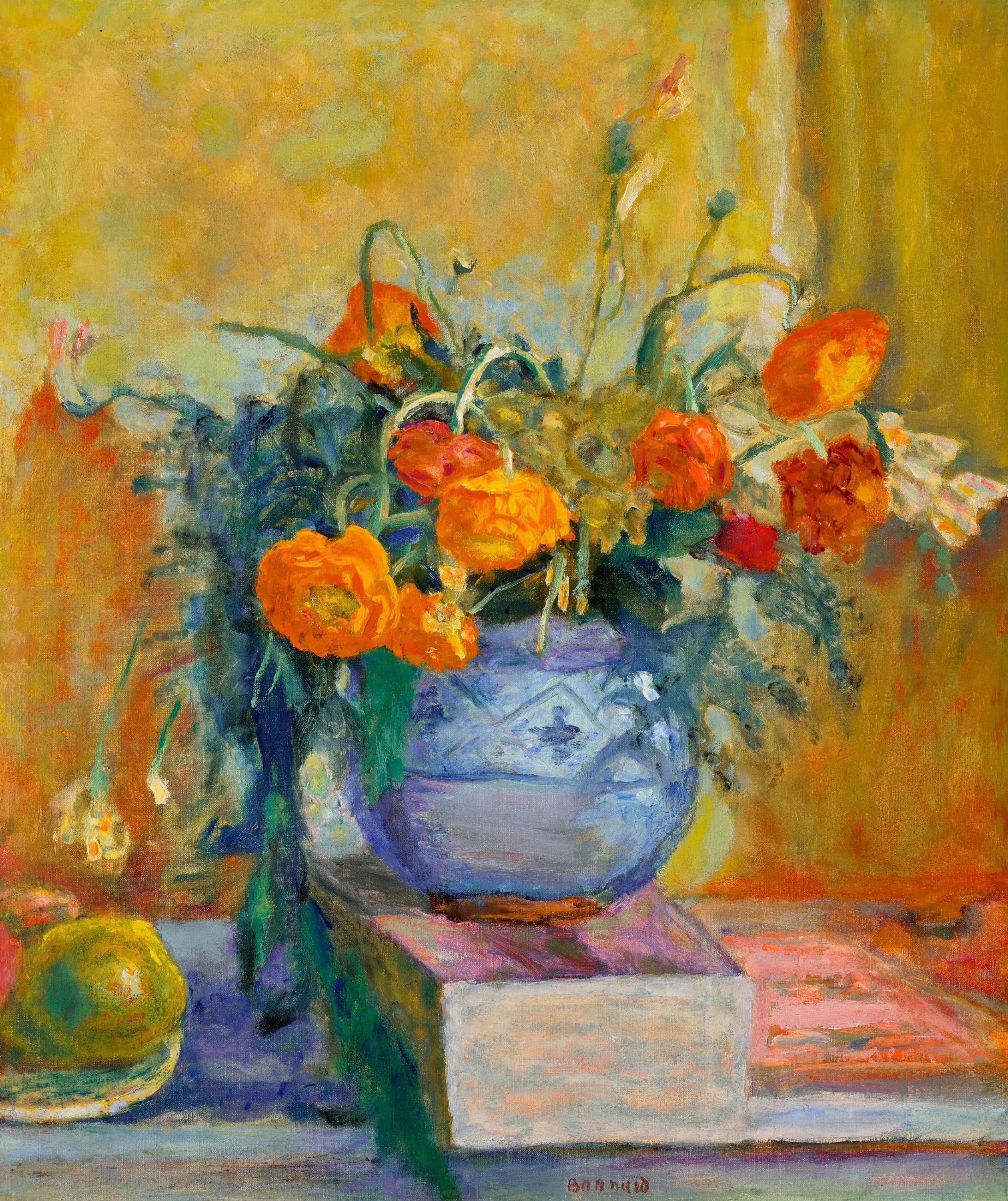
Ranunculus in a Blue Vase
- Original dimensions
- 49 x 58 cm
- Museum
- Not specified
- Year
- 1925
Scene depicted
In this canvas , the ranunculus, symbols of ephemeral beauty, burst with color under the soft light, while the blue vase gives them an aura of serenity. The composition, rhythmically shaped by rounded forms and luminous contrasts, evokes a feeling of spring freshness, transforming the space into a scene of contemplation and escape.
Historical context
Created in 1925, this painting expresses the richness of the post-impressionist movement, which emerged primarily in Paris, at the heart of France. The work was conceived at a time when artists sought to transcend the classical rules of representation, exploring color and light in a vibrant composition. Although the canvas is not currently exhibited in a known museum, it represents a unique piece of Bonnard's artistic heritage.
Place in the artist's career
Ranked among Bonnard's essential works, this painting marks a turning point in his career, signifying the fusion of personal sensitivity and avant-garde style. Compared to other notable works like “The Nap” and “The Great Nude,” this composition reveals the evolution of his approach to light and color, moving closer to poetic abstraction.
Anecdote
“Beauty lies in ephemeral moments,” Bonnard might have said while reflecting on this work. Perhaps it was a sunny morning when the first rays of light danced through his window, bestowing sweet sounds and scents upon the ranunculus he delicately placed in this blue vase. This inspiration, captured in the painting , resonates with a deep melancholy and a joy of living, both palpable and intimate.