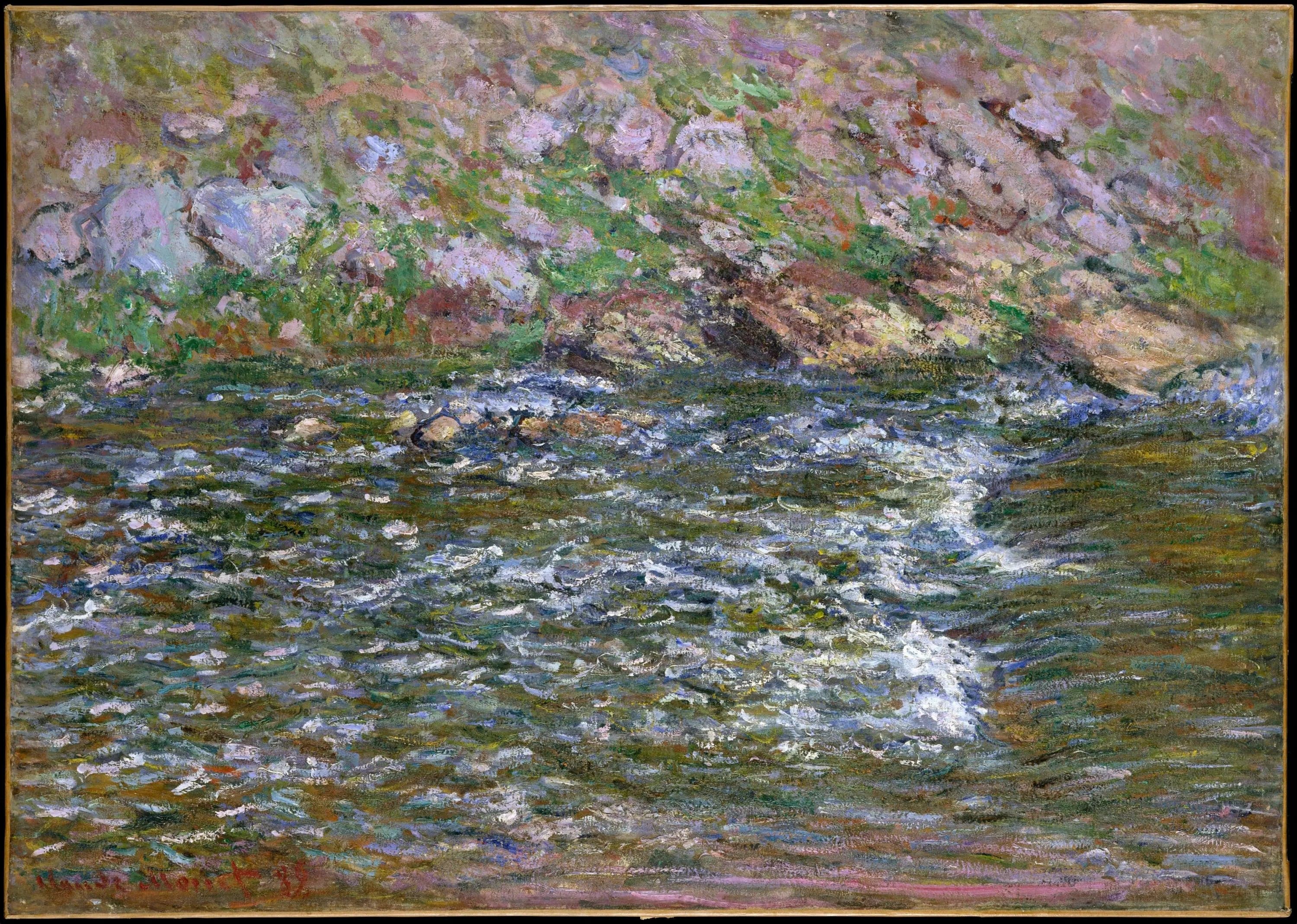
Quick on the Petite Creuse at Fresselines
- Original dimensions
- 91.8 x 65.4 cm
- Museum
- Metropolitan Museum of Art
- Year
- 1889
Scene depicted
This painting illustrates a vibrant scene of river life in the Petite Creuse, where the tumultuous waters blend with the lush vegetation of the banks. The rapids, translated by shades of blue and white, come alive under the light, revealing the fleeting magic of a suspended moment. Monet captures here the very essence of nature, oscillating between calm and agitation, where each element merges into perfect harmony.
Historical context
Year: 1889 |BRK| Museum: Metropolitan Museum of Art |BRK| Dimensions: 91.8 x 65.4 cm
Place in the artist's career
This painting stands as a milestone in Claude Monet's career, representing a period of maturation of his Impressionist style. In parallel with his previous works such as Impression, Sunrise and The Water Lilies , Rapids on the Petite Creuse at Fresselines reflects a significant technical evolution, with a pronounced mastery of light and color. This canvas , both bold and emotive, illustrates the path towards Monet's relentless quest to capture the ephemeral beauty of his environment.
Anecdote
Claude Monet once declared, "Nature guides me, it is my only master." It was on a sunny spring morning, as he contemplated the shimmering reflections of the water of the Petite Creuse, that he drew inspiration for his masterpiece . This fleeting moment, imbued with sweetness, resonates in the evocative power of his painting , where each brushstroke tells the story of a living and vibrant nature.