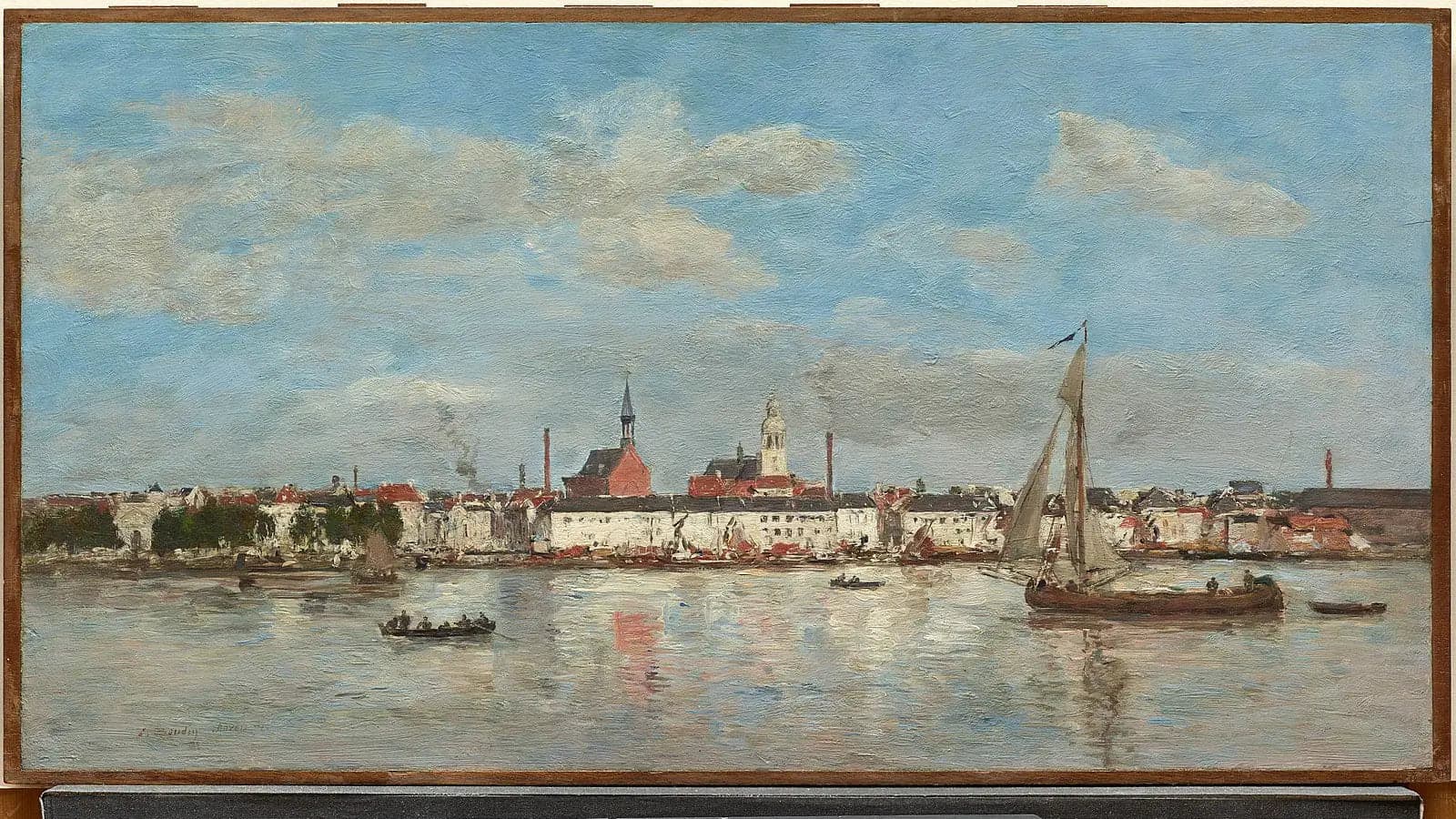
Quay in Antwerp
- Original dimensions
- 63.82 x 34.61 cm
- Museum
- Dallas Museum of Art
- Year
- 1874
Scene depicted
The painting “Quai à Anvers” transcends a simple representation of a place. It depicts a vibrant scene where boats slowly dance with the water, while the human figures, blurred yet alive, indicate a lively maritime activity. The light, a central phenomenon of the work, creates a play of shadows and reflections that brings a sense of movement, reminding observers of the universality of daily life at the port.
Historical context
Created in 1874, this painting is set in the enchanting backdrop of Antwerp, Belgium, a port city rich in history. Eugène Boudin , influenced by the Impressionist movement, captured the essence of his time through his pictorial works, particularly in this canvas that illustrates the lively life of the docks, near the port. The masterpiece is now displayed at the Dallas Museum of Art , allowing everyone to admire the beauty of this timeless composition.
Place in the artist's career
“Quai à Anvers” marks a turning point in the artist's career, symbolizing a period of flourishing and stylistic exploration. Linked to other canvases such as “La Plage de Trouville” and “La Côte de Bilbo,” this painting shows Boudin's evolution towards a mastery of light and maritime atmospheres, integrating his love for nature and port life.
Anecdote
“Every morning, the light dances on the water, and I stand there, capturing the ephemeral.” This quote evokes Boudin's passion for nature and the capture of the moment. On a spring morning, as the starry sky gives way to dawn, he finds himself on the docks of Antwerp, a place where inspiration awakens, infusing this canvas with vibrant energy.