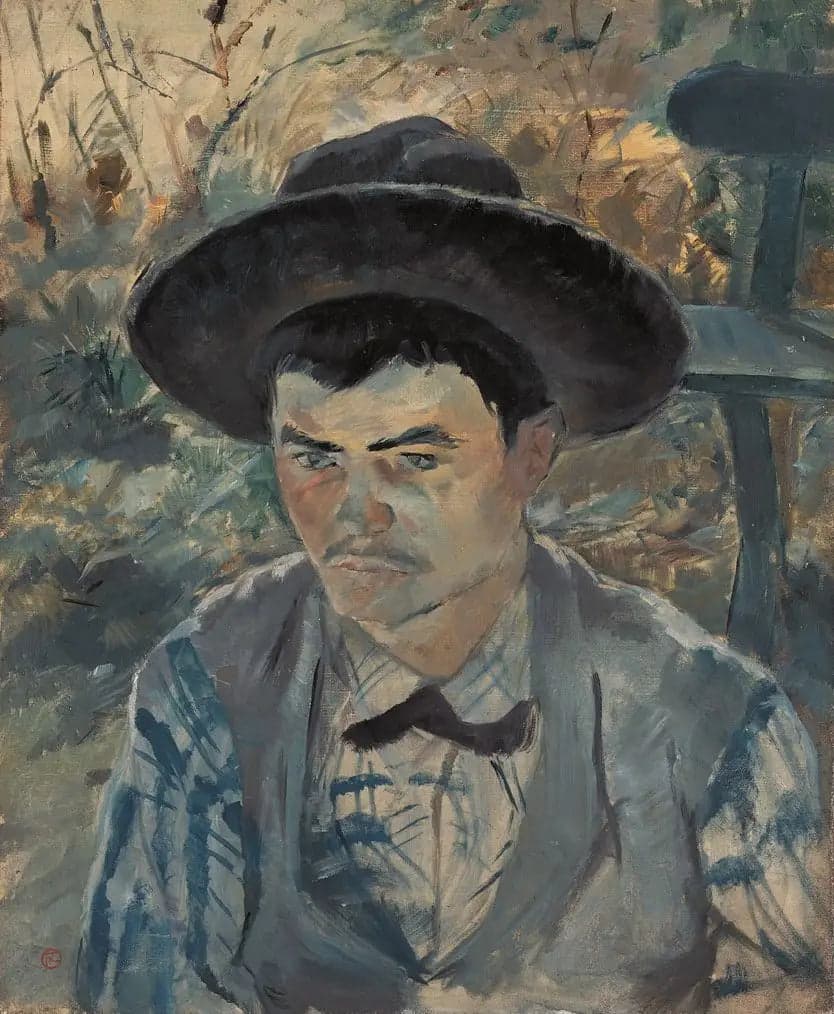
Q30063927 - Henri de Toulouse
- Original dimensions
- 49.8 x 61 cm
- Museum
- Neue Pinakothek
- Year
- 1882
Scene depicted
In this canvas , Toulouse-Lautrec immerses us in an intimate atmosphere, where each character seems animated with its own life. The scene evokes a party, perhaps a ball, where the characters, finely sketched, dance and exchange knowing glances. The interplay of light and shadow vibrates the space, transforming this composition into a living painting where the energy of the city seems to seep in, wandering with the movements of the painting .
Historical context
Created in 1882 in the vibrant and artistic setting of Paris, the painting “Q30063927” by Henri de Toulouse-Lautrec embodies the very essence of the post-impressionist movement. The time when this canvas came to life was marked by a cultural effervescence, where cabarets and theaters illuminated the Parisian night. Currently, this painting is preserved in the Neue Pinakothek museum, a world-renowned art venue where each piece tells a story. The format of this work is beautifully proportioned, allowing it to stand as a true masterpiece within an art collection.
Place in the artist's career
“Q30063927” stands as a key milestone in Toulouse-Lautrec's career. Revealing a bold style, this painting reflects a growing mastery of pictorial art, while fitting into a period where the artist refined his observation of the Parisian world. In parallel, works such as “Le Moulin Rouge” and “La Toilette” showcase his evolution, reflecting a dialogue between moments of life captured with a deceptive mood and portraits more imbued with melancholy.
Anecdote
“I paint what I feel, not what I see.” These words from Toulouse-Lautrec resonate strongly. The artist could find inspiration in ephemeral moments, like in a quiet alley of Montmartre, where the echo of laughter from night owls merges with the scent of fresh coffee. This small scene captured in the painting is both a tribute to the bustling daily life of his time and an invitation to contemplate beauty in the ordinary.