Q133252898
- Original dimensions
- 38 x 46 cm
- Museum
- Not specified
- Year
- 1876
Scene depicted
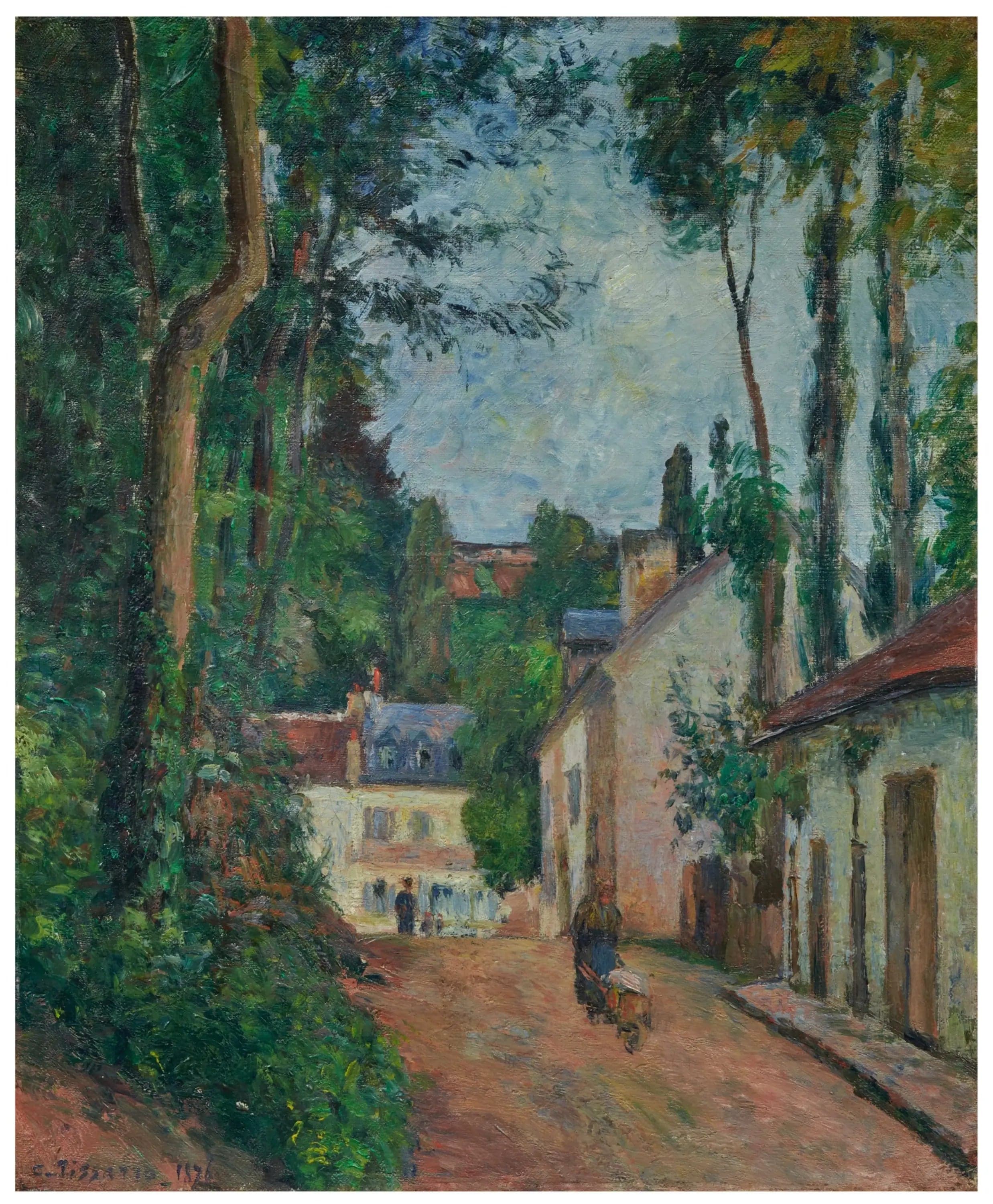
This iconic painting by Camille Pissarro reveals a lively scene where nature blends with daily life. The characters merge into a pastoral landscape, where light dances on blades of grass, creating harmony between man and his environment. It is an invitation to share a moment of serenity, where each element is a tribute to the simple beauty of rural life.
Historical context
Created in 1876 in the city of Pontoise, in the heart of France, this painting belongs to the Impressionist movement, a trend that seeks to capture the present moment and fleeting light. Through this painting, Pissarro immerses us in a vibrant atmosphere, typical of a time when art breaks free from academic conventions. Currently, the precise location of this canvas remains unknown, but its imprint on the history of art remains indelible.
Place in the artist's career
Positioning this painting within Pissarro's career, one perceives a stylistic maturation. Emerging in the 1870s, his work evolved towards greater abstraction and a bold exploration of light and color, as seen when comparing it with “Boulevard Montmartre, spring” (1897) and “The artist's garden at Éragny” (1895).
Anecdote
“Nature is my greatest source of inspiration, a silent dialogue between me and the light,” could have said Camille Pissarro while contemplating the landscapes of his region. Inspiration springs up at every corner, where one April morning, he might have stopped to observe the beauty of shadows in a narrow alley, thus bringing to life his masterpiece , which combines passion and art.