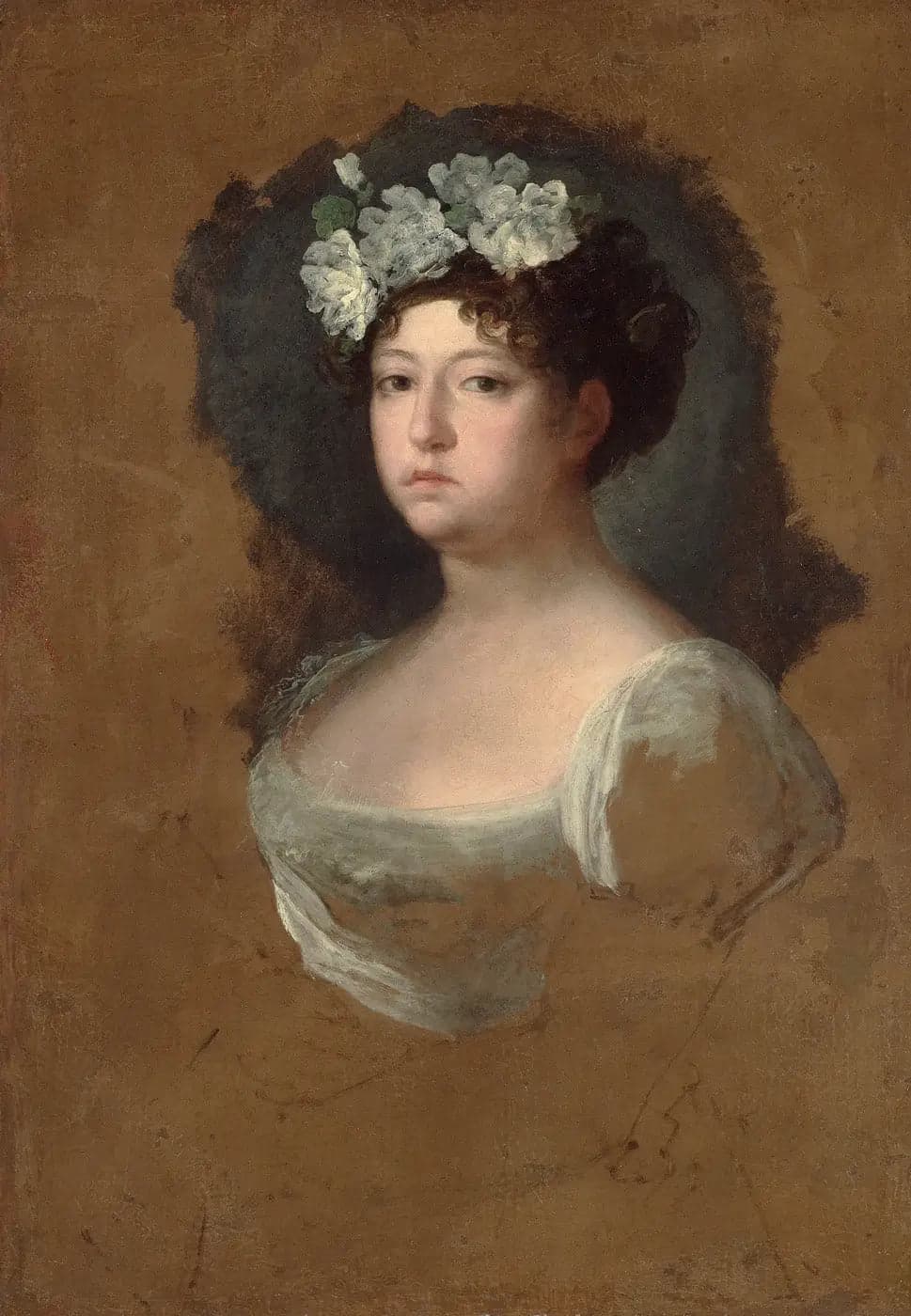
Q123027450
- Original dimensions
- 53 x 75.2 cm
- Museum
- Meadows Museum
- Year
- 1816
Scene depicted
The painting “Q123027450” by Goya immerses us in a pictorial narrative where human emotions intertwine with divine nature. The scene, of striking intensity, transports the viewer into a universe where light and shadow clash, and where every detail reveals a deeply human story, made of fragile beauty and poignant melancholy.
Historical context
Created in the heart of Madrid in 1816, this canvas masterfully showcases the sublime genius of Francisco de Goya , an essential figure of the romantic movement. A tumultuous period in Spain, the early 19th century sees Goya breaking free from academic norms to embrace a more personal and emotional vision. The painting currently resides at the Meadows Museum, where it continues to inspire and move visitors with its evocative power.
Place in the artist's career
“Q123027450” represents a significant milestone in Goya's artistic journey. In contrast to his earlier works, such as “La Maja desnuda” and “The Executions of May 3, 1808,” this painting marks a turning point towards increased expressiveness and a deeper emotional exploration, corresponding to his period of artistic maturity.
Anecdote
“Art, for me, is only emotion unveiled. It must resonate in the hearts of men.” In a quiet alley of Madrid, as a ray of light caressed his brush, Goya gave birth to this masterpiece , a vibrant composition that echoes his inner turmoil and the upheavals of his time.