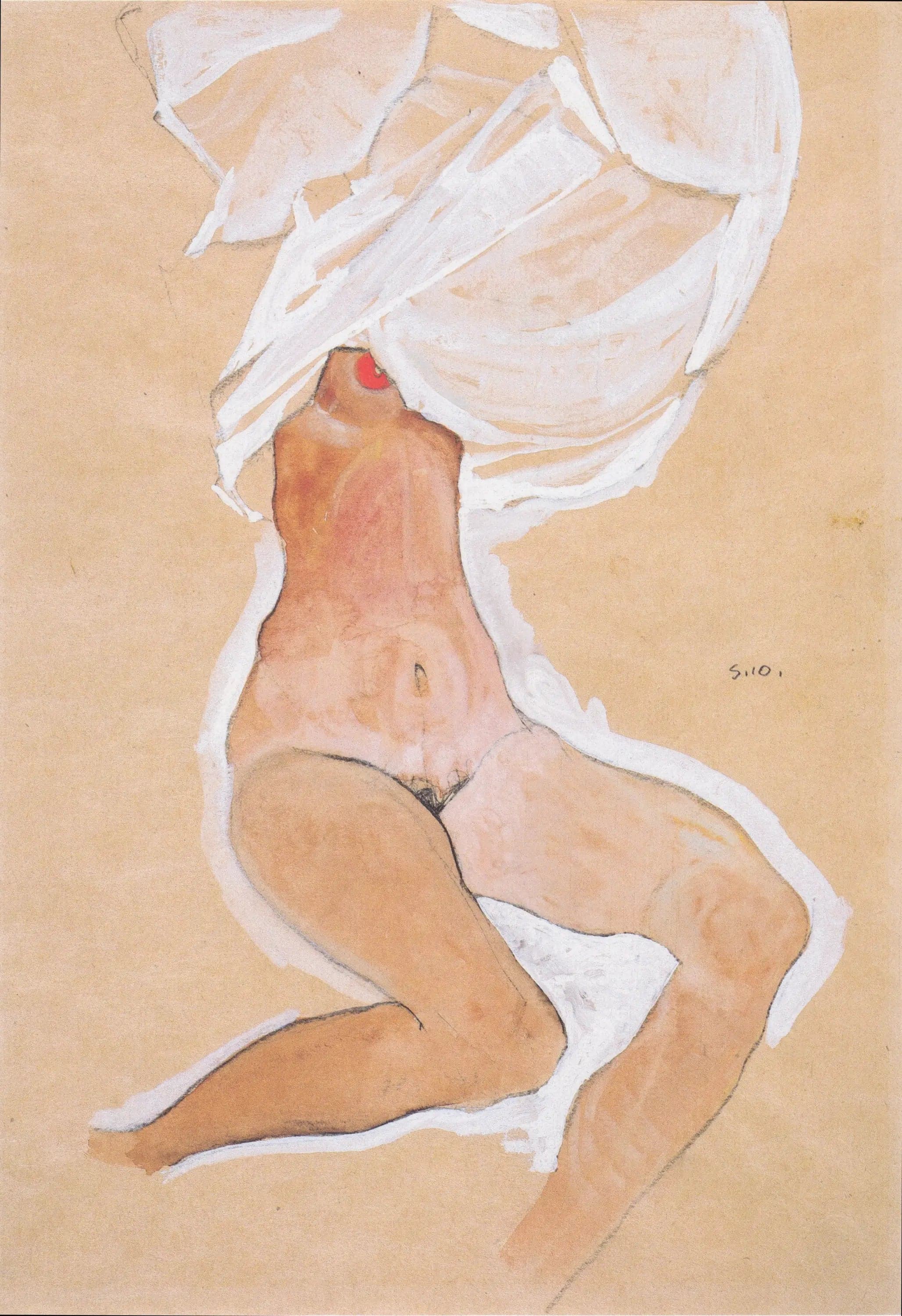
Q115412811
- Original dimensions
- 32.7 x 44.7 cm
- Museum
- Albertina
- Year
- 1910
Scene depicted
This canvas , both intimate and universal, reveals a tormented inner world, like an open window to the human soul. The contours of the figures, expressive and charged with palpable intensity, sketch a dance between suffering and ecstasy. Each brushstroke, each nuance of color, seems to whisper a story, an unexpressed feeling that dialogues with the viewer, immersing them in their own reflections.
Historical context
Created in 1910 in Vienna, this painting belongs to a bold artistic movement of the early 20th century: Expressionism . Egon Schiele , a student and a precursor of modernity, captured the essence of human emotions through his artistic project. The canvas , now exhibited at the Albertina , an iconic museum in the Austrian capital, testifies to the creative genius of a time when art emancipates itself from conventions, offering a new perspective on life.
Place in the artist's career
At the heart of Schiele's career, Q115412811 represents a pivotal moment where his style asserts itself and sheds academic influences. Alongside works such as “Self-Portrait with an Outstretched Arm” and “The Laure,” this masterpiece illustrates his growing mastery of forms and emotions, moving towards a bolder exploration of themes of life and death.
Anecdote
“The painting is a cry, a surge, an inner joy.” These words from Egon Schiele resonate as an echo of his spiritual quest. Imagine the young artist, wandering a street in Vienna on a spring morning, his thoughts swirling like leaves in the wind. This is how he managed to capture the very essence of existence in Q115412811 , a canvas vibrant with emotions.