Q114800247
- Original dimensions
- 99 x 72 cm
- Museum
- National Museum of Fine Arts Buenos Aires
- Year
- 1810
Scene depicted
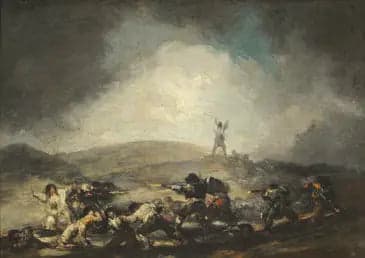
The painting powerfully illustrates the tensions between power and the people, using dark and light motifs to question the viewer about the human condition. Through this painting , Goya transcribes a personal vision of inner struggles and the rifts of a tormented society.
Historical context
Created in 1810, during a period of political upheaval in Spain, this canvas is emblematic of the romantic movement. It reflects the sensitivity of the time, between shadows and lights, echoes of social struggle. The painting is currently displayed at the National Museum of Fine Arts in Buenos Aires, testifying to Goya's undeniable artistic legacy within Argentine cultural heritage.
Place in the artist's career
At this time, Goya finds himself at a turning point in his career. Q114800247 marks a shift towards bolder expression, alongside works such as “The Disasters of War” and “The Naked Maja.” With this masterpiece , the artist reveals an increased sensitivity to the sufferings of men.
Anecdote
“Each masterpiece is a reflection of an era, a shadow of the souls that preceded it.” This quote could easily emanate from Goya himself, emphasizing the inspirations drawn from the dark alleys of Madrid, where silence was sometimes more eloquent than the cries of revolt. In this vibrant context of contrasts, Q114800247 emerges as a profound introspection.