Q112706999
- Original dimensions
- 47.9 x 32.6 cm
- Museum
- Leopold Museum
- Year
- 1915
Scene depicted
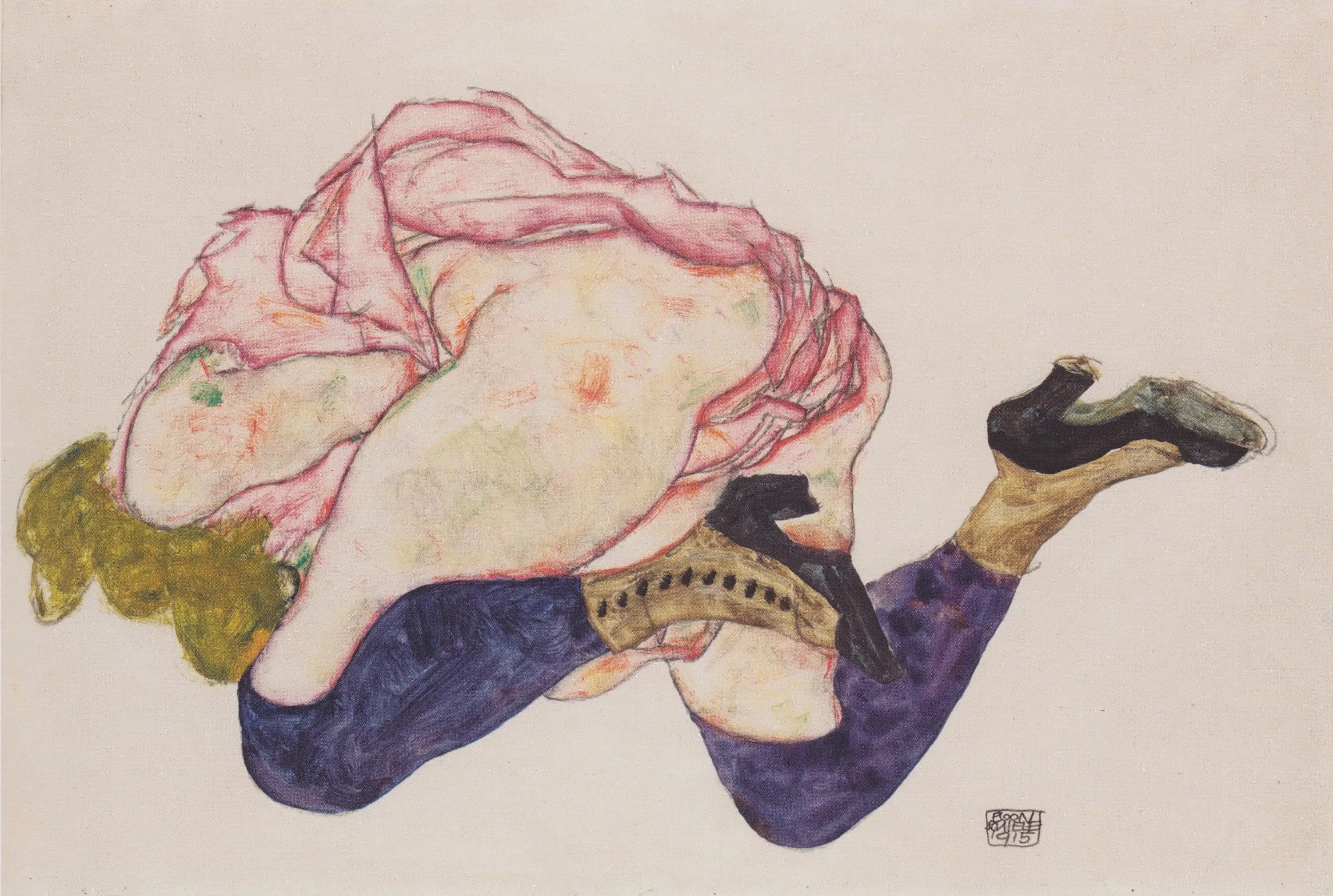
This painting reveals a bold composition, showcasing figures with a powerful visual language. The depth of human emotions is expressed in a palpable contrast between anguish and beauty. Each nuance, each delicate stroke invites us to enter the introspective universe of the artist, while confronting us with the complexity of existence.
Historical context
Created in 1915 in the heart of Vienna, this canvas timelessly bears the imprint of the expressionist movement, immersing us in a tumultuous era where art breaks free from conventions. The painting , currently exhibited at the Leopold Museum , embodies the essence of an artist who, despite his young age, is already leaving an indelible mark in the history of painting .
Place in the artist's career
This painting is part of a pivotal phase in Schiele's career, where the intensity of expression reaches its zenith. Compared to his earlier works such as “Self-Portrait” and later ones like “Nude Woman Squatting,” this masterpiece illustrates a stylistic evolution marked by a play of light and more liberated forms.
Anecdote
“Art is my breath,” Schiele might have said while contemplating one spring morning in Vienna. It is in the vibrant alleys of creativity in the city that he drew inspiration for this painting , capturing a fleeting yet powerful moment. This masterpiece testifies to his unique perspective on the world and the tragic beauty that surrounds him.