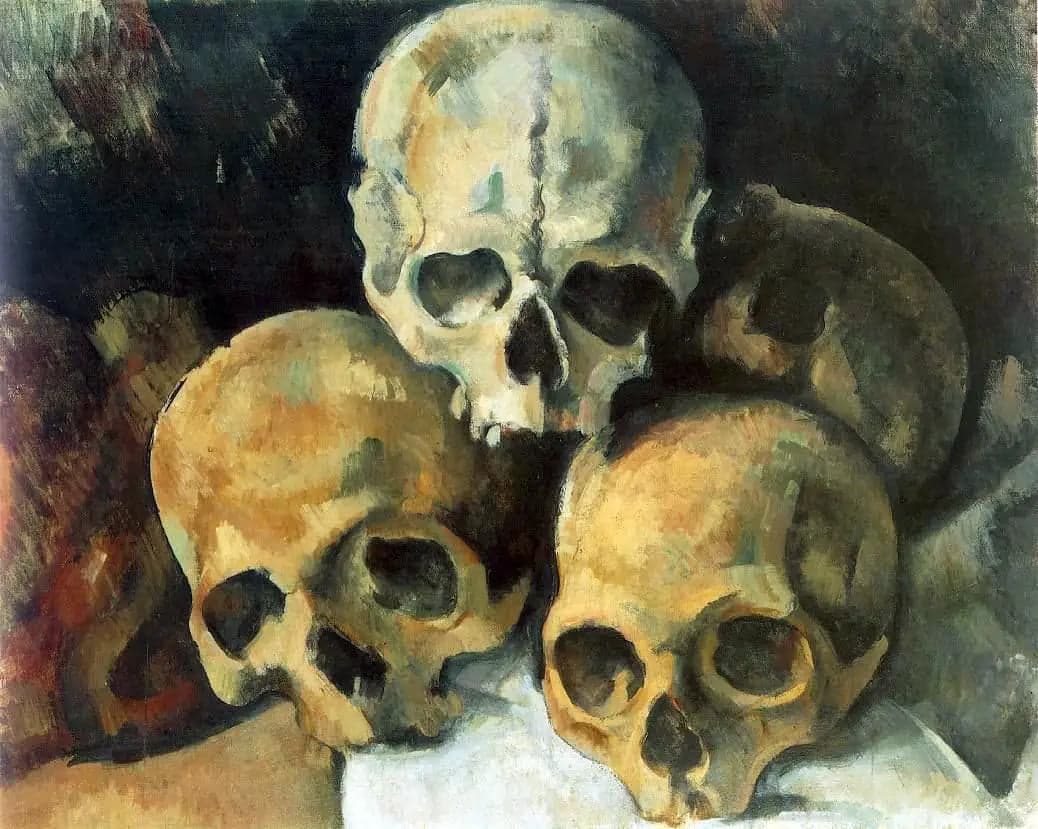
Pyramid of Skulls
- Original dimensions
- 46.5 x 39 cm
- Museum
- Not specified
- Year
- 1899
Scene depicted
The composition of Skull Pyramid is not merely a study of objects. It becomes a reflection on mortality, where the skulls evoke both the fragility of life and the beauty of forms. This canvas transports us to a world where the living dialogues with the dead, where each shadow reminds us of our own limits, thus enveloping the viewer in a profound contemplative atmosphere.
Historical context
Born in the artistic effervescence of the late 19th century, the painting titled Skull Pyramid is part of the post-impressionism movement. Famous for his ability to transfigure ordinary elements into iconic works of art, Paul Cézanne wields brush and color with undeniable virtuosity. This canvas , with precise dimensions of 46.5 x 39 cm, reflects an era where the contrast between light and shadow created unique atmospheres. Although the current location of this pictorial work remains uncertain, its impact endures through the ages.
Place in the artist's career
Inaugurating a period of maturity in the career of Paul Cézanne , Skull Pyramid stands alongside famous paintings such as The Large Bathers and Mont Sainte-Victoire . Each of these masterpieces reflects the artist's stylistic evolution, blending spontaneous impressions with a geometric search for form.
Anecdote
“Truth is in nature, and that’s where I will find it,” Cézanne liked to say, evoking the inspiration that animated him in his studio in Aix-en-Provence. Imagine a spring morning, when the rising sun gently embraces the contours of the skulls, revealing their mystery at the heart of a vast canvas. This moment of wonder resonates throughout the painting , each brushstroke testifying to his quest for expression.