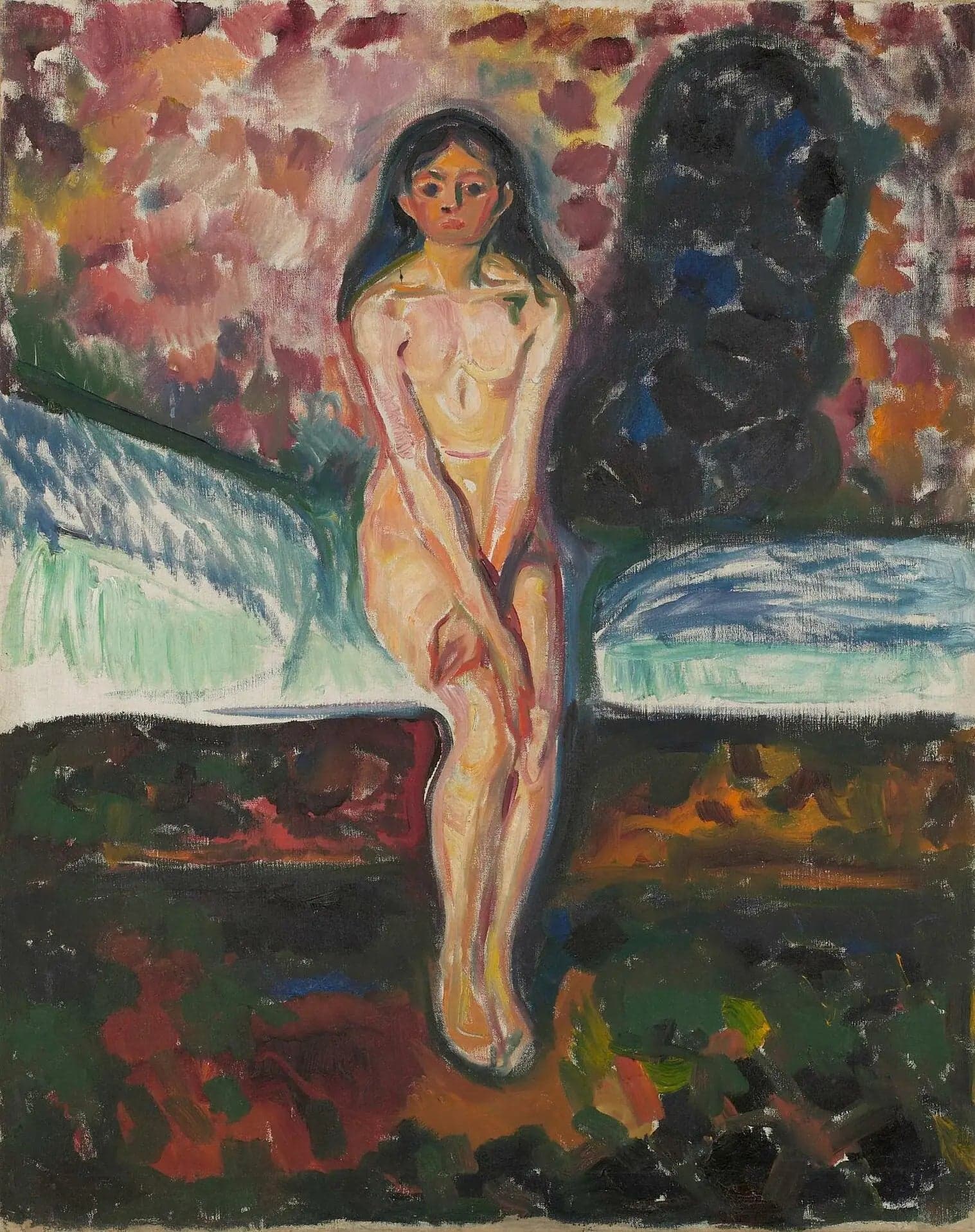
Puberty
- Original dimensions
- 77 x 97 cm
- Museum
- Munch Museum
- Year
- 1914
Scene depicted
The painting “Puberty” illustrates the pivotal moment when innocence fades to make way for an emerging consciousness. At the center of the painting, a youthful silhouette stands bathed in light, symbolizing the fragility and tumultuous desires that accompany this delicate period. The gazes, full of hope and concern, carry the weight of an inevitable transformation, telling silent stories to the observers.
Historical context
Created in 1914, this painting is iconic and emerges in the vibrant context of Oslo, where the artist, a leading figure of Norwegian symbolism , explores human emotions with striking depth. Within the Munch Museum, this painting is a testament to the introspection and turmoil associated with the transition to adulthood, thus reflecting the rich cultural heritage of the city of Oslo.
Place in the artist's career
“Puberty” is part of Edvard Munch 's mature period, revealing his distinctive style. Alongside works like “The Scream” and “The Madonna,” this painting demonstrates the evolution of his emotional technique, the combination of his bold brushstrokes and vibrant colors conveying complex states of mind.
Anecdote
“I paint my memories, shards of emotions captured in time.” This could summarize the thought of Edvard Munch , inspired one spring morning by the echoes of laughter and tears from young people in search of identity, making the canvas an intimate exploration of the human soul.