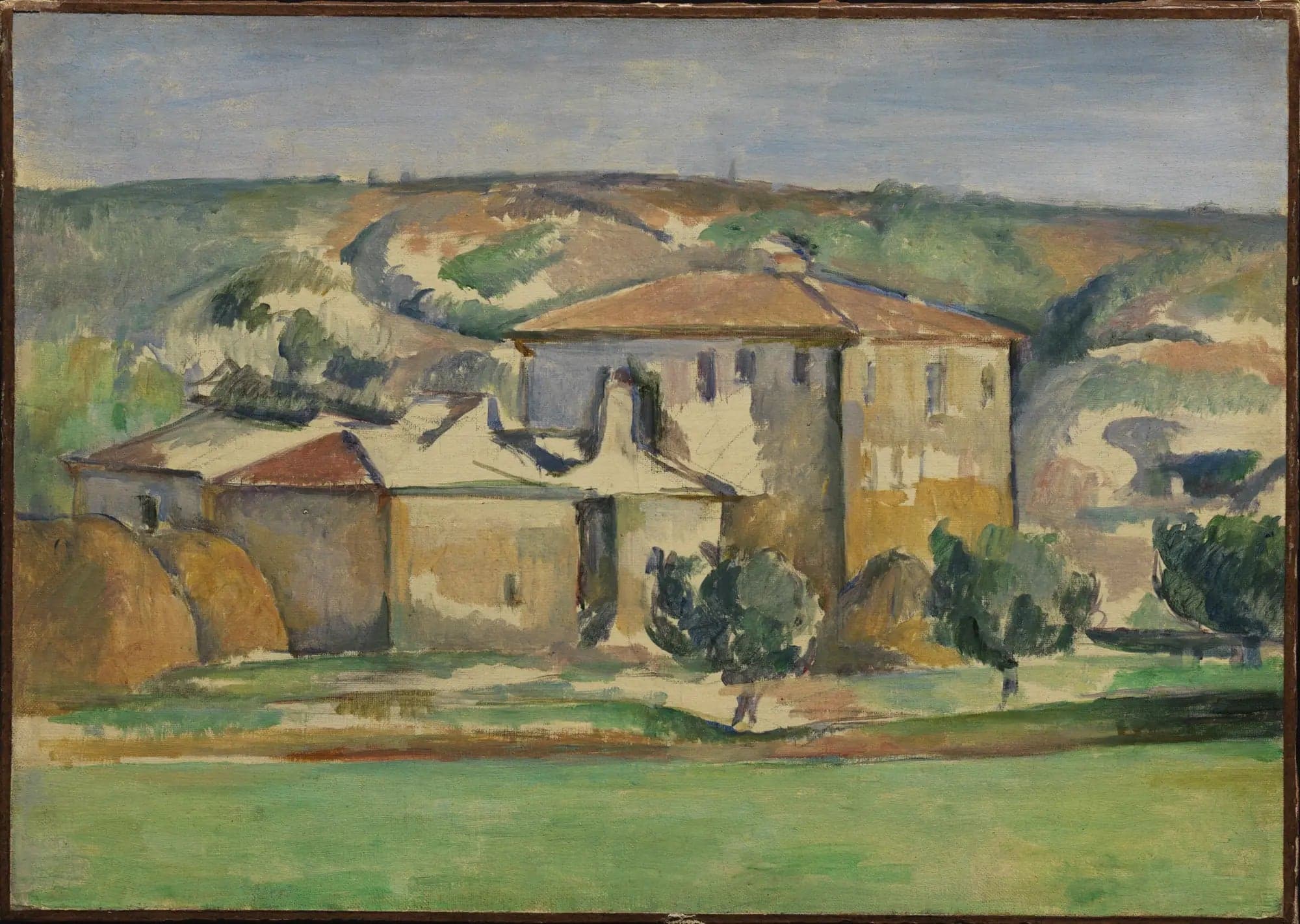
Provençal Houses, Encagnane
- Original dimensions
- 48.2 x 33 cm
- Museum
- Princeton University Art Museum
- Year
- 1885
Scene depicted
In this painting , Cézanne invites us to contemplate the timeless charm of Provençal houses. Through his dynamic and generous brushstrokes, he sketches the rustic simplicity of homes, anchored in the warm soil of the land. The composition exudes the serenity of summer days, where time seems to flow slowly, enveloped by a golden light.
Historical context
This pictorial work was created in 1885, in Aix-en-Provence, a city bathed in the light of Southern France. The painting is part of the post-impressionist movement, seeking to express a reality beyond mere representation. Currently, this painting is carefully preserved at the Princeton University Art Museum , a place that celebrates global artistic heritage.
Place in the artist's career
Maisons Provençales, Encagnane marks a significant turning point in Cézanne's career, illustrating his transition to bolder formats. This masterpiece compares to other works like Montagne Sainte-Victoire and Les Joueurs de cartes, revealing an evolution in his technique, where light and color blend to evoke deep feelings rather than being limited to faithful representation.
Anecdote
“I want to paint in a way that leaves no room for doubt.” These words from Paul Cézanne resonate with the strength of his artistic intention. Inspired by sunny mornings and the lively alleys of Encagnane, the artist captured in his painting the very essence of his memories, transforming every brick and every shadow into a powerful emotional narrative.