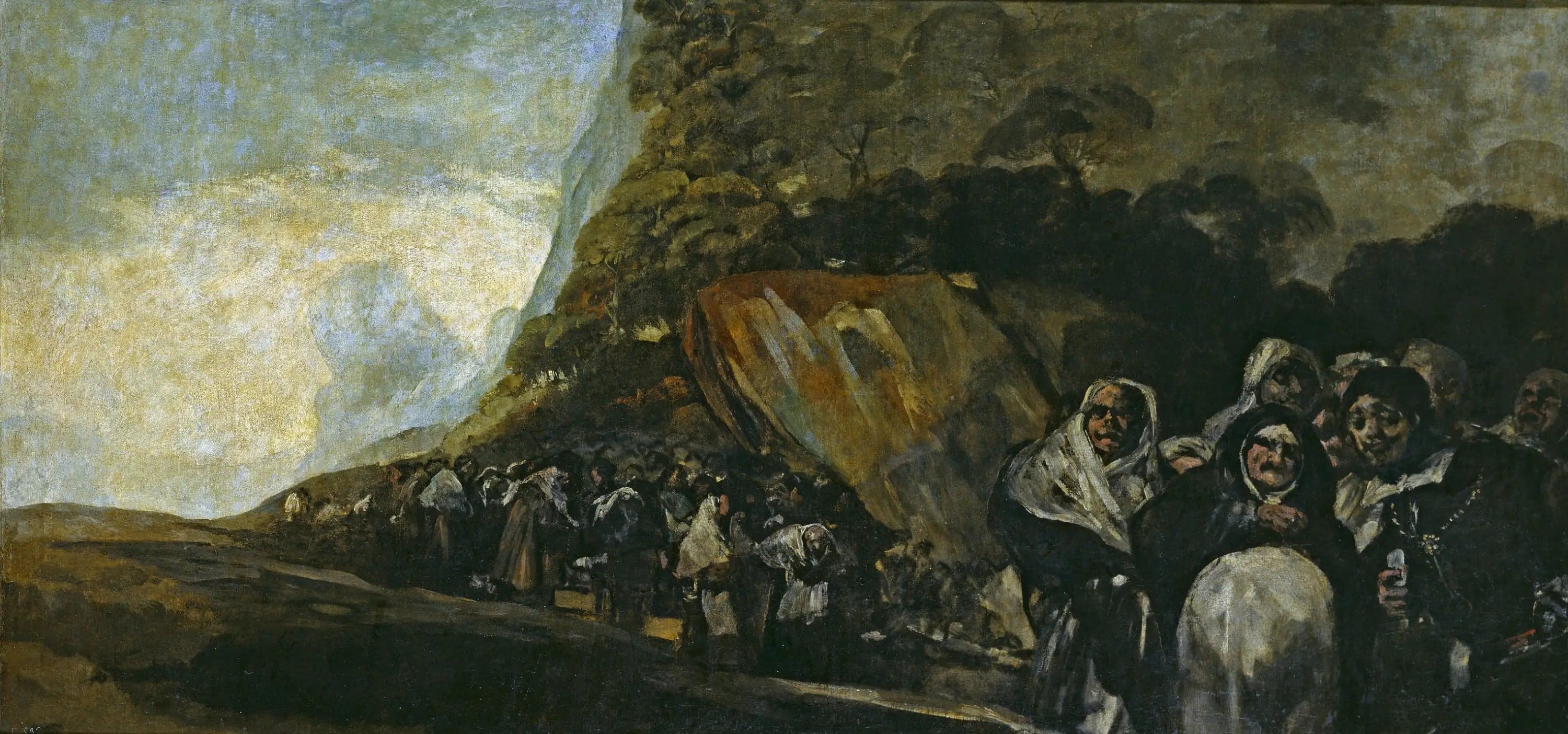
Procession of the Holy Office
- Original dimensions
- 266 x 127 cm
- Museum
- Prado Museum
- Year
- 1819
Scene depicted
The painting illustrates a vibrant scene in full motion: a religious procession advancing, dark and silent, leaving a deep imprint on the minds. The figures, in religious garments, move within a setting filled with spirituality, highlighting the importance of beliefs within early 19th-century Spanish society. The parade testifies to the exaggeration of human emotions and the rituals that connect us despite distance.
Historical context
Created in the heart of Madrid in 1819, this painting is emblematic of a pivotal time when Goya, caught between the shadow of revolutions and the light of romanticism , captures a striking emotional depth. The painting is now housed in the prestigious Prado Museum, a true sanctuary of masterpieces, where it continues to evoke the tension between tradition and innovation within the romantic movement.
Place in the artist's career
This painting stands as a major work in Goya's career, embodying the depth of his reflections as an artist. It marks a period of maturity, the quest for a more nuanced understanding of the human condition, while echoing his previous masterpieces, such as “La Maja Desnuda” and “Los Caprichos,” where light and shadow play a key role in emotional expression.
Anecdote
“Light pierced the darkness as shadow surrounded me” could have said Goya, recalling the moment of inspiration that brought this masterpiece to life. On a cobblestone path, on a sunny morning, the murmur of a procession carried the painter into a reflection on faith, fear, and hope. This canvas brimming with intensity reveals this duality.