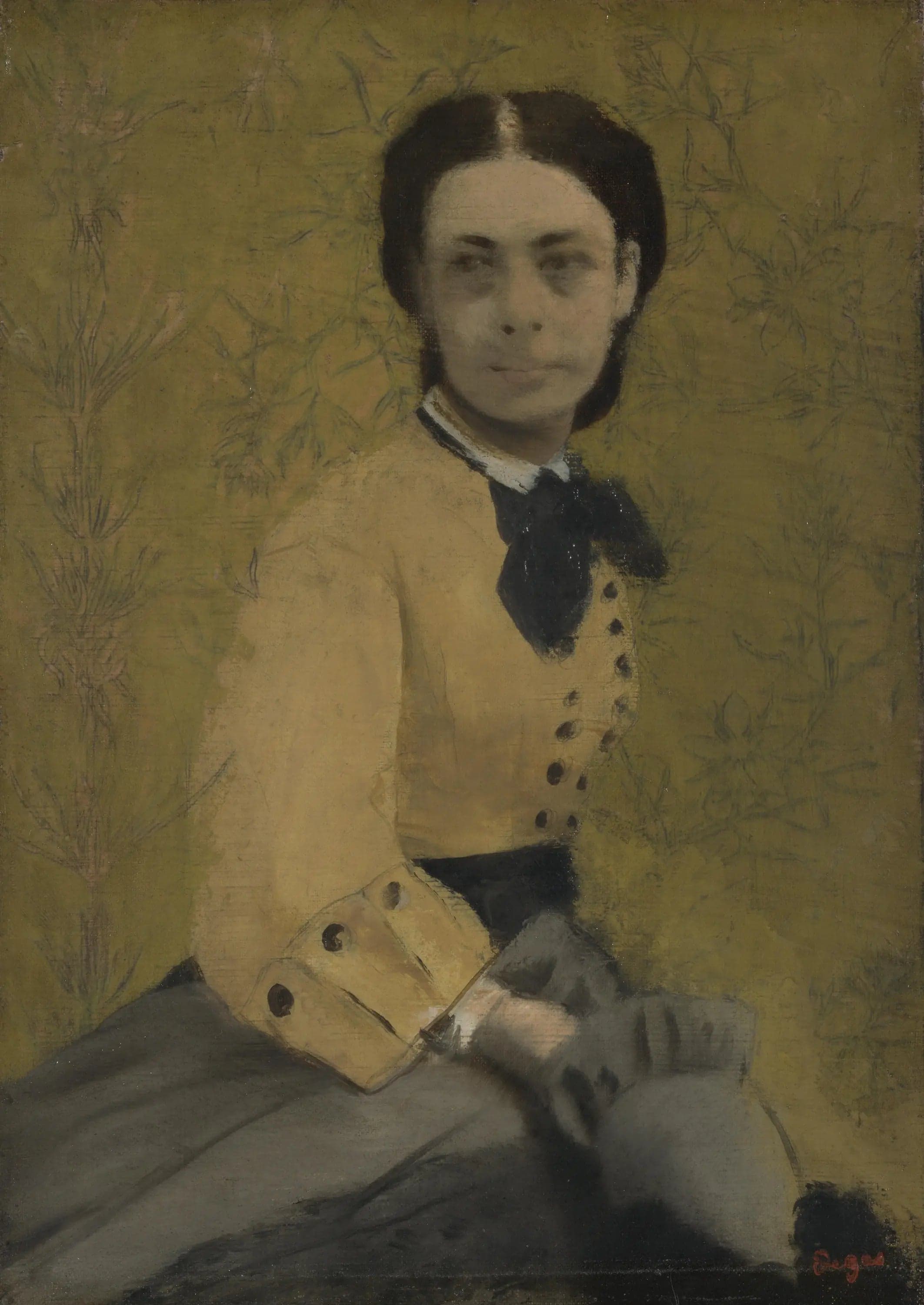
Princess Pauline of Metternich
- Original dimensions
- 29 x 41 cm
- Museum
- National Gallery
- Year
- 1865
Scene depicted
The painting "Princess Pauline de Metternich" presents us with a woman of striking beauty, dressed in a delicate gown that dances in the air. The artist wonderfully captures the elegance of his model, highlighting the fineness of her features and the brightness of her eyes. The work radiates a subtle charm, revealing the intimate world of Parisian high society, where every glance and every gesture seems to tell a story.
Historical context
Created in 1865, in Paris, the capital of art and culture, this painting is part of the Impressionist movement that revolutionized the way of seeing and representing the world. The canvas is now located at the National Gallery, a prestigious institution that houses timeless masterpieces. The size of this exceptional canvas , 29 x 41 cm, emphasizes the delicacy and intimacy of this pictorial work.
Place in the artist's career
This painting represents a turning point in Degas's career, a period marked by vibrant stylistic exploration while anchoring itself in his favorite themes. At this time, he had already created iconic works such as "The Dance Class" and "The Dancers," each showing his evolution towards a more personal and emotional representation of subjects. "Princess Pauline" testifies to his artistic maturity and unique perspective.
Anecdote
Edgar Degas once declared: "A painting must be a living thing, an element of emotion." It was in the muted setting of a Parisian salon, one April morning, that the artist crossed paths with the fascinating gaze of Princess Pauline, an inspiration as ephemeral as it is captivating. This painting expresses an evocative intensity that draws from this moment of encounter, a moment frozen in time at the heart of the composition.