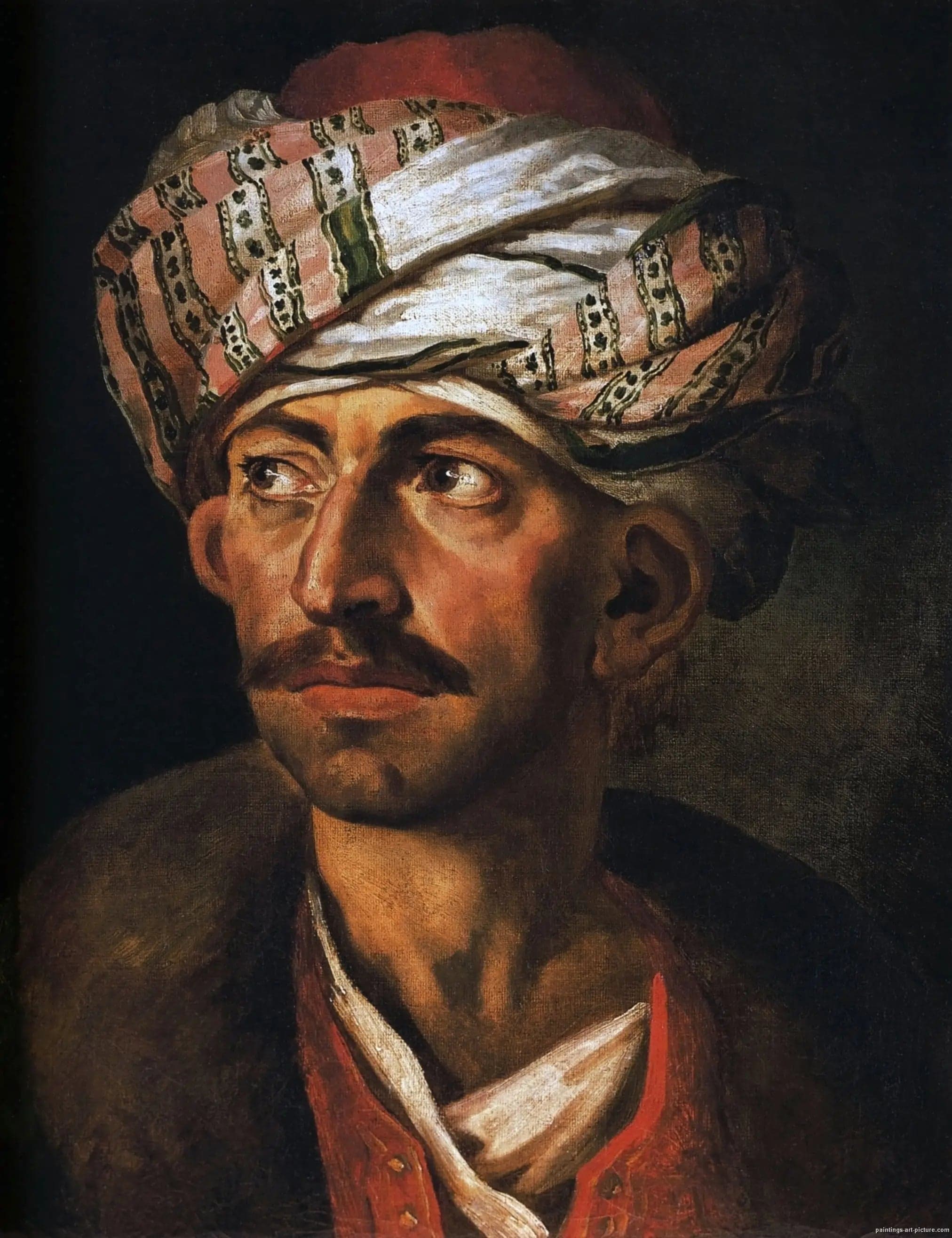
Presumptive Portrait of Mustapha
- Original dimensions
- 48 x 59.3 cm
- Museum
- Museum of Fine Arts and Archaeology of Besançon
- Year
- 1819
Scene depicted
This painting breathes life into a karstic figure of a young man, typically caught in feelings of dignity and human complexity. Through its detailed features, Géricault offers a subtle representation of human diversity, evoking themes of memory and identity at a time when these questions were slowly emerging in public discourse.
Historical context
Created at the dawn of the 19th century, this painting emblematic of Géricault comes to life in the vibrant setting of post-Napoleonic France. This work belongs to the romantic period, where emotions and individual expressions emerge powerfully. Currently, the canvas rests in the Museum of Fine Arts and Archaeology of Besançon, a cultural landmark in the heart of the Bourgogne-Franche-Comté region.
Place in the artist's career
The Presumptive Portrait of Mustapha represents a turning point in Géricault's career, marking his transition to a more mature exploration of emotional portraits. Previously, works like The Raft of the Medusa and The Charge of the Guard Lorraine testified to his technical genius. This painting continues to assert his unique style, combining finesse and narrative depth.
Anecdote
“Every face is a story I aspire to reveal,” Géricault might have said one spring morning while observing passersby in a bustling alley. It is in this quest for truth that the masterpiece of the Presumptive Portrait of Mustapha is born, a canvas vibrant with emotions captured with care.